“Shopping for a Pastor”

Since all of us are often under a great deal of stress, once in a while it does us good to give ourselves over to something that is of a “merry heart.” In that spirit, I am sharing the following “tongue in cheek” essay on “How Much Is That Preacher in the Window?” I clipped it out of a publication that came to my desk twenty years ago. It was originally published in Please Don’t Stand Up in My Canoe by Jean Shaw (Zondervan, 1975). I got a chuckle out of it and I hope you will, too.

“Good morning, madam. May I help you?”

“Yes, please, I’d like to buy a minister.”

“Did you have a particular model in mind?”

“I’ve got a description from the candidate committee right here. We want a man about 30, well educated, with some experience. Good preacher and teacher, balanced personality. Serious, but with a good sense of humor. Efficient, but not rigid. In good health. Able to identify with all age groups. And, if possible, sings tenor.”

“Sings tenor?”

“We’re short of tenors in the choir.”

“I see. Well, that’s quite a list. How much money did you want to spend?”

“The committee says $15,000-$15,500 dollars.”

“Hmm. Well, perhaps we’d better start in the bargain basement.”

“Tell me, how much is that model in the window?”

“You mean the one in the Pendleton plaid suit and the grey suede dune boots?”

“Yes, that one. He’s a real dream.”

“That’s our Dallas #467. He has a Ph.D. and AKC papers?”

“AKC papers?”

“American Koinonia Council. He sells for $16,000 plus house.”

“Wow! That’s too rich for our blood. What about that model over there?”

“Ah, yes. An exceptional buy. Faith #502. He’s a little older than 30, but excellent experience. Aggressive. Good heart. Has a backing of sermons, two of which have been printed in Christianity Today.”

“He’s not too bad. Can you do something about his bald head? Mrs. Fulton especially insists that our minister have some hair.”

“Madam, all of our ministers come in a variety of hair styles.”

“I’ll keep that in mind.”

“Now let me show you Olympia #222. Four years of varsity sports at Southern U. Plays football, basketball, volleyball and ping-pong. Comes complete with sports equipment.”

“What a physique! He must weigh 200 pounds!”

“Yes, indeed. You get a lot for your money with this one. And think what he can do for your young people.”

“Great! But how is his preaching?”

“I must admit he’s not St. Peter. But you can’t expect good sermons and a church-wide athletic program too!”

“I suppose not. Still…”

“Let me show you Westminster #801. Now, here’s a preacher! All his sermons are superb—well researched, copious anecdotes, and they always have three points. And he comes with a full set of Calvin’s Commentaries at no extra cost! You get the whole package for $18,300!”

“He’s wearing awfully thick glasses.”

“For $200 more we can put in contact lenses.”

“I don’t know. He might study too much. We don’t want a man who’s in his office all the time.”

“Of course. How about that minister over there? Comes from a management background. Trained in business operations. Adept with committees. Gets his work done by 11:30 every morning.”

“His tag says he’s an IBM 486x.”

“Madam, you have a discerning eye. Innovative Biblical Methods! This man will positively revitalize your church.”

“I’m not sure our church wants to be revitalized. Haven’t you got something less revolutionary?”

“Well, would you like someone of the social worker type? We have this Ghetto #130.”

“The man with the beard. Good gracious, no. Mrs. Fulton would never go for that.”

“How about Empathy #41C? His forte is counseling. Very sympathetic! Patient. Good with people who have problems.”

“Everyone in our church has problems. But he might not get out and visit new people. We really need a man who does a lot of visitation. You see, all of our people are very busy and…”

“Yes, yes. I understand. You want a minister who can do everything well.”

“That’s it! Haven’t you got somebody like that?”

“I’m thinking. In our back room we have a minister who was traded in last week. Excellent man, but he broke down after three years. If you don’t mind a used model, we can sell him at a reduced price.”

“Well, we had hoped for someone brand new. We just redecorated the sanctuary, and we wanted a new minister to go with it.”

“Of course. But with a little exterior work, a fresh suit, this man will look like he just came out of the box. No one will ever know. Let me bring him out and you can look him over.”

“All right. Honestly, this minister shopping is exhausting. It’s so hard to get your money’s worth. Tell me, do you accept coupons, and do you double them? What about rebates?”

“Uh, no. But if there’s any dissatisfaction after six months, we send a new congregation for the balance of the year. That usually takes care of most of the problems.”

*******

Well, there you have it.

Preachers: Maybe we need to be more understanding of the pitfalls that pulpit committees face when “shopping” for a new pastor!

Pulpit committees: Watch out, you may get what you bargained for!

“If We Did Not Go, Who Would Go?”

A  young man who had lived on the southside of Indianapolis, ending up for help at Lester Roloff’s Lighthouse for men—from whence he would migrate to Tennessee Temple College in the early 1970s—and a quiet, shy young lady from Prosperity, West Virginia—also a student at TTC at that same time—met, fell in love, and married in 1973 with the purpose and plan to serve God somewhere on Earth as missionaries.  Their first choice was to go to Trinidad and Tobago. So, having raised necessary support, they applied for visas to those gospel-thirsty  islands, only to discover that their visas were not readily forthcoming; so, they went instead to work with missionaries in St. Thomas while waiting for the visa green light to be granted.  They served faithfully there, helping in a Christian camp and in the Blue Water Bible College, and welcomed while there their youngest son (of three) into the world.  With visas finally in hand, they shipped a 55-gallon drum containing their “earthly belongings” to Trinidad, where they immediately were thrust into the leadership of a local church. But, having been there only a year, they were forced to leave because of unrest in the aftermath of the Jim Jones incident.

“Where to go?” Well, upon the counsel of their mission board, Steve and Treasa Fox accepted the challenge of moving to the Philippines to assist in the ministry of five mission churches their first two years there—and then, for the next two years, planting a church themselves.  During those years of serving in missions in the Far East, God began to stir Steve and Treasa’s hearts about the need to take the gospel to Native American Indians in the southwest United States.

Having announced their desire to follow God’s leading to work with Native Americans, Steve and Treasa met with some well-meaning but misguided warnings about the slow, trying, and tedious work they would find on this mission field. They were warned about the discouragement and difficulties, but this couple—who from their earliest days of marriage had abandoned themselves to doing God’s will whatever that would entail, and wherever it would take them—assuredly believed that their previous training in God’s prep school on the islands, and in the Philippines, was designed to prepare them for this ministry, which would indeed in the beginning seem almost fruitless and “useless.”

But God reminded the Fox duo that He had called them, had directed them, and was fully able to sustain them.  Many of the people on the Salt River Indian Reservation where they began their Native American evangelization, were alcoholics or drug addicts. It was a work that would demand patient perseverance, purposeful plodding, and plowing while friendships with the tribal residents were being forged through Steve and Treasa’s serving their neighbors and helping them with basic life skills. Steve donned his work belt and repaired roofs and broken-down autos and anything mechanical, over the course of time winning the confidence and trust of those amongst whom he and his faithful helpmeet lived.  It was “slow as molasses” but, in time, yielded dividends not measured in substance but in souls.  Steve often said what he was doing was “love in work clothes.” 

After earnestly and faithfully plowing and planting with good gospel seed for 22 years, Steve was diagnosed with colon cancer in 2007, but his work was not finished; in fact, as he battled cancer and endured draining treatments for the next eight years, Steve intensified his efforts, resulting in many people trusting Christ as Savior and enrolling as disciples in Bible courses he taught so they would be grounded in truth.  On June 12, 2015, Steve Fox, the once-troubled teen who grew up in his Dad’s roller-skating rink on the near southside of Indianapolis, was graduated to glory. He and his steady helpmeet of 42 years had faithfully labored through the ups and downs, dreams and disappointments, victories and defeats, thick and thin, for better and for worse, in sickness and in health—never forgetting that initial question that they answered positively before God: “If we don’t go, who will?” They did go, and the value of their steadfast perseverance on a challenging mission field, loving and laboring with and for our Native Americans, can be aptly and succinctly summarized in the words of a teenager whose life, one of many, Steve and Treasa touched indelibly: “Pastor and Mrs. Fox have played an enormous role in my spiritual growth,” and in the words of another who said, “I am honored to have learned and served under the Christian teachings of Pastor and Mrs. Fox.  They modeled faithfulness, commitment, service, and love for the Lord.”

We can only thank God, as Steve, now with his Savior, and Treasa would want us to do, that the Holy Spirit hunted, hounded and hauled into the Good Ship Grace a troubled youth who was guided and guarded by His skillful hand to the Lighthouse in Corpus Christi, Texas, and then on to Tennessee Temple College; and that the same Holy Spirit took a young lady from Prosperity, West Virginia, who marveled at the thought that God could use her, to a path that would merge one day with the path of a God-called missionary named Steve Fox, eventuating in the two becoming one with each other and one in the single-hearted desire to take the Good News to peoples who had never before heard it.  We can all rejoice that God wrote with an indelible ink on the hearts of this young couple, “If we don’t go, who will?”

Editor’s note: In 1973 Thompson Road Baptist Church became the first church to commit to prayer and financial support for the Fox’s, and served as their sending church for 48 years. After Steve’s passing, Treasa continued ministering to women and children on the Reservation for another six years. She remarried and now resides with her husband in Florida.

Go ye therefore, and teach all  nations, baptizing them in the name of the Father, and of the Son and of the Holy Ghost.  Teaching them to observe all things whatsoever I have commanded you; and lo, I am with you alway, even unto the end of the world. Amen.” (Matt. 28:18-20) 

In His Own Words

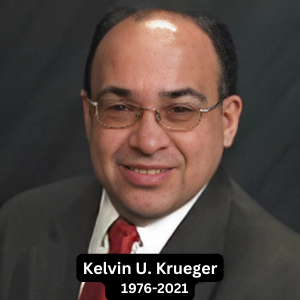
On September 26, 2010, our church had a commissioning service for Kelvin Krueger, missionary appointee under the auspices of Baptist World Mission in Decatur, Alabama. Read Kelvin’s testimony in the following paragraphs to appreciate what an incredible feat God allowed this special servant of His to accomplish in serving as a missionary for six years in Johannesburg, South Africa:

“Good evening, my name is Kelvin Krueger.  I was born into a Christian home where my parents loved the Lord.  When I was young, I was interested in being a cowboy.  At the age of four, I received Christ as my Lord and Savior.  As soon as I received Christ, He gave me a burden in my heart for the mission field, so I changed my direction from being a cowboy to being a cowboy missionary.  At the age of six, I was diagnosed with brain cancer.  I was operated on, and the doctors had to take out a good portion of my learning cells.  After my surgery I was flown to Boston, where a team of doctors were going to  perform radiation therapy.  My parents had to sign a release form saying that if I came through the therapy, which was doubtful, I would have the mental capacity of a six-year-old.  The release was signed, but fervent prayer made the difference.  The Lord brought me through the surgery.  The doctors said there were going to be some side effects of the radiation therapy which included:  puberty at an early age (as you can see, I am shorter than my dad, but at least I am taller than my mom); scoliosis (it is hard to walk straight); and memory loss (where am I)? 

It has been a long road to where I am today, but I thank the Lord for the paths He has led me by.  I graduated from Marquette Manor Baptist Academy and went to Bob Jones University for part of my schooling.  I received a Certificate of Children’s Ministry from Northland Baptist Bible College.  At graduation, Dr. Les Ollila presented me with the JOB award for accomplishments regardless of difficulty.  I have been on mission trips to Mexico, Australia, and Saint Kitts.

The Lord then gave me opportunity to go to New Zealand for a few months.  When I returned home, I worked under the maintenance director, who was also the children’s pastor at Marquette Manor Baptist Church.  Through him, I got involved with ventriloquism and gospel magic. Also, in my duration there, I was able to lead ten first graders to the Lord.  Through the Lord, I will be all He wants me to be.  Isaiah 6:8 says: “Also I heard the voice of the Lord, saying, whom shall I send and who will go for us? Then said I, here am I; send me.” I believe the Lord has called me in the service of children’s ministry in South Africa.  Proverbs 3:5-6: “Trust in the LORD with all thine heart; and lean not unto thine own understanding. In all thy ways acknowledge Him and He shall direct thy paths.”

I was at Maranatha Baptist Bible College in Watertown, Wisconsin, for the Baptist World Mission annual conference meeting from October 22 through 25 of 2007.  While at the conference, I was interviewed two times about where I stood doctrinally, and I was questioned on key issues.  I went into the interviews knowing the Lord was on my side.  The last interview was in a room where all the board members were sitting down.  I was asked to sit in a chair and give my testimony.  I was asked why I felt called to the mission field, and why I wanted to join Baptist World Mission.  I thank the Lord for His help and His guidance in leading me to Baptist World Mission and allowing me to join.  I know that if we reach children with the gospel, that will give us an open door into the homes, and that will give us an opportunity to tell the parents the good news of the gospel.

There was a very brilliant Bible teacher, Robert Dick Wilson, born in 1856 and died in 1930.  By the time he was 25 years old he could read the New Testament in nine languages. (I have trouble reading it in English) He could repeat from memory a Hebrew translation of the entire New Testament, as well as a large portion of the Old Testament.  One day, while teaching his students, he said: “Young men, there are many mysteries in this life I do not pretend to understand, many things hard to explain. But I can tell you this morning with the fullest assurance that Jesus loves me, this I know, for the Bible tells me so.”

Editor’s note: Kelvin served faithfully through a local church in Johannesburg until he suffered a disabling stroke in 2015. He was graduated to glory four years ago, Feb. 2, 2021. David Livingstone, denied the opportunity of going to China, chose South Africa. When warned by a friend about dangers of serving there, the great missionary replied, “Lo, I am with you always, even to the end of the world. That, my friend, is the word of a gentleman, so let’s be going.” Kelvin had that kind of a spirit for the Lord and His work.


For ye see your calling, brethren, how that not many wise men after the flesh, not many mighty, not many noble, are called:  But God hath chosen the foolish things of the world to confound the wise; and God hath chosen the weak things of the world to confound the things which are mighty…that no flesh should glory in His presence.”  (I Cor. 1:26-29)
  

Philip the Apostle (4th in a series on the Apostles)

  1. Before His Call

“Philip” means “lover of horses.” The name is Greek but, like all of the twelve apostles, Philip was a Jew. He was from the town Bethsaida, ruled by Philip the Tetrarch, brother of Herod. (Luke 3:1) Philip the Tetrarch named the city Bethsaida after the death of the emperor Augustus. He was a popular ruler, built buildings and brought trade to this town on the northern shores of Galilee. It is quite probable that Philip the Apostle was named after this admired leader.

Bethsaida the town—“House of Fish”—was also the home of Andrew and Peter as well as James and John, sons of Zebedee. Quite likely, Philip was associated with these men who were in business with Zebedee in what was a successful business at that time.

Jesus, in His preaching, singled out this prosperous “House of Fish” in one of His unforgettable messages. As quoted by Luke in his gospel, He said: “Woe unto thee Chorazin! Woe unto thee Bethsaida! For if the mighty works had been done in Tyre and Sidon which have been done in you, they had a great while ago repented, sitting in sackcloth and ashes.” (Luke 10:13) Bethsaida, home to at least five of the 12 apostles, had the privilege of hearing and seeing the mighty words and works of God as perhaps few other cities of His day. Yet they, by and large, had not repented. Thus the stern rebuke from the Lord’s lips.

Philip was probably a disciple of John the Baptist. He is not to be confused with either Philip the deacon (Acts 6) or Philip the evangelist (Acts 8).

  1. At His Call and Commission (John 1:43)

Philip was “found” by the Lord Jesus the day after Andrew had received his call to “come and see” where Jesus dwelt. On that day, John records that Jesus was on His way to Galilee, and it was on that journey that Jesus “findeth Philip, and saith into him, ‘Follow me.’”

The next thing we learn of Philip is that he immediately went and found his friend, Nathanael, and said to him, “We have found him, of whom Moses in the law, and the prophets, did write, Jesus of Nazareth, the son of Joseph.” (John 1:45) It is evident that Philip had been searching the scriptures and had learned from the writings of Moses and the prophets that Israel could and should expect a Messiah through the lineage of Joseph. There may well have been a “Messianic expectation” abroad at that time among serious students who had access to the prophecy of Daniel—as the wise men from the East might well have had, causing them to make an arduous trip of several hundreds of miles to meet the one who was born to be King of the Jews. Nathanael, however, could not quite “wrap his head” around the fact that the long-awaited Messiah was come from such a low-life city as Nazareth! (John 1:46)

So, Philip and the other apostles were commissioned to be with Jesus and to preach. They spent more than three years living with and learning from Him. They learned from the Master what it was to enjoy genuine fellowship; they asked for and received instructions on prayer, preaching, propagation of the gospel, and the future growth and development of His kingdom on earth (see Matthew 13—the eight parables He taught in light of His rejection by Israel’s leaders).

  1.  After His Commission

Philip has gotten a lot of “bad press” and some writers consider him dull, even a bit stupid. The reason for this harsh assessment was his response to Jesus’ question on the occasion of the feeding of the 5,000. (John 6:5-7) Seeing the great company, five thousand men plus women and children, Jesus said to Philip, “Whence shall we buy bread, that these may eat?” (“And He said this to prove him: for he himself knew what he would do.”) Philip answered Jesus: “Two hundred pennyworth of bread is not sufficient for them that every one of them may take a little.” We can be certain that Jesus was not trying to make Philip look like a dunce. He no doubt was using this as a teaching moment. By the way, try to recreate the scene in your mind and put yourself in Philip’s sandals. What would you have said had Jesus posed the question to you?

The other instance that featured Philip and Jesus interacting was in the upper room, when Philip said to Jesus, “Lord shew us the Father, and it sufficeth us.” He made that statement in response to Jesus saying that “If ye had known me, ye should have known my Father also.” (John 14:7,8) Jesus’ reply to Philip’s request to see the Father was, “Have I been so long time with you, and yet thou hast not known me?” (John 14:9) How could it be that, after three years, the disciples still did not know Him?  Well, how long have you walked with Him? Do you feel as though you know Him, or might you sigh and say with Paul, “That I may know Him, and the power of His resurrection, and the fellowship of His sufferings.” (Phil.3:10) Jesus knew that none of His followers would really know Him until the Comforter had come who would “glorify me: for he shall receive of mine, and shall shew it unto you.” (John 16:14)

Charles Kingsley, well-known English novelist, was once asked, “What is the secret of your success?” His reply was, “I had a friend.”

Someday in that eternal city, one might ask Philip how it was that he had come to sit on one of the twelve thrones, judging the twelve tribes of Israel (Luke 22:14-30); or how had it happened that he had his name inscribed on one of the foundation stones of the eternal City of God. (Rev. 21:14) Philip just might answer, “I was from Bethsaida, the city of Andrew, Peter, James and John, and I had some good friends.” Unlike Philip the Roman Tetrarch of his day, Philip the Apostle never made much of a splash in his time; but, though he never ruled a city here on earth and was never highly acclaimed by men, his memory will live as long as God lives. In that Kingdom over which Christ will rule, Philip will sit on a throne as a judge, and his name will be engraved on the foundation stones of the gates of the Holy City of Jerusalem. Selah!

His lord said unto him, Well done, good and faithful servant; thou hast been faithful over a few things, I will make thee ruler over many things: enter thou into the joy of thy lord.” (Matt. 25:23)

Home, Sweet Home

Asked to define a home, one person said: “A place where there is a roof to keep out rain, four walls to keep out the wind; floors to keep out the cold, yes, but a home is so much more. It is the laugh of a baby, the song of a mother, the strength of a father. Warmth of loving hearts, light from happy eyes, kindness, loyalty, comradeship. Home is the first school and the first church for the young ones, where they learn what is right, what is good, and what is kind. Where they go for comfort when they are hurt or sick; where joy is shared and sorrow eased. Where fathers and mothers are respected and loved. Where children are wanted. Where the simplest food is good enough for kings because it is earned. Where money is not so important as loving-kindness. Where even the teakettle sings from happiness. That is home. God bless it.” (Ernestine Schuman-Heink)

Remember the “nuclear family?” That was a family, common in the 1950s and 60s, comprised of a father and mother with their own biological or adopted children. But, beginning in the 70s and 80s, that compact household began to break down. More and more families in those decades were headed by a single parent due to a rising divorce rate. Today, 39% of marriages end in divorce. Infidelity and finances are the most common causes. The average marriage that ends in divorce lasts about 8 years. In 2023, the CDC (Centers for Disease Control and Prevention) reported that there were 674,000 divorces in the United States, which is down from a previous high of one million divorces (annually) in recent decades. In 2022, 39.8 percent of births in the U.S. were “out of wedlock,” versus 18 percent in 1980. Patrick Fagan, sociologist, says that “it is now a widely accepted premise that children born into single-parent families are much more likely than children born into intact families to fall into poverty and welfare dependency.” One could add crime and violence to the list of pitfalls more common to children born into single-parent families.

The family that prays together is even more uncommon. Studies show that where there is a Mom and Dad in the home, both of them attending church regularly, their children will also remain spiritually faithful in 72% of cases. Where only Dad attends church, 55% will remain faithful to church. If only Mom attends, the percentage drops to 15; and where neither Mom nor Dad remain attached faithfully to a church, just 6% of the children will attend church faithfully as adults.

The old-time evangelist knew something about what it takes to make a house a home when he said, “You can stand anything when you have a peaceful home. It does not matter how hard life is if you have a little place called ‘Home Sweet Home’—a little place where everybody loves everybody. Oh, it may not be a rich home, you know. It does not have to be rich, just a home where there is love, understanding, gentleness, kindness, and patience—and the authority vested in the head of the family. Oh, yes, there will be some ups and downs. If a man tells me he never had a cross word with his wife, I know there is something wrong with one of them. I am not going to lie about it: I have been married forty-nine years, and that is a long time to stick to one woman and never lose your temper! But you know, it has been pretty wonderful. What would life be without each other? What would it be? No children, no mother, no father, no home?

“Say, how about fixing yours up like it ought to be? You know, Jesus can fix it. He met the chief of the publicans at Jericho, looked up at him in the tree and invited himself home with him for dinner. I will venture that home was never the same after that—never the same again.” (Dr. Bob Jones, Sr.)

In 1677 a man who was notoriously immoral married a woman of like character, and 1,900 descendants came from that union. 771 were criminals; 250 were arrested for various offenses; 60 were convicted thieves; and 39 were murderers. This family spent 1,300 years behind bars, collectively, and cost the state of New York millions of dollars.

About the same time, Jonathan Edwards—the famous preacher, who became president of Princeton—began a family line. 1,334 descendants were born and traced to this line. Many of them became college presidents or professors. 186 became preachers, and many were active church members. 86 were senators; three were congressmen; 30 were judges, and one became vice-president of the United States. None of them spent any time in jail, nor were any of them an extra expense to the state. (copied)

One final, profound thought that “Prof” Howard (Howie) Hendricks—who taught at Dallas Theological Seminary for sixty years—shared with a class of preachers in training: “Your home is not apart from your ministry; it is part of your ministry.”

Home, Sweet Home. Let us strive to promote, preach, and propagate the Biblical model of a home that is truly sweet because of His prevailing and pure love!

Except the Lord build the house, they labor in vain that build it…Lo, children are an heritage of the Lord; and the fruit of the womb is His reward.” (Ps. 127:1,3)

John, “Whom Jesus Loved” (3nd in a series on the Apostles)

The Bible has been called a biography of the human race, and rightly so. It sets forth our record from creation, to the fall, to our death for sin and our death to sin through redemption and regeneration through Christ.

Not only does it give us a record of man, it also tells us of men—individual, particular men. It tells us how they lived and how they died. It gives us glimpses of their words and works. We have at times profiles, and at times portraits—of good men and of bad men.

Of all the biographies of the Bible, none has made more impact than those of the Apostles of Jesus Christ.  They were those who were closest to our Lord during his three and one-half years of earthly ministry. They heard His every word and saw His every deed. They felt His pulse, as it were, heard His prayers, witnessed His trials, and watched His tears. They were chosen by Him to carry on what He had begun.

And, of the 12, none is more important than the one who leaned on His breast at the Last Supper in the Upper Room.

We know him simply as John. He was one of the first to be called to this holy vocation, and he was the last to have lived out the will of God for his life on earth. We can benefit greatly as we study his life in the New Testament—noting his profile as an apostle, his performance as an apostle, and his pen as an apostle.

  1. His profile.
  • He was one of the “sons of Thunder,” brother of James, sons of Zebedee. His mother, Salome, was a devoted follower of Jesus. Zebedee employed his sons in the family fishing business. Jesus gave James and John the name “Sons of Thunder.”
  • Andrew and Peter were also in this business with Zebedee and his sons. It was a thriving business.
  • He was a disciple of John the Baptist and was led to Christ by the Baptizer. (John 1:35)
  • He wrote five books of the New Testament and was known as “the one whom Jesus loved.” (John 13:23; 19:26; 21:7; 21:20)
  • He outlived 12 Roman emperors, including Augustus and Nero. Two of these emperors committed suicide and seven were murdered.
  • He was doubtless in his teens when Jesus called him to follow Him as an apostle; he outlived all others apostles, dying (it is believed) in his 90s.
  1. His performance.
  •  John probably enjoyed the most intimate fellowship with the Lord Jesus.
  • He was the last person Jesus spoke to before He “gave up the ghost.” It was John to whom Jesus committed the care of His mother, Mary.
  • He was, along with Peter and James, one of the three who made up the “inner circle” of Jesus during His earthly ministry. At the Last Supper, Peter asked John to find out from Jesus who the betrayer was that Jesus had alluded to. (John 13:23,24)
  • He became a close companion of Peter: at the Supper; at the place of Judgment, both Peter and John were on site; and both were at the sepulcher, John arriving before Peter. (John 20:1ff)
  • Peter and John were fishing when Jesus, in a post-resurrection appearance, met them on the shore and fixed breakfast for them. (It was John who first said from the boat, “It is the Lord.”)
  • After the resurrection and following Pentecost, this apostolic duo was often together, as at the healing of the lame man at the Temple. (Acts 3:11)
  • They were persecuted, imprisoned together, and withstood the authorities when told they must stop preaching.
  • Their personalities were very different: Peter was open, John closed; Peter was quick to act, John given to thinking first.
  • Both possessed an unquestionable love for, and devotion to, Jesus of Nazareth.
  1.  His pen.
  • John’s writing was his greatest contribution. He wrote more than any of the 12. Yet, he never mentioned his name in the 21 chapters of his classic gospel, the only gospel which does not contain a list of the 12.
  • The one word that characterizes his writings is “love.” For example: “God so loved the world.” “Let us love one another.” “God is love.” “We know that we have passed from death to life because we love the brethren.” “There is no fear in love.” “We love Him because He first loved us.”
  • One writer said of John: “He gave in his writings a definition of love that the world has not found in any other literature.”
  • One learns a lot about John by noting the words he uses repeatedly in his gospel: “light” (23); “life” (52); “love” (7); “truth” (25); “believe” (98); “world” (78); “witness” (30) “testify” (13); “testimony” (25). In his writings, John uses the word “love” a total of 80 times.
  • It is fair to say that the Apostle John wrote to present incontrovertible evidence that Jesus is God and that God is love.

His place among the 12 was unique. He spent the latter years of his life in exile on the isle of Patmos, where he received the indescribable Revelation!

John was the only Apostle who was not cruelly martyred. Legend says that he was put into a cauldron of boiling water, from which he escaped in a miraculous manner. Afterward, he was exiled to Patmos, where he received the Revelation of Jesus Christ as recorded in the last book of the New Testament.

I was in the Spirit on the Lord’s Day, and heard behind me a great voice, as of a trumpet…And when I saw Him, I fell at His feet as dead. And He laid a hand upon me, saying, Fear not; I am the first and the last.”(—the Apostle John, Rev. 1:10, 17)


Everyday Holocaust

The Centers for Disease Control and Prevention (CDC) reported that in 2021, with 46 states reporting, there were in the U.S. 625,000 abortions; and, in the years 2013 through 2022, there were on average 625,000 abortions reported. One will find varying statistics, and some have reported that the number of abortions annually in our land of the free is over one million. And, since the U.S. Supreme Court’s overturning of Roe v. Wade the number of abortions reportedly has actually risen.

For those of us who believe that life begins at conception, it is not a stretch to conclude—with Lutheran Pastor Dietrich Bonhoeffer, who was hanged by the Nazis for trying to subvert the German World War II holocaust—that “destruction of the embryo in the mother’s womb is a violation of the right which God has bestowed upon this nascent life. To raise the question whether we are here concerned already with a human being or not is merely to confuse the issue. The simple fact is that God certainly intended to create a human being and that this nascent human being has been deliberately deprived of his life, and that is nothing but murder.” (quoted from Bonhoeffer’s book Ethics)

Consider that in America’s horrific Civil War there were 498,312 casualties; in World War II, there were 407,316; and in the Vietnam War, 58,098. But by the most conservative reports (CDC) there are over 600,000 casualties every year in America’s War on the Unborn, or America’s Daily Holocaust on the unborn.

A missionary, in a prayer letter written some years ago, mentioned the magnitude of the problem in Russia: “A friend told us the average Russian woman has had 10-12 abortions in her life. That was verified a few weeks later when we read an article in a local newspaper which stated that 300,000 girls between ages 15-19 have abortions each year, and that 10% of the girls under 19 in Moscow have already had an abortion. By the time a woman reaches 26 it is not uncommon for her to have had as many as 12 abortions.”

The termination of an embryo’s life does not, however, cause the “problem” to go away. A doctor at the University of Minnesota, according to the Christian Action Council, published a study on the long-term (i.e., five-to-ten year) manifestations of stress from abortion. The study, including women from diverse backgrounds, revealed that (1) 81 percent reported preoccupation with the aborted child; (2) 73 percent reported flashbacks of the abortion experience; (3) 69 percent reported feelings of “craziness” after the abortion; (4) 54 percent recalled nightmares related to abortions; (5) 35 percent had perceived visitations from the aborted child and (6) 23 percent said they experienced hallucinations related to abortions.

Interestingly, the original plaintiff in the Roe v. Wade case petitioned a federal court to take a second look at the 1973 decision to legalize abortion. She said, “My case was wrongfully decided and has caused great harm to the women and children of our nation.” (Norma “Jane Doe” McCorvey in a friend of the court brief 5/31/01, Third Circuit Court of Appeals; reprinted in The Baptist Courier, 7/5/01) Later in life, McCorvey became an anti-abortion activist, stating that she regretted her role in the Roe v. Wade case; and, when the ruling was finally overturned, the 55 year-old McCorvey  was quoted as saying her involvement in Roe was “the biggest mistake of my life.” (Wikipedia)

One prolife advocate, whose name at one time had almost universal recognition, said, “America needs no words from me to see how your decisions in Roe v. Wade has deformed a great nation. The so-called right to abortion has pitted mothers against their children and women against men. It has portrayed the greatest of gifts—as a competitor, an intrusion, and an inconvenience.” (Mother Theresa, quoted in the Wall Street Journal, 2/25/94)

Consider: American war casualties since 1776: 1,077,200. Americans killed by heart disease, cancer or stroke in 1994: 1,425,300. Babies aborted in 1992: 1,528,930. (Figures from Right to Life) In 1997, a Crisis Pregnancy Center noted that “on average, over 75 babies are killed each week in our city (Indianapolis)—even during the holidays.”

The annual Right to Life march will be held again this year on Saturday, January 24, on the National Mall in Washington, D.C. The first one was held in March of 1974 to lobby Congressional leadership to find a legislative solution to the Supreme Court’s decision to legalize abortion.

Someone has posed these questions: (1) A minister and his wife (who are very poor) have fourteen children. Now she finds she is pregnant with number 15. Considering their extreme poverty, would you recommend an abortion? (2) The father is sick; the mother has TB. They have four children. Child one is blind; the second has died, the third is deaf, and the fourth has TB. The mother finds she is pregnant again. Given the extreme situation, would you recommend an abortion? (3) A male raped a thirteen-year old girl of a different race who finds herself pregnant following the assault. If you were her parent, would you go for an abortion? (4) A teen-age girl is pregnant. She is not married. Her fiancée is not the father of the baby, and he is very upset. Would you consider recommending an abortion?

If you did recommend an abortion to the minister and his wife, you would have agreed to kill John Wesley; in the 2nd case, you would have been party to the murder of Beethoven; in the 3rd Ethel Waters, gospel soloist; and in the 4th case, Jesus of Nazareth.

For thou hast possessed my reins (kidneys); thou hast covered me in my mother’s womb.” (A Psalm of David, Ps. 139:13)


On Preaching

Since I have spent more than 50 years preaching, often several times a week, I am always interested in learning more about what kind of preaching God is pleased with, and what kind of preaching the Holy Spirit uses to transform the lives of the preacher’s hearers. “Preach the Word,” Paul exhorted Timothy in his final loving admonition to his protégé, defining what to preach and also how to preach: “reprove, rebuke, exhort with all longsuffering and doctrine.” (II Tim. 4:2)

Having introduced the subject then of preaching, I want—in this and maybe some ensuing posts—to share some thoughts from various teachers and preachers, past and present, that may be to my readers (both preachers and those who are recipients of preaching) the blessing they were to me when I was fulfilling my commission to “preach the Word.” God calls all sorts of men to preach, all sizes and shapes, from various and sundry cultures, with unique personalities, idiosyncrasies, training, levels of education, years of experience, and on and on.  So, I will share some principles of preaching that hopefully will help any preacher in some way, as well as those who are regularly receiving your pastor’s preachments.

For years I received a publication called Pulpit Helps, edited by Spiros Zodhiates, a Greek-American Bible scholar and director of AMG (Advancing the Ministries of the Gospel) International. Zodhiates wrote a column, “Delivering a Message,” in which he shared several salient tips regarding our preaching. Here are a few of them: “(1) Know as much as you can about your audience; speak to them as one who is part and parcel of their problems; (2) Avoid addressing your hearers with a negative attitude as though they were your adversaries; they are there because they want to hear you; (3) Don’t try to imitate any other popular preacher; be yourself; (4)  Don’t generalize; (5) Don’t condemn all because of something that one has done wrong; (5) Try to meet the people before you get into the pulpit to speak to them; (6) Pick a few friendly faces and develop eye-contact with them; their expressions will help you in your expression of ideas and relationship with the people; (7) Never read your messages; people will unconsciously think that they could stay home and read a message of their choice instead of your choice; Don’t use more words to convey an idea than you have to—remember that the time of the people is precious; (8) Don’t speak so fast that your listeners do not have time to absorb your thoughts; (10) Never memorize a sermon and give it word for word; (11) Speak from an outline and notes, but don’t feel you have to deliver within the allotted time everything that you have prepared; (12) Speak with authority, but not with authoritarianism; (13) Do not try to present the entire Bible in one message, for instance giving Scripture after Scripture….”

I never heard Zodhiates speak in person; but, though he died in 2009, his advice is just as pertinent for preachers as any you might hear from today’s contemporary spokesmen for God.

Another preacher/teacher of yesteryear, J. Vernon McGee—pastor, Bible Teacher, and author of a whole commentary on the Bible—once challenged his contemporaries on the subject of preaching on Hell. He had read an article written by a seminary professor with a Ph.D. who was “letting us in on a new way of preaching. The subject was formerly called hermeneutics, and it instructed young men to declare the whole counsel of God. That would include a sermon on Hell at least once in a lifetime. The new thing, according to this young professor, is to avoid being negative. ‘Be positive, pleasant, pleasing.’  The important thing, according to this young theologue, is to sell yourself. The article was largely psychological. It was fine for the Fuller Brush man.”

McGee concluded: “This new method of preaching may also be the reason why some folk think it is great fun being a Christian and that the lost may even throw snowballs in Hell! Isn’t it about time we start rescuing sinners who are on the way to Hell? Fads and fancies will pass away. Entertainment has its place, but people don’t go to Hell laughing. There is a Heaven to gain and a Hell to shun.”

And, Dr. Edward Caughill, when he was on the staff of Tabernacle Baptist Bible College and Seminary in Virginia Beach, wrote on “The Priority of Preaching,” reminding us that preaching is not loudness (“While a monotone preacher may be dull, a screaming one is irritating”), nor is it length (“A sermon does not have to be eternal to be immortal”). Caughill listed, instead, several components of good preaching: “communicating truth; declaring a message; heralding forth good news; telling the ‘old, old story,’; sharing the gospel; informing hearers; teaching the basics; exercising a gift; soul-saving; fulfilling a calling; reaching others for Christ; pleasing God; building others up in the faith; awakening faith”—and, finally, Dr. Caughill said, “preaching is a solemn responsibility.”

Chuck Swindoll, Chancellor of Dallas Theological Seminary, writing to preachers, asked: “Is the pulpit a priority to you? Are you investing sufficient time in your study? Do you still search the Scriptures in depth and with diligence? When was the last time you purchased several solid volumes for your library? Have you become predictable in your delivery, maybe even a little dull and boring? Should you renew your commitment as a preacher…as one who stands boldly for that which is right?”

Preachers, I hope these challenges are used of God so that you, through His Spirit, might stir up the gift that was bestowed upon you. “You and God” will have more posts, from time to time, in this “On Preaching” series.  

But none of these things move me, neither count I my life dear unto myself…that I might testify the gospel of the grace of God.” (Acts 20:24)


Andrew, Brother of Peter (2nd in a series on the Apostles)

A great conductor was once asked: “What is the hardest position in your orchestra to fill?” His reply: “2nd fiddle. Everyone wants to fill the first chair, but not many enjoy being 2nd fiddle.”

Andrew, the apostle, was a man who in many ways was “2nd fiddle.”

He wrote no books that bear his name.

He preached no great sermons that were recorded for posterity.

He has no heroic endeavors or wise words attributed to him.

He was not chosen to go with Jesus into the Garden of Gethsemane to pray, just prior to the arrest and subsequent crucifixion of Jesus.

Unlike his brother Peter, Andrew was not chosen to accompany John and Peter with Jesus to the Mount of Transfiguration, where Christ’s unveiled glory was made manifest to His inner-circle of followers.

His only claim to fame, one might say, is that he was Simon Peter’s brother!

Andrew was one of those very special people who, like many in life, are best known because they are the brother or sister of so and so, or someone’s son or daughter. 

Some might resent that role; but the gospels give no hint that Andrew entertained an ounce of resentment because he lived in the shadow of the towering figure of his brother, Simon Peter.

He was, in many respects, a model disciple. Though we have only two or three brief snapshots of him in scripture, and only a handful of words are attributed to him, enough is said and seen of Andrew to reveal a man whose character and conduct merit, in many ways, emulation. Note with me the life, labors, and last of Andrew:

  1.  The Life of Andrew.
  • With his brother, Simon, he was a fisherman. Jesus, walking by the Sea of Galilee, saw “Simon, and his brother, casting a net into the sea, for they were fishers.” (Mark 1:16)
  • They hailed from Bethsaida, a town on the north shore of Galilee, near where Jesus fed 5,000 and where He also healed a blind man. (John 1:44) Jesus denounced this fishing village (also home to Phillip), along with Capernaum and Chorazin, for its unbelief: “Woe unto thee Chorazin! Woe unto thee Bethsaida; for if the mighty works had been done in Tyre and Sidon which have been done in you, they had a great while ago repented, sititing in sackcloth and ashes.”  (Luke 10:14,15)
  • Andrew was a disciple of John the Baptist. (John 1:36-40) He believed the kingdom of Heaven was at hand (Matt.3:2) and was baptized by the “Baptizer” to identify with this kingdom message and messenger. John announced the coming of one whose shoe latchet he was not worthy to stoop down to loose, one whom He would identify as “the Son of God, the Lamb of God.” (Mark 1:7; John 1:34-36)
  • Andrew was one of the first followers of Jesus, calling Him “Rabbi” and announcing to his brother that “we have found the Messiah.” (John 1:38-41)
  1. The Labors of Andrew.
  •  Andrew was a soul-winner. (John 1:41) Think of all that Peter did; the thousands that were saved at Pentecost; the multiplied millions who have read his epistles. When you consider all that Peter did, never forget it was Andrew who FOUND and brought Peter to Jesus. The testimonies of men like D.L. Moody and C.H. Spurgeon can often be traced back to an otherwise unknown, unseen, and unsung believer who had a burden to share the gospel message—which, in turn, was driven by God’s Holy Spirit into the hearts of men who would, in turn, broadcast it to the world for His kingdom’s sake.
  •  He was a serious student of God’s Word. (Mark 13:3)
  •  He was a man of humility. Peter was named before Andrew in every list of the apostles, and in many respects Andrew’s identity was that he was the brother of Simon Peter. “Grace humbles a man without degrading him, and exalts a man without inflating him.”
  • He was a man of faith, cf. John 6:8.
  • He was a man of compassion and love. (John 12:20-22) The first and last glimpse of Andrew in the gospels is that of him bringing someone to meet Jesus.
  1.  The Last of Andrew (according to “extra-biblical” records and tradition).
  •  He is said to have taken the gospel to Russia, Greece, Asia Minor, and Turkey.
  • He lived to be old and died a martyr’s death in A.D. 69.

“In the city of Patras, in Achaea, Greece, Andrew’s missionary work was very successful. Many turned to him including Maximilla, wife of the Roman proconsul Aegeas. Enraged at Andrew’s success in the city—and especially in his own household—Aegeas ordered Andrew to lead the people in a sacrifice to a heathen god. Refusing to do so, Andrew was beaten severely and then crucified, on a X-shaped cross. He was fastened with cords rather than nailed on so that he would linger longer in death. While on the cross for two days, Andrew preached to the people, praising God and exhorting his listeners to repentance and faith. After his death, Maximilla, the wife of the proconsul, claimed Andrew’s body and buried it with loving care.” (copied/unknown)

Fear none of those things which thou shalt suffer: behold, the devil shall cast some of you into prison, that ye may be tried; and ye shall have tribulation ten days; be thou faithful unto death, and I will give thee a crown of life.” (Rev. 2:10)


I Saw the Lord

If there is a fundamental attribute or characteristic of God, it must surely be His holiness, for at the very center of every concept of the nature of God is—and ever has been, and must always be—the pillar of His holy and righteous character.

It may be debated that there is one fundamental attribute of God. Some say that the essence of God is love, and truly God is love; but God’s love is governed by His holiness. God, out of love, never acts in a way that violates His holiness. Man does, but man is not inherently holy, and man is not naturally loving.

God is love; but God is also holy, and God is characterized by a holy love and a loving holiness.

God is fundamentally holy, and His holiness is fundamental! Isaiah, the silver-tongued prophet, was given a divine call from God to preach and prophesy to an unholy people. His task was an impossible one: getting blind people to see and deaf people to hear.

The people to whom this prince of prophets was sent were described by Isaiah in chapter one of the book that bears his name: they were a nation of individuals, and, as a whole, their head was sick and their heart was faint:  “From the sole of the foot even unto the head there is no soundness in it, but wounds, bruises and putrefying sores.” (Isa.1:5) Isaiah characterized the apostacy and depravity of the people to whom he was sent as being total: “Your country is desolate, your cities are burned with fire; your land, strangers devour it in your presence and it is desolate as overthrown by strangers.” (Isa. 1:7) So total was the spiritual defection of Judah at that time, Isaiah had to conclude: “Except the Lord of hosts had left unto us a very small remnant, we should have been as Sodom and we should have been like unto Gomorrah.”

Before Isaiah could stand before a people such as that, he had to first of all receive a divine call. He did, and it is recorded in Isaiah 6:1ff. Consequent to this call, there had to be a cleansing. Isaiah, after experiencing heartfelt contrition, received divine cleansing, resulting in his unqualified consecration, followed by God’s commission of him. All of this is set forth in Isaiah 1:1-10. That which prefaced the call—the contrition, cleansing, consecration, and commission of Isaiah—was a vision of the HOLINESS of God.

He saw, as a man, what he’d never seen before. It changed his life so that he was never the same. The vision came in the year that King Uzziah died. This king’s long and glorious reign over Judah ended in tragedy and terror. Having been blessed with material prosperity and many spiritual blessings, King Uzziah fatally erred in one of his final acts as Judah’s king. In II Chronicles, we read the account of how he presumed to take upon himself the duties of a priest, offering burnt offerings before the Lord—a high privilege never enjoyed by any of the kings over Judah, a privilege that was reserved rightfully only to the priests. King Uzziah learned, too late, that trifling with God’s holy law can and does end in judgment.

Isaiah saw this—and, in the midst of such a situation, he also saw the Lord. No doubt he, like his peers, had for some time seen many things other than the Lord. They had seen the power, prestige, and popularity of King Uzziah. They had witnessed their little nation rise to unprecedented military prowess. But now, with the death of the king, their world was beginning to crumble about them. Spiritual prosperity had long since passed. Now, material hard times seemed inevitable. In such a context, after Isaiah had gotten his eyes off of a man, he saw the Lord. We can, should, and must see the Lord: His glory, as Moses saw Him, and His holiness, as Isaiah saw Him. Note in this passage:

The Revelation of God to the prophet, vss. 1-4
♦ God’s position of exaltation, v. 1
“The Lord sitting upon a throne, high and lifted up.”
♦ God’s position of exultation, vss. 2,3
“Holy, holy, holy is the Lord of hosts; the whole earth is full of His glory.”

2. The Response of the prophet, v. 5
♦ Woe because of his internal condition: undone—“Woe is me for I am undone.”
♦ Woe because of his external condition: “I am a man of unclean lips.”
♦ Woe because of his environmental condition (in the midst of an unclean people).
♦“Mine eyes have seen the King, the Lord of hosts.”

3. The Restoration of the prophet, vs. 7.
♦ His iniquity was taken away.
♦. His sin was purged.

Isaiah saw the Lord, and he heard the voice of the Lord (“Go and tell this people,” v. 9.) To God’s question—“Whom shall I send, and who will go for us?”—Isaiah replied, having seen the Lord high and lifted up in all of His glorious holiness: “Here am I; send me.” (Isaiah 1:8)

Today, in America, we are witnessing a nation that has been “on the brink.” What is God doing? We wait. We pray. We watch. We must keep our eyes off the man and on the Almighty. We are living in the midst of a people of unclean lips. God is yet saying, “Whom shall I send and who will go for us?” Will you? I was reading Isaiah as a 19 year-old pre-law student in 1961. I answered God’s question with “Here am I; send me.” Is He calling you?