“Time Out”

Today marks the fourth year since I began posting this blog series, “You and God.” This is post #416. I have covered a wide range of topics bearing upon Christian living and am gratified that a few hundred readers follow these posts and read them regularly.

It was a little over two years ago that I was diagnosed with multiple myeloma (MM), a cancer of the blood that attacks one’s bone structure. There is no known cause for this disease, nor is there yet any known cure; but with proper treatments, it often goes into remission for a time. It is treated with chemotherapy in pill form, along with monthly injections of some other high-powered and very expensive therapy. Thankfully, through insurance and other available programs, the cost of this medicine is covered. Insurance coverage and generous grants from non-profit foundations have enabled us to keep our heads above water, so to speak, financially, for which we give God all the glory, thanksgiving, and praise.

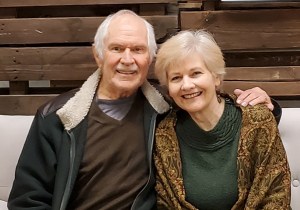
I want to take a “time out” in this installment of “You and God” to thank all of you who have faithfully prayed for Ellen and myself during this time. And when I mention Ellen, it is by design, for she has been a caregiver “par excellence!” Those of you who have suffered with, or are suffering with, a prolonged illness know full-well that the caregiver is placed under extraordinary stress, with demands that are life-altering on his/her time and attention.

Everyone with MM deals with different symptoms and side effects. It generally leaves one weak, especially in the extremities. I have not had a great deal of pain other than weakness in my legs, along with neuropathy. I do not have much energy, and my balance is pretty shaky. I have been blessed not only with an amazing caregiver here at home but with a team of superb Indianapolis doctors at both the St. Francis cancer center and the Indiana University Hospital, both within 15 minutes of our home. We are blessed with a devoted family; a caring church and pastor; and a cadre of praying friends hither and yon, some of whom assure us that they are praying daily for us.

One of my doctors told me more than a year ago that I would die of something other than MM. Well, I suppose that is a safe bet seeing that I am now 81 and it is certain that my normally allotted days upon this earth are soon to expire, one way or another! I have not achieved remission and may never, but for several months the doctors have said that I am “stable,” and they encourage me to “stay the course.” I have had the strength to preach a few times a month when called upon; and my desire to write has not diminished; so I feel blessed above measure. This summer, Ellen and I will celebrate 59 years of marriage, most all of which have afforded us good health, wonderful friends, fruitful ministries, and children who have always been loving, supportive, and caring. We would not have dared to pray for more than the blessings we have enjoyed!

So, since I generally do not like to make my health a topic of discussion—but am aware that most of you know of my health issues—I thought it appropriate on this four-year anniversary of “You and God” to take a “time out” to bring you up to date on what’s happening at our house, health-wise. Ellen is diabetic and has been able to keep that in check with medications and with meals that are recommended for diabetics. (That kind of diet is good for me, too!)

Again, thank you to all who assure us of your prayers! We do not have words for how much we deeply appreciate you all. Thank you for reading these bi-weekly posts and for occasionally replying with a comment. Life is good for us, and we surely have no complaints. Without a doubt, His mercies are new every morning; His love is matchless; His grace is all-sufficient; His Word is ever comforting, and His Spirit is a constant guide. His church is amazing, great hymns of the faith are inspiring, and our family is never far away—and always right here when needed. Yes, God is good.

The Lord bless thee and keep thee: The Lord make His face to shine upon thee, and be gracious unto thee: The Lord lift up His countenance upon thee, and give thee peace.” (Num. 6:24-26)

FYI:  All of the 416 posts are archived and at your fingertips. Here’s how to access them. Scroll to the bottom of this post until you read the words, “Read in Browser.” Click on that and you will get another posting of today’s blog. Scroll all the way to the bottom and past until, after the “Comments” box, you will see April 2024, March 2024, etc. You can find any month, all the way back to April 2020. Click on any one of those months and you will get a listing of the posts for that month with the titles. When you click “continue reading,” the entire post will come up and you can then read, copy, or send it.

Special thanks to my son Theo for proofing and doing some minor editing on my posts, and to my daughter Sandy Wagner who dresses each post up with some attractive design/artwork!

“Father of Mercies, God of all Comfort”

It was a typically cold winter morning, that first week of February, 1981. The children were all settled into their classrooms, and moms and dads were at their workplaces. That’s about where the word typical will have to cease in describing that fatal February morning.

At my desk in the office at Thompson Road Baptist Church, I received a call that Gerald “Butch” Doss, one of the deacons of our church, working on railroad tracks as an employee of Conrail, had been tragically and instantly killed as he and a fellow worker, dressed in warm winter parkas, had been cutting railroad ties on a track that was supposed to have been “dormant.” Butch had a huge chain saw in his hands as he was working a section of the track, and he never saw or heard the speeding train that swept by the two men, killing the young father of two.

It suddenly became a day of shock, weeping, and for a time stunned silence. Ellen and I immediately went to visit Butch’s wife, Brenda, who then lived just a few minutes from our church. There were no words—just hugs, tears, and pain. Butch and Brenda had taken our family in when we had moved to Indianapolis in the fall of 1979 to assume the pastorate here; as we were trying to find housing, they graciously kept our three children for I think two or three weeks, giving us time to find a house and get moved in.

Butch was the kind of deacon any pastor would love to serve alongside of! He was an encourager and a vibrant, growing believer who modeled godliness. Both he and Brenda soaked up the Word of God. Butch began a ministry of taping the services at our church, and his ministry was not limited to our local church; he had expanded it, making duplicated messages available to a wider audience. Back then, as I recall, the cassette-tape ministry was just starting to replace the old, cumbersome reel-to-reel tapes. Butch was zealous about sharing God’s Word with whomever would want to hear a taped version of the services.

My last memory of this good deacon was of the service he attended just before being called to glory. His face was beaming; he was excited about what God was doing in our church and was hopeful about what he believed God was going to do. His enthusiasm shone through with a big smile and a caring pat on his preacher’s back. He would not long thereafter be looking into the face of His living, loving Savior.

Having received the call that shattered our morning, and in a real sense our lives, Ellen and I made our way to the Doss home, where I would leave Ellen while I made my way to the school where the two Doss children, Sonnie and Eric, were in their classes. I conveyed to the principal what my mission was, and the children were quickly dismissed to my care. I drew deeply upon God’s grace and strength in sharing with them that their daddy had been killed by a train that morning. It was one of those moments you would have hoped would never come; one that you could never blot from your memory. I could not even imagine what was going through the hearts of those precious little ones.

Meanwhile, Ellen was with Brenda, and they were in each other’s arms. In a recent prayer meeting, our Pastor, Joel Stevens, taught a lesson from II Corinthians 1 about “the Father of our Lord Jesus Christ, the Father of mercies, and the God of all comfort.” Ellen shared a testimony that when she arrived at the Doss home that morning, Brenda told her that God had already been preparing her for this day, as early that very morning she had just been reading this passage in II Corinthians. Brenda’s words 43 years ago—words from God’s Word at the darkest moment of her life—still ring in Ellen’s heart and memory as words of comfort, yet reminders that He is one ”Who comforteth us in all our tribulation, that we may be able to comfort them which are in any trouble, by the comfort wherewith we ourselves are comforted of God.” (II Cor. 1:4). God’s Word, first and last, really does work, and it works for a lifetime.

This is not to say that there was not anguished suffering; there was! Physical, emotional, mental, and spiritual agonies of body, mind and soul were to assault Brenda and her family for an indefinite period of time. The aftershocks will never fully fade away this side of glory; but neither will God’s sustaining grace and comforting consolations.

Brenda taught English in a local Christian academy for several decades after Butch’s homegoing. For more than 50 years, she has faithfully attended and served her Lord at Thompson Road Baptist Church in many capacities including church secretary, women’s Sunday School class teacher, and member of the choir. In time, God gave her a wonderful husband in the person of Donald Harris—a Vietnam veteran who, saved out of a religious background that majored on works, has been a caring and devoted husband and, for 47 years now, a stalwart and faithful servant of God here at TRBC.

Some near-crippling physical issues have taken a toll on Brenda, so that mobility challenges now limit her church attendance. But no one who knows her doubts that when the church gathers for worship, she is in their midst, either in body and spirit or in spirit—singing, praising, bowing in her Savior’s presence, all the while looking forward to that day when our faith will be made sight; and that grand reunion of the church, the rapture, will be called at the sound of the trumpet to summon our meeting with the Lord in the air. And so shall we ever be with the Lord.

Then we which are alive and remain shall be caught up together with them in the clouds, to meet the Lord in the air: and so shall we ever be with the Lord. Wherefore comfort one another with these words.” (I Thess. 4:17,18)

Fundamentalism Today (Part 2)

Continuing my “table talk” discussion of the landscape of fundamentalism today, as seen through the eyes of this aged pastor who has been privileged to serve churches in the latter part of the 20th century and the first couple of decades of the 21st century, I want to speak to a few other subjects that are significant in any discussion of the subject.

Cultural considerations: Of course, over a period of 60 years there are bound to be many cultural drifts, some gradual, some not so subtle. When I was a young pastor in the early 70’s, long hair on men and short skirts on women began to surface, and for people who had grown up in the 1940’s and 50’s, these outward breaks with past norms were problematic. Standards that were not negotiable in fundamental churches became issues to debate. Women would never wear “pants” or slacks to church in the 60’s, or some even in the 70’s. Today, in almost any independent Baptist church, most of those externals have been pretty much laid to rest and one might see any or all of the above in any assembly on any given Lord’s day. No longer are they “issues.” Cycling through those years with changes that people had decided opinions on was a challenge to most pastors. Some who majored on the theme of “grace” were considered not to be fundamental, and others who homed in on the old standards were considered to be legalistic. Today these old battles have been for the most part put to rest, but at the apex of the evolving attitudes, there was a climate that sometimes was unattractive in our fundamental circles.

Versions and translations: Also, the past half-century has witnessed debate and division amongst those who are known as fundamentalists over issues surrounding the plethora of modern Bible versions and translations. When I was a child, I remember in our home there was a copy of the “Amplified” version of the Bible. No thought was given to the idea that it was not a legitimate copy of God’s Word. But today, beginning in the early 70’s with Kenneth Taylor’s paraphrase The Living Bible, the market has been flooded with all sorts of translations and versions of the Holy writ. Of course, there have been sometimes raging debates over the validity of the newer translations, as opposed to the “authorized” King James (TR) Version that was first published in 1611. The debate is not roiling as much today, but it still simmers, and there are those both for and against new versions that would go to the stake defending their position. People have called those who differ with them all sorts of bad names, written them off as unbelievers, severed any kind of fellowship with them and considered them anathema. It was, at times, ugly. But it is part of the history of fundamentalism today and cannot be ignored.

Pastoral/Ministry Ethics. I have witnessed an erosion of basic ministerial ethics in the course of the time that I have pastored. Like divorce, moving from one Bible-preaching church to another used to be rare. Not so much now. As one member once said, with no accompanying explanation following a Sunday morning service, “We’ll be moving on now”— meaning it would be his last Sunday at the church. Many leave at the drop of a hat, over any issue or no issue. In our city, you can drive 10 minutes from our church and pass by more than one fundamental church. The options are almost limitless; thus the “musical church hopping.” What’s more depressing: Many pastors seem not to discourage it and fail to even initiate a courtesy call to the pastor of the visitors who are “church hopping.”

Sectarianism in fundamentalism. To be honest, the landscape of what we call fundamentalism is so broken up that “tip-toeing through the tulips” has taken on new meaning. A missionary, evangelist, or pastoral candidate has to line up squarely with the right version of scripture, the right Bible college, the right dress standard, the right song book, the right mission board—ad nauseum—if he is to be accepted. Independent churches and pastors too often have become “islands” to themselves and their flock, all in the name of biblical separation, “bless God!” It is a 21st century scandal in ministry, and it answers the question: “Why do we not experience revival today?”

Well, I think I have said (maybe more than) enough. That’s how I see things as I look out on today’s fundamentalism. Who’s to blame? No one (except Satan). It’s a sign of the times, and so much the more as we see the day approaching. So, be encouraged. Keep on keeping on. Practice brotherly kindness and charity. (II Pet.1: 7) And, look up, for our redemption draweth nigh!

(Comments, pro and con, of course are welcomed. I do not pretend to “know it all” or even to have the best perspective on the subject. Share your thoughts if you care to. I may do a part 3, and if so it will focus on corporate worship and a few doctrinal issues. Stay tuned.)

“Beloved, when I gave all diligence to write unto you of the common salvation, it was needful for me to write unto you, and exhort you that ye should earnestly contend for the faith which was once delivered unto the saints.” (Jude, v. 3)

Fundamentalism Today

I write this post and the next in a bit of a different mode; consider it “table talk” over a cup of coffee as an old preacher, not far from glory’s shore, shares some candid thoughts.

I’ve given considerable thought of late to “fundamentalism.” It is, after all, a movement with which I have identified all of my life as a student, then as a pastor, and now as a “retired” pastor who lives every day with an incurable disease. I have, then, no axe to grind and nothing to prove, but merely some observations to share.

I was saved as a youngster, not yet 10 years of age, under the preaching of Pastor Harold Day, who labored over the flock of God that met weekly on North Court street in Ottumwa, Iowa, known as the North Court Baptist Church. It was affiliated with the General Association of Regular Baptist Churches. Pastor Day was an unashamed fundamentalist, warning his flock of the apostacy which he saw then, in the mid-1950s, gaining ground through such organs as the National Council of Churches. He was a dispensationalist, and about the only Bible college that I remember him speaking of was the Omaha Baptist Bible Baptist Institute (today known as Faith Baptist Bible College in Ankeny, Iowa).

When I was a teenager, my parents joined a church on Ottumwa’s south side, pastored by Rev. Keith Knauss, a good Bible teacher/pastor who pastored the Calvary Baptist Church, then affiliated with the Conservative Baptist Association of Churches. Pastor Keith channeled all the young people he could to Pillsbury Baptist Bible College in Owatonna, Minnesota, a fundamental Bible college then led by Evangelist Monroe Parker.

Also on the south side of our city was the Ottumwa Baptist Temple, a church that lined up with the Bible Baptist Fellowship. The pastor, A.D. Pringle, favored the then newly formed Baptist Bible College of Springfield, Missouri, where my oldest sister attended as a classmate of a student from Virginia who would become quite well-known, Jerry Falwell.

So, my background, when I enrolled at Bob Jones University in 1962 was in Bible-preaching, fundamental, dispensational churches. Upon completion of my training for ministry, I accepted a call to pastor Gideon Baptist Church of Wichita, Kansas, an independent church with a history of lining up with the Bible Baptist Fellowship, as several other churches in the greater Wichita area did at that time. In 1979, I accepted a call to pastor the Thompson Road Baptist Church to succeed Pastor Fred Moritz, a former seminary classmate of mine who resigned the Indianapolis church to go into full-time evangelism. He later became assistant director, under the leadership of Dr. Monroe Parker, of Baptist World Mission—and would eventually become its executive director, a job he so ably discharged for more than two decades.

When I settled into the pastorate of Thompson Road Baptist Church (TRBC) in the fall of 1979, I soon learned of the Indiana Fundamental Baptist Fellowship of Churches (IFBF) and would be a member of this strong state body of independent Baptists for the duration of my ministry as a senior pastor. So, from the time I became a believer through faith in Christ, through the years of my training and then pastoring, I have always been in the fundamentalist camp, specifically in the Independent Baptist branch of fundamentalism. I have encouraged young people to attend a Christian college that believed the fundamentals of the faith; and I have recommended to the churches that I have pastored missionaries sent out by churches of like faith, serving under the auspices of mission boards that were known as conservative, independent, and fundamental. I always have been, therefore—and am to this day—a fundamentalist without apology. So, looking at the landscape of the movement I have been identified with for more than half a century in ministry, what do I see?

Schools/Colleges. Many of the colleges that I could recommend to young people early in my ministry are no longer in existence. Some that are struggle to maintain open doors. The mood of many of today’s youth is career focused, and the colleges that once trained hundreds of preachers have shrunken ministerial classes that are dwarfed in size compared to the classes of yesteryear. Schools that once trained missionaries that had hearts burning to reach lost souls and cities in fields far and near no longer specialize in the training of vocational missionaries. Some few schools still major in missions and ministry, but most are not large schools, though one can and should be thankful that there are some who are “staying by the stuff” in this lukewarm spiritual climate.

Fellowships/Associations. Many of the fellowships and associations of churches that were once ablaze in banding together for revival, missions, and church planting are no longer true to their original mission. Compromise on the basics, sectarianism, isolationism, and other trends have gutted their once hard-core militant stand on the fundamentals of the faith, so that they are today a shell of their original founding body.

(to be continued)

Add To Your Faith Love (8th and last in series)

Seven essential building blocks are listed in II Peter 1:5-7. Six of these we have already covered: virtue, knowledge, temperance, patience, godliness, and brotherly kindness. We come now to the seventh, charity.

Today, brotherly kindness and charity are often thought of as synonymous. Not so, though, in the Greek mind; and the fisherman-Apostle Peter wrote these words employing the Greek language of his day; thus, it will help to understand the nuances of these two words if we check out the differences as first written, as opposed to the English translation.

First, brotherly kindness is just one word, philadelphian, a word that refers to a kind of tender affection—something close friends enjoy in a soul-binding friendship, much like that of David and Jonathan’s loyal and deep affection for one another.

On the other hand, the word “charity” here, which is transliterated as agapao, refers to a selfless, sacrificial love of the highest degree. This word is used often by Jesus in the gospel of John, as in John 3:16, where the Son said of the Father that He “so loved (agapao) the world that He gave His only begotten Son.”

To our faith, then, we must apply all diligence to add this love that only flows from the heart of Him who is love, for “God is love.” (I John 4:8)

Now, I must at this point admit that I “blew it” when, in an earlier installment of “You and God” in this series, I said that temperance was the only building block in this list of “add-ons” in II Peter 1 that was also mentioned in Paul’s listing of the fruit of the Spirit in Galatians 5:22,23. It is not! Love, translated “charity” in II Pet.1:7, is the same as the first fruit that Paul mentions in his list in Galatians, which begins with love, joy, peace, etc. I missed it as I focused on the word “charity” in the II Peter list. My bad! It does prove this: Any speaker, writer, or teacher who speaks often or writes much will have to make a retraction sooner or later. I have taught this passage and preached from it many times, yet I flubbed this one. Thanks for your “kindness.”

Thus, as with temperance, so with charity: We can only add these traits by surrendering to the Holy Spirit. There is NOTHING within us that can produce love, which can only come from the heart of God. Brotherly kindness is different. We can work at that, and if our heart is right with God, by our words and deeds we can treat others with a friendship that can only be described as “kindness.”

Now, if we have agapao love within our hearts, it will be evident that we will (1) Love God, (2) Love our neighbor, and (3) Love our enemies.

(1) Love God. God is love, and if He is in us then—and only then—can we love God. (I John 4:16) One wise person said, “On the whole, God’s love for us is a much safer subject to talk about than our love for Him.” John put it this way: “We love Him because He first loved us.” (I John 4:19)

In John 21, there is an interesting post-resurrection appearance of Jesus with some of His disciples as they had enjoyed breakfast together. Three times, Jesus bluntly asked Peter, “Do you love me?” The first two times, Jesus employed the word “agapao.” Do you love with a love in your heart like God the Father’s love? Selfless. Self-sacrificing. Genuine. Absolute love. Each time, Peter said in response, “I phileo you” (i.e., have tender affection, friendship for you). Having denied Jesus three times when His Lord stood before Pilate—just after having affirmed that he would never deny Jesus but would, if necessary, die for Him—Peter now would not let himself say, “I love (agapao) You, Lord.” Jesus again posed the question, “Do you love Me?” But this third time, Jesus used the word “phileo.” And for the third time, Peter replied, “I love (phileo) You.” A play on words, to be sure, but a keen insight into both the Savior’s heart for His Apostle and the Apostle’s heart for his Savior. Jesus got into the depths of Peter’s soul, and accepted his confession that at that particular moment—what with the recent history of denial fresh in Peter’s mind—he was unable to use the word “agapao,” the highest and deepest God-like love, in telling how he felt for Jesus. Jesus accepted that, and in turn commissioned Peter to feed His sheep. Peter would do that, as we learned in Acts. And now, in his epistles, he bids his brethren to add to their faith “agapao” love.

(2) Love our neighbor. Jesus told His followers of the good Samaritan, a story which underscored the truth that our neighbor is anyone who is near us and in need. (Luke 10:29-37) James 2:8: “If ye fulfill the royal law according to the scripture, thou shalt love thy neighbor as thyself, ye do well.”

(3) Love our enemies. In His extended sermon in Matthew 5:43,44, Jesus said that we should not only love our neighbor, but that we should also love our enemies and even “bless them that curse you.” This kind of treatment of those who despitefully use us can only be the result of God’s love coming from us to others.

So, add to your faith LOVE. The Christian life has faith as its foundation and love as its crown of glory. We are to add love—the love of God, love of neighbors and love of our enemies. Believers who have added to their faith these qualities will neither be spiritually barren nor blind. (II Peter 1:8,9)

“For if these things be in you, and abound, they make you that ye shall be neither barren, nor unfruitful…but he that lacketh these things is blind, and cannot see afar off, and hath forgotten that he was purged from his old sins.” (2 Pet.1:8,9)

To Those in Ministry

“Isn’t it strange that princes and kings, and clowns that caper in sawdust rings, and common folk like you and me, are builders for eternity? To each is given a bag of tools, a shapeless mass, and a book of rules; and each must build ‘ere life has flown, a stumbling block or a stepping stone.” (“A Bag of Tools,” R. Lee Sharpe)

Strange indeed! But even stranger that God would save the weak, the base, the despised, and the foolish—and use them to build His church and further His kingdom! But it’s true; therefore, it is incumbent upon us to take to heart Paul’s admonition in his epistle to the church at Colossae, when he wrote: “And say to Archippus, Take heed to thy ministry which thou hast received in the Lord, that thou fulfill it.” (Col. 4:17)

I have addressed these words “to those in ministry,” and every person who has confessed Christ as Savior has a ministry to discharge faithfully for the Lord. Peter says that “as every man hath received the gift, even so minister the same one to another, as good stewards of the manifold grace of God.” (I Pet. 4:10) The gift Peter speaks of is the gift with which the Holy Spirit has endowed each believer, meted out at the moment of one’s salvation. Peter says, “every one of you has received a spiritual gift for use in ministry.” Paul reiterated that in Eph. 4 when he wrote that He (Christ) gave gifts unto men (v. 8), including apostles, prophets, evangelists and pastors-teachers. These gifts, Paul said, were “for the perfecting of the saints, for the work of the ministry, for the edifying of the body of Christ.” (Eph. 4:11,12) Another and more complete list of spiritual gifts occurs in Romans 12:6-8: “Having then gifts differing according to the grace that is given to us, whether prophecy, or ministry…teaching…exhortation…or he that giveth…he that ruleth, he that sheweth mercy.” Other spiritual gifts are mentioned in I Cor. 12. So, God has equipped, by His Holy Spirit, the Church He founded with men and women who are gifted for ministry in the Body of Christ for the purpose of edifying the Body.

You, if you have been redeemed, have a spiritual gift. You received it when you became a follower of Christ. It was given to you not to keep to yourself, not to show others how gifted you are, but to use in ministry to build up the Church that Christ loved and died for. Just like Archippus. How are you doing with your gift and the use of it? No believer can plead ignorance by saying, “I’m not sure what my gift is.” God does not give gifts to people so that they can figure out what the gift is. He will shew you plainly, and it behooves each of us to “take heed to the ministry” that we have received. The Devil has darts of discouragement, of doubt, of disappointment, discontent, detours and distractions. Take heed that you are faithful and fruitful, and that your ministry is, at the last, fulfilled:

1) Faithful. Faithful to your calling, which is a high calling. “I press toward the mark for the prize of the high calling of God in Christ Jesus.” (Phil. 3:14) Not only is it a high calling; it is a holy calling: “Who saved us and called us with an holy calling.” (II Tim. 1:9) And, too, it is a heavenly calling: “Wherefore, holy brethren, partakers of the heavenly calling.” (Heb. 3:1) Faithful to our calling means that we will “study to shew ourselves approved unto God” (II Tim. 2:15); pray without ceasing (I Thess. 5:17); love one another (John 15:12); stand (Eph. 6:14); watch (Matt. 24:42); occupy (Luke 19:13); and contend (Jude 3), among many other things.

2) Fruitful. Not “successful,” nor “acclaimed,” nor “popular,” nor “well off,” but fruitful. Jesus: “Ye have not chosen me, but I have chosen you, and ordained you, that ye should go and bring forth fruit, and that your fruit should remain.” (John 15:16)

3) Fulfilled. Paul said, “I have fought a good fight, I have finished my course, I have kept the faith.” (II Tim. 4:7) He knew his death was pending, but he could say, “I am now ready to be offered.” Archippus, Paul had exhorted, was to fulfill the ministry he had received. Paul fulfilled the ministry that God had given him and for which the Holy Spirit had equipped him.

Babe Ruth was the “home-run king,” but he once said, “Most of the people who have really counted in my life were not famous. Nobody ever heard of them except those who knew and loved them. I was acquainted with an old minister once. His hair was white and his face shown with joy. I have written my name on thousands and thousands of baseballs in my life. The old minister wrote his name on just a few simple hearts, but how I envy him! He was not trying to please himself, so fame never came to him. I am listed as a famous home-run hitter, yet compared to that obscure preacher, who was so good and wise, I never got to first base.”

Take heed to your ministry: Faithful. Fruitful. Fulfilled.

“Henceforth there is laid up for me a crown of righteousness; which the Lord, the righteous judge, shall give me at that day; and not to me only, but unto all them also that love His appearing.” (2 Tim.4:8)


Another Easter Celebration

He thought he’d won--
The Devil, called the Wicked One.
The soldiers jeered, the wild crowed yelled;
By nails, His hands and feet were held.

His body bruised, the crucified;
The sun did blush the day He died;
While demons clapped their hands in glee,
God’s Son did die on Calvary.

The day was dark, the deed was done.
The serpent thought the battle won.
But as the prophets all had said,
Christ would not stay among the dead.

Three days and nights, in God’s grace plan,
And Christ would shed the cold death band.
He rose victorious o’er the grave!
His life He gave the world to save.

We celebrate the empty tomb,
We wait to greet His coming soon;
One sacred Sunday He arose,
Victorious over all His foes.

He came, He died, He rose, He lives!
And now eternal life He gives,
To all who come confessing Him,
As Lord and Savior from all sin.

Rejoice today, rejoice and sing!
Sing praises to the coming King;
By faith we’ll surely live and be,
With Jesus for eternity!

Pastor Slutz
Easter 2024

Ellen and I wish you all a blessed Easter!

The Crucifixion Week

It is often referred to as the “Holy Week,” the last week upon earth of Jesus’ life amongst men as the God-man, culminating in the cruel cross crucifixion.  It serves us well to be reminded often of the unspeakable Calvary event, unspeakable because of the rejection of Jesus by His own whom He came to redeem; yet, precious because of the atonement that His dying secured for all men, specially for those who believe. (I Tim.4:10)  The following is an outline of the events of His last week:

On the Sunday before He was nailed to the cross, Jesus entered Jerusalem on a colt, fulfilling Zechariah’s prophecy that Messiah would come as King “riding upon a colt, the foal of an ass.” (Zech. 9:9)  On that day multitudes cried “Hosanna to the Son of David,” (Matt. 21:9) yet just a few days hence the crowds would be crying “crucify Him, crucify Him!” Luke notes that “when he was come near, he beheld the city and wept over it.” (Luke 19:41)

On Monday, approaching the city, Jesus curses a fig tree that appeared to be at the stage of fruit bearing but was instead barren.  Arriving in Jerusalem at the Temple site, Jesus surveys the merchandizing taking place in His “Father’s House,” and responds by turning upside down the moneychangers’ tables, driving them out as He proclaimed that “…it is written, my house shall be called a House of Prayer; but ye have made it a den of thieves.” (Matt. 21:13)  He had similarly done this temple cleansing at the beginning of His ministry as John records in his gospel, chapter 2. 

Tuesday was an extended teaching day for Jesus, beginning in the Temple teaching His disciples in parables and continuing just outside the Temple where the disciples asked Jesus about the end of the age issues.  Those questions (Matt. 24:3) initiated a lengthy discourse of Jesus, recorded in Matthew 24, 25, called the Olivet Discourse, in which Jesus gave signs that would precede His 2nd coming, and the great tribulation that would take place just prior to that coming; and the judgment of the nations that would immediately follow His return to earth in power and great glory. (Matt. 25)

On Wednesday of “Holy Week” Jesus, at dinner in the home of Simon the leper, had His head anointed by a woman who poured over Him a box of very precious ointment.  The disciples rebuked the woman, but Jesus rebuked the disciples and commended the woman, while Judas Iscariot slipped out of the room to seek out Pharisees with whom he could conspire to betray His Master.

On Thursday afternoon, the first day of the feast of Unleavened Bread, Jesus instructed Peter and John to secure an upper room where He and the disciples could share in the Passover Supper together. It was after this meal that Jesus washed His disciples’ feet, then revealed that Judas would betray Him, while He also warned His followers of their pending denial of Him.  Our Lord instituted the memorial of the Last Supper, (Luke 22:17-20) then launched into a farewell discourse, (John 14-16) climaxing with His great Intercessory Prayer, (John 17) followed by a short walk to the garden of Gethsemane on the Mount of Olives where Jesus uttered the agonizing petition, “Let this cup pass from me, nevertheless, not my will but Thine be done.”  It was under the cover of an early morning blanket of darkness that Judas then led his cohorts in crime to the garden, betraying Jesus with a kiss, feigning love and loyalty, resulting in the arrest of Jesus and His hearing before Annas, former High Priest and father of Caiaphas, the then current High Priest, before whom Jesus would next stand to be interrogated along with being accused, mocked, charged with blasphemy, beaten, blindfolded and reviled. 

Friday morning, early, Jesus was formally condemned by the Sanhedrin, about the time, interestingly, that Judas, beginning to feel the awful consequences of his betrayal of the Son of God, went out and hanged himself.  Jesus was led to Pilate where the Roman governor asked Him point blank “Art thou the king of the Jews?”  In keeping with the custom of releasing a prisoner on such festive feast days, the blood-thirsty crowd demanded that the seditionist-murderer Barabbas be released and that Jesus, King of the Jews, be crucified.  Pilate, learning that Jesus was from Galilee, sent Him to Herod Antipas to be judged, and it was before Herod that Christ was mocked, dressed for a few moments in a gorgeous robe, and then sent back to Pilate where he was chastised and crowned in mockery with a crown of thorns.

Friday morning, between 6:00 a.m. and 9:00 a.m., Jesus continued to be mocked and scourged by soldiers and then, with reservations, released by Pilate to the frenzied crowd.  He is led to Golgotha just a little before 9:00 a.m. and nailed to the cross where He would hang between two thieves from 9 until noon, during which time Jesus would utter “Father, forgive them,” and to the repentant thief “This day thou shalt be with me in Paradise,” and to His mother, “Woman, behold thy son,” and to the beloved John, “Son, behold thy mother.” His garments were parted, and soldiers cast lots to see who would get what; and a superscription was written in Hebrew, Latin and Greek, “This is Jesus of Nazareth, the King of the Jews.”  Jesus would suffer hanging upon the hill called Golgotha for another three hours from noon until 3:00 p.m. crying out four more times:  “My God, My God, why hast thou forsaken me?” and “I thirst,” “It is finished,” and finally, under a darkened sky where neither sun nor moon shone and where the earth was about to quake, Jesus cried “Father, into Thy hands I commend my spirit.” Immediately Matthew tells us that the veil of the Temple was rent from the top to the bottom, the earth did quake, some tombs of Old Testament believers were opened, and some Old Testament saints were observed walking the streets of Jerusalem. (Matt. 27:52) The Centurion Soldier at the cross was overheard saying, “Truly this was the Son of God.”  Jesus had died for the sins of the world; then He was carefully anointed for burial before being placed into the never before used tomb of a wealthy man from Arimathaea, Joseph, who was  also a follower of Jesus.

After three days and three nights, (by Jewish reckoning any part of a day is a day, night is a night) Jesus rose victorious over death, hell and the grave, whereupon He appeared to many of His followers before ascending back into the heavens in a visible display of His power and great glory, the full display of which is being reserved for His 2nd coming at the conclusion of the Great Tribulation. (Matthew 24,25)

Behold He cometh with clouds; and every eye shall see Him, and they also which pierced Him:  and all kindreds of the earth shall wail because of Him.  Even so, Amen.” (Revelation 1:7)

(This “You and God” post is a reprint of a March, 2021 article on the Holy Week)

Add to Your Faith Brotherly Kindness (7th in Series)

The foulest, vilest, most wretched member of the human race has hopefully been loved at some time by someone—a mother, father, sister, brother, friend, or sweetheart. Just as a baby cannot survive without milk, so a human being cannot survive long without love.

Thirteenth-century Roman Emperor Frederick II allegedly experimented with infants, isolating them from the speech of any human being. A historian recounted the experiment thusly:

“He wanted to find out what kind of speech children would have when they grew up if they spoke to no one beforehand. So, he bade foster mothers and nurses to suckle the children, to bathe and wash them, but in no way to prattle with them or speak to them, for he wanted to learn whether they would speak Hebrew, Greek, Latin or Arabic, or perhaps the language of their parents. But he labored in vain, because the children all died. They could not live without the caressing and joyful faces and loving words of their fathers and mothers.”

Just as the children of that inhumane experiment could not long survive without kind words and loving interaction of other human beings, so the church of the living God will not thrive without members who have intentionally added to their faith loving kindness. The word Peter employs here is from a Greek word that is almost identical to the English word Philadelphia, brotherly love. Sometimes it is used almost interchangeably with agapao, the Greek word for the highest kind of love, as in I Thess. 4:9 and I Pet. 1:22. In each of these two verses, both words are used, Philadelphia first (brotherly kindness) and agapao second (God-like love). The word in II Peter 1:7 is translated “brotherly kindness,” and the basis for all brotherly kindness or brotherly love is the love that originates in the heart of God and is inextricably a part of His nature, agapao love.

It is instructive to note the commands, the character, and the consequences of brotherly kindness:

(1) The commands:

⇒“Be ye kindly affectioned one toward another with brotherly love.” (Romans 12:10);
⇒“But as touching brotherly love ye need not that I write unto you: for ye yourselves are taught of God to love one another” (I Thess.4:9);
⇒”Seeing ye have purified your souls in obeying the truth through the Spirit unto unfeigned love of the brethren, see that ye love one another with a pure heart fervently.” (I Pet.1:22)

Jesus said that our loving kindness toward the brethren would be like a badge whereby “shall all men know that ye are my disciples, if ye have love one toward another.” (John 13:35) An unbelieving Greek wrote of Christians in about 120-200 A.D.: “It is incredible to see the fervor with which the people of that religion help each other in their wants. They spare nothing. Their leader (Jesus) has put it into their heads that they are brethren.”

(2) The character:

⇒It can be costly: As John said that as Christ laid down His life for us, “we ought to lay down our lives for the brethren” (I John 3:16).
⇒It is compassionate: When we see a brother in need, we must not shut up our bowels of compassion from him, for “how dwelleth the love of God in him” (the brother who would not be moved to help another brother in need)? (I John 3:17)
⇒It is constant, through thick or thin. “A friend loveth at all times.” (Provs. 17:17) Jonathan loved David “as he loved his own soul.” (I Sam.20:17) And so we ought to love one another in adversity, through arguments, and in life’s most anguishing moments.

(3) The consequences:

⇒Relating to the world: Jesus said all men would know we belonged to Him because of our love one to another. “It is our care for the helpless, or practice of loving kindness that brands us in the eyes of many of our opponents. ‘Look!’ they say, ‘how they love one another! Look how they are prepared to die for one another!’” (Early Christian author and apologist Tertullian)
⇒Relating to the body of Christ: loving kindness will cover a multitude of sins. “Above all, have fervent charity among yourselves for charity shall cover the multitude of sins.” (l Pet.4:8) Also, it will produce unity in the body: “Better is a dinner of herbs where love is than a stalled ox and hatred therewith.” (Provs. 15:17) Finally, it will lend itself to growth, for there is nothing more compelling and attracting than brethren dwelling together in the sweetness of unity that is the expression of loving kindness one toward another.
⇒Relating to one’s self: Brotherly kindness will give you a settled assurance that you are one of Christ’s: “We know that we have passed from death to life, because we love the brethren.” (I John 3:14)

“Is it worthwhile that we jostle our brother, bearing his load on the rough road of life? Is it worthwhile that we jeer at each other, in blackness of heart that we war to the knife? God pity us all in our pitiful strife; God pardon us all for the triumph we feel when a fellow goes down ‘neath his load on the heather, pierced to the heart: words are keener than steel; and mightier far for woe or for weal.” (Joaquin Miller)

Is it worthwhile? Not at all. Choose brotherly kindness!

“Let brotherly love continue.” (Heb.13:1)

You Bet Your Life!

Indiana, a mainly conservative Midwestern state where my wife and I have lived for more than half a lifetime, has legalized just about every form of gambling that could be made legal. The most recent is “sports betting,” legalized by a bill passed by the majority of state legislators, mostly Republican. On Sept. 1, 2019, at the Indiana Grand Racing and Casino in Shelbyville, it was signed by the governor, who cast the very first legal sports wager in our state. His rationale was that modernizing Indiana’s gaming law would stimulate the state’s economic growth, creating jobs and attracting industry. This in spite of the fact that states that have expanded legal gaming have experienced more undesirable results.

The National Coalition Against Gambling Expansion says gambling is a moral issue. Consider, they say, that gambling not only causes addiction but increases bankruptcy, crime, suicide, and divorce; damages the economy; cannibalizes jobs; and corrupts politics. These conclusions are based upon credible studies in states where various forms of gambling have been legalized. (National Coalition Against Legalized Gambling, www.ncalg.org)

It is demonstrably a moral issue; it is a spiritual and biblical issue. The wise word from Solomon’s pen states that “He that is greedy of gain troubleth his own house, but he that hateth gifts shall live.” (Provs.15:27) Paul reinforces that ancient wisdom in I Tim. 6:9,10: “But they that will be rich fall into temptation and a snare, and into many foolish and hurtful lusts, which drown men in destruction and perdition. For the love of money is the root of all evil; which while some coveted after, they have erred from the faith and have pierced themselves through with many sorrows.”

The files of Gamblers Anonymous, as reported in U.S. News and World Report, corroborates these scriptural admonitions: One man said, “Once I was hooked, any wager would do. I would give odds on how many cars would pass over a bridge in the space of ten minutes.” Another victim testified: “I stole vacation money from the family sugar jar. I spent every waking hour thinking about how to get to the track.” Still another: “When I was at the blackjack table, my wife could have been home dying of cancer, and I could have cared less.” Ronald P. said: “I degraded myself in every way possible. I embezzled from my own company. I conned my six-year-old out of his allowance.” And, Archie K. wrote: “After I woke up from an appendectomy, I sneaked out of the hospital, cashed a bogus check and headed for my bookie. I was still bleeding from the operation.”

No wonder the strong warnings in God’s Word: “He that hasteth to be rich hath an evil eye and considereth not that poverty shall come to him.” (Provs. 28:22)

“The desire of the slothful killeth him; for his hands refuse to labor; he coveteth greedily all the day long: but the righteous giveth and spareth not.” (Provs. 21:25,26)

“Wealth gotten by vanity shall be diminished: but he that gathereth by labor shall increase.” (Provs. 13:11)

“Labor not to be rich: cease from thine own wisdom. Wilt thou set thine eyes upon that which is not? for riches certainly make themselves wings; they fly away as an eagle toward heaven.” (Provs. 23:4,5)

James Dobson, in a Focus on the Family newsletter, once cited the U.S. Bureau of the Census Statistical Abstract when he said, “Did you know that Americans gamble more money each year than they spend on groceries?” Or that one in five homeless people admitted that gambling contributed to their poverty; yet 37% of them said that they continue to gamble. Or that 75% of pathological gamblers admitted that they had committed at least one felony to support their habit?

Yet 48 states have legalized some form of gambling, even as crime rates soar. In the city of Indianapolis, host to all kinds of conventions and gatherings, including the 2024 NBA All-
Star game, one or more murders are reported almost nightly; in 2023 there were a total of 216 homicides.

It is so deceitful, the lure of instant fortune. A math professor pointed out that the chances of winning the California lotto jackpot are about one in 18 million. If you have to drive 10 miles to buy this ticket, you are three times more likely to be killed in an automobile accident on the way to win the jackpot. Or, he continued, if you stood all the losers of this lottery in a line, it would be 6,800 miles long, more than the distance from Manhattan to Tokyo. Or, if you bought 50 tickets per week, you ought to win once every 6,923 years. So, you should be due to win any day now—if you started about 5,000 B.C.

No believer should be engaged in any form of gambling activity; no state will better itself economically, socially, or morally by legalizing gambling. Shame on the Indiana legislative body that has endorsed this moral blight in our Hoosier state.

Righteousness exalteth a nation: but sin is a reproach to any people.” (Provs. 14:34)