Thanksgiving 2021

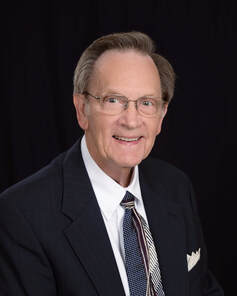
Ellen and I want to express to each of you our heartfelt appreciation for your prayers and friendship through the times past. We look forward to serving Him together until we receive from Him our “upward” call. Our prayer for you and yours is that you will enjoy His grace and goodness continually and that He shall grant you the desires of your heart.  We sincerely wish you all a “Happy Thanksgiving!”

Thanksgiving 2021

Thank you, Lord, for grace that’s sure,
	Thank You, too, for love that’s pure;
Thank You for Your mercies given,
	From Your storehouse there in heaven.

We give thanks for daily bread;
	For the Church with Christ as Head;
Grateful hands we lift in praise,
	We will serve You all our days.

Thank You for a mother’s sigh,
	Thank You for a baby’s cry;
Thank You for the Home that’s sweet,
	Where the family loves to meet.

Gladly we do raise our song,
	With our voices all day long.
Your Son came to bear His cross,
	In our place He suffered loss.

Sins He bore there on the tree,
	So that sinners could go free;
From Your Son You hid Your face,
	Death He suffered in our place.

From the grave our Savior rose;
	He triumphant o’er His foes;
By Your power death’s bands were broken,
	Empty tomb is our sure token.

We await our Lord’s return,
For His coming we do yearn.
Till He comes again from Heaven,
	Grateful will our praise be given.

Anthony Slutz
November, 2021

The Lord bless thee and keep thee: the Lord make His face shine upon thee, and be gracious unto thee:  The Lord lift up His countenance upon thee, and give thee peace.” (Numbers 6:24-26)

What Can Make Me Whole Again?

Some years ago, at the Great World Fair, held in the city of Chicago, there was said to be a meeting of people representing the various religions of the world.

At that meeting was an old-fashioned Bible believing preacher who set out to demonstrate the superiority of Christianity. To do so, he began to quote Shakespeare’s LADY MACBETH. He recited the famous piece of literature and brought out, as it were, Lady Macbeth onto the stage and had them listen to her as she looked at her hands stained with the blood of a murderess.  “Out damned spot, out damned spot, out, out I say!”

Then the old preacher said, “Is there anyone here today representing a religion that can cleanse the hands of Lady Macbeth? Cleanse her from her murderous blood? From her guilt…who has a religion that could cleanse her hands of this damnable spot?”

It is said that one stood to his feet and said, “I have no remedy for cleansing, but had I been able to talk to Lady Macbeth before she had sinned, I might have been able to keep her from sinning.”

Another stood to his feet and said, “I have no remedy for cleansing, but if I could have talked to Lady Macbeth, I could have helped her have peace of mind in spite of the fact that her hands were stained with blood.”

The old preacher said again, “Is there anyone here who has a remedy for cleansing this spot from the hands of Lady Macbeth? Who can remove it?  Who can get it off her hands?”

No one had a remedy. Finally, the preacher said, “Only Christianity has a remedy. The blood of Jesus Christ cleanses from all sin!”

“What can wash away my sin? Nothing but the blood of Jesus!  What can make me whole again? Nothing but the blood of Jesus?”

A bedrock of the Christian faith from the beginning has been, is and always will be its belief in the absolute necessity of the shed blood! No man from Adam on has ever been saved apart from the blood!

The preaching of the blood has become distasteful to many; some consider it out of date, unsophisticated. But to the believer, it is precious. Basic, blessed and bold is this doctrine concerning the shed blood of the Lord Jesus Christ.

Basic: The blood was basic before the Revelation of the Old Testament ritual. It was basic at the time of man’s fall into sin. Gen.3:21: “And unto Adam also and to his wife did the Lord God make coats of skin, and clothed them.”  The coats covered their nakedness, but the blood covered their sins.

The blood was also basic after the fall. Gen.4:4: “And Abel, he also brought of the firstlings of his flock and of the fat thereof. And the Lord had respect unto Abel and to his offering.” Exodus 12:13: “And the blood shall be to you for a token upon the houses where ye are: And when I see the blood, I will pass over you, and the plague shall not be upon you to destroy you.”

The blood was basic under the Old Testament economy of a ritualistic system. Lev. 4:4-6: “And he (the priest) shall bring the bullock unto the door of the tabernacle of the congregation before the Lord and shall lay his hand upon the bullock’s head and kill the bullock before the Lord. And the priest that is anointed shall take of the bullock’s blood and bring it to the tabernacle of the congregation, and the priest shall dip his finger in the blood and sprinkle of the blood several times before the Lord before the veil of the sanctuary.” Lev. 17:11: “For the life of the flesh is in the blood: and I have given it to you upon the altar to make an atonement for your souls: for it is the blood that maketh an atonement for the soul.”
And, the blood is basic for the believer today. Romans 3:24,25: “Being justified freely by his grace through the redemption that is in Christ Jesus. Whom God hath set forth to be a propitiation (covering) through faith in His blood, to declare His righteousness for the remission of sins….” Eph.1:7: “In whom we have redemption through His blood-the forgiveness of sins, according to the riches of His grace.” Eph. 2:13: “But now in Christ Jesus ye who sometimes were far off are made nigh by the blood of Christ.” Col.1:14: “In whom we have redemption through the blood of His cross by Him to reconcile all things to Himself.”

So, the blood is basic, but it is also blessed! Heb.9:12: “Neither by the blood of goats and calves, but by His own blood he entered in once into the Holy Place, having obtained eternal redemption for us.” The song asks “Would you be free from your burden of sin? There’s power in the blood!”

We are saved, therefore, by the blood, but the blood is also blessed to us because it is by His blood that we are given the opportunity of serving our Redeemer. Heb.9:14: “How much more shall the blood of Christ who through the Eternal Spirit offered Himself without spot to God, purge your conscience from dead works to serve the living God?” John 1:7 says that it is the blood of Jesus Christ which cleanses us from all sin.

Then, too, it is His blood by which we have obtained sanctification in all its aspects, positionally (past), experientially (present) and eternally (future). Hebs.10:10: “By the which we are sanctified through the offering of the body of Jesus Christ once for all.” Our natural birth was messy and bloody, yet was a blessed event; even so, our spiritual, new birth was by blood and through a “messy” crucifixion, but so blessed indeed!

The blood is basic and blessed and it is also boldness to the believer. Hebs. 10:19: “Having, therefore, brethren, boldness to enter into the holiest by the blood of Jesus.” God made a path, through the rent veil, through our High Priest who is a “High priest over the house of God,” (Hebs 10:21) so that now we have a profession enabling us to “draw near with a true heart in full assurance of faith, having our hearts sprinkled from and evil conscience, and our bodies washed with pure water, let us hold fast the profession of our faith without wavering….” (Hebs. 10:22,23)

“Christ has for sin atonement made, what a wonderful Savior; We are redeemed, the price is paid, what a wonderful Savior!”  

Ever give thanks to our Great God and Savior the Lord Jesus Christ for His precious blood which has always been and will ever be, Basic, Blessed and Boldness to every believer!

Forasmuch as ye know that ye were not redeemed with corruptible things, as silver and gold…but with the precious blood of Christ, as of a lamb without blemish and without spot.” (I Pet. 1:18,19)

You Won’t See God Without It


The Bible states plainly that we should “Follow after peace with all men AND HOLINESS without which no man can see God.” (Hebs.12:14)

There is nothing more important yet possibly more unappealing to most than the subject of holiness. To be sure, because some have misrepresented what holiness is, it has taken a bad rap, so to speak, so that in the minds of some holiness is equated more with what you wear or what you do not do and where you do not go than who you are in relationship with God. But holiness is not only good, it is vital in healthy Christian living:

“Holiness is not the way to Christ, but rather Christ is the way to holiness. Holiness is the architectural plan on which God builds up His living temple. The serene beauty of a holy life is the most powerful influence in the world, next to the might of the Spirit of God.” (C.H. Spurgeon)

William Penn put it this way: “True godliness does not turn men out of the world, but enables them to live better in it, and excites their endeavors to mend it.”

Another sage said, “The perfume of holiness is instilled in the soul of continual contact with the Rose of Sharon.”

No wonder P.P. Bliss wrote his worshipful song, “More holiness give me, more striving within; more patience in suffering more sorrow for sin. More faith in my Savior, more sense of His care. More joy in His service, more purpose in prayer.”  And, yes, it all begins with “More holiness give me….”

We do have a PATTERN of holiness, given to us in the person of our Lord and Savior. “As He which hath called you is holy, so be ye holy in all manner of conversation.” (I Pet.1:15). Our model of holiness is our high priest, Jesus, “for such an high priest became us, who is holy, harmless, undefiled, separate from sinners….” (Hebs. 7:26)

Old Testament passages set forth the same verities: “For I am the Lord your God:  ye shall therefore sanctify yourselves and ye shall be holy, for I am holy….” (Lev.11:44,45)

Then, too, we who are His have a PURPOSE in holiness: “But ye are a chosen generation, a royal priesthood, a holy nation, a peculiar people: that ye should shew forth the praises of Him who hath called you out of darkness into His marvelous light.” (I Pt.2:9) Ours is a lifestyle that to the world in which we live, a world out of tune with His Word and out of step with His will, seems peculiar; but be that as it may, our life is lived to “shew forth the praises of Him….” We are a book, read of all who know us. Our life is a walk more than a talk. “Holiness vanishes when you talk about it, but becomes conspicuous when you live it.” Therefore, it is imperative that we “Take time to be holy, speak oft with thy Lord, abide in Him always, and lean on His Word.”

A.W. Tozer reminds us that “whoever would be filled and indwelt by the Spirit (who is absolutely and infinitely pure) should first judge his life for any hidden iniquities; he should courageously expel from his heart everything which is out of accord with the character of God as revealed by the Holy Scriptures.”

Next, there is a PEOPLE of holiness as enumerated in God’s Word: “Sing unto the Lord, O ye saints of His, and give thanks at the remembrance of His holiness.” (Ps.30:4)

“So, I will make my holy name known in the midst of my people Israel…and the heathen shall know that I am the Lord, the Holy One in Israel.” (Ezek.39:7)

“The Lord is righteous in all His ways and holy in all His works.” (Ps.145:17)

“O sing unto the Lord a new song…His right hand and His holy arm hath gotten Him the victory.” (Ps.98:1)

“For the Lord is our defense; and the Holy One of Israel is our King.” (Ps.89:18)

“I am the Lord, your Holy One, the creator of Israel, your King.” (Isa.43:15)

“O worship the Lord in the beauty of Holiness….” (Ps.96:9)

“Give unto the Lord the glory due His name; worship the Lord in the beauty of holiness.” (I Chr.16:29)

“Give unto the Lord the glory due His name; worship the Lord in the beauty of holiness.” (Ps.29:2)

“To the end that He may stablish your hearts unblameable in holiness before God.” (I Th.3:13)

“And that ye put on the new man, which after God is created in righteousness and true holiness.” (Eph.4:24)

“…that we might be partakers of His holiness.” (Hebs.12:10)

“Ye also, as lively stones, built up a spiritual house, an holy priesthood….” (I Pet.2:5)

“Beloved, building up yourselves on your most holy faith.” (Jude 20)

Next, do not be naïve concerning the PITFALLS of holiness: “But fornication, and all uncleanness, or covetousness, let it not once be named among you as becometh saints.” (Eph.3:5) As the long tenured prof at DTS said, “It is foolish to build a chicken coop on the foundation of a skyscraper. If a Christian fails to live a holy life, he fails to utilize the foundation Christ has given him.” (Howard Hendricks)

Finally, here’s a PLAN for holiness: (1) Acknowledge it is God’s will for you: “For this is the will of God even your sanctification that ye should abstain from fornication.” (I Thess. 4:3) “For God hath not called us unto uncleanness but unto holiness.” (I Th.4:7) (2) Abstain from anything which would prevent you from living a holy life. (I Th.4:3; Eph.5:3) (3) Yield to the Holy Spirit: “I speak after the manner of men because of the infirmity of your flesh: for as ye have yielded your members servants to uncleanness and to iniquity, even so now yield your members servants to righteousness unto holiness.” (Rom.6:19) (4) Endure God’s chastening: “For they verily for a few days chastened us after their own pleasure; but He for our profit, that we might be partakers of His holiness.” (Hebs.12:10) (5) Learn to possess your body in sanctification by both what you put on it and by what you put into it. (I Thess. 4:4)

C.S. Lewis said, “How little people know who think that holiness is dull. When one meets the real thing…it is irresistible.”

Thomas Kelly writing “Praise the Savior ye who know him:” “Then we shall be where we would be; then we shall be what we should be, gladly let us render to Him, all we are and have.”

Editor’s note: The believer is positionally sanctified at the moment of salvation and that position, spiritually, is static, unchanging and unchangeable as we are “seated together in heavenly places in Christ Jesus.” Then, on a day- by- day journey with Jesus, the maturing believer is “being sanctified” practically, which is what Paul meant when he wrote that we should possess our body in sanctification; (I Thess.4:4); finally, there is an ultimate sanctification when we see Jesus and shall be made like unto Him with glorified sinlessness as we occupy our place in the heavenly kingdom of our Lord and Savior.  Much of this post has spoken of a daily, practical sanctification, “perfecting holiness in the fear of God.” (2 Cor.7:1)

“For they verily for a few days chastened us after their own pleasure, but He for our profit, that we might be partakers of His holiness.” (Hebs. 12:10)

NANCY

Eulogies of our dearest ones are often shared, like beautiful bouquets, at their memorial services.  I have often thought it would be better to share them with our loved ones while they are still living, so here is a tribute to my dear Sister, Nancy, who has suffered so much for so long.

My dear sister, it is quite possible that Ellen and I will not get to see you and hug you again this side of heaven, from what we understand; but know for sure that your younger brother and your angel sisters, one older and one younger, are begging God’s mercies to flood your spirit and to make your “crossing over” something that you are glad to welcome. We love you dearly and all of us wish we could be with you when that moment comes.

Your nerves were frayed to the edge of what was bearable when, as an eight-year-old child, on a visit to your cousins who lived on a farm near that little south eastern Iowa town where we grew up, you stood by in anguish and watched our eleven-year-old brother drown in the creek that weaved its way through that farm on an August day in 1947. Your night mares recurred for years and the whole tragic event left an indelible mark upon your mind and spirit that you will take to the grave with you. A year or so earlier, your first-grade teacher had sent you home in the spring with a report card indicating that you needed to repeat that year in school, even though your card and teacher had indicated no progress problems through the year. Mom was shocked, called a meeting with the superintendent and school board and succeeded in getting the decision reversed, but the teacher remarked that she would see to it that you would fail the second grade. She did and you were failed. What the school board and superintendent did not know was that the teacher, one of our aunts, was in a running feud with another aunt and she was trying to mete out justice in her warped way of thinking by failing one of Mom’s children. You never were much of a lover of learning in school-room settings following that sad saga that left you a child-victim of an adult warring world.

You were three years older than I, and I was pretty thin and looked a bit scrawny and it was not uncommon that some bigger bully-type would intimidate me in the school yard and promise to get me after school and it was more than once that you, tough as nail s and fearless, came to your little bro’s rescue and no bully would dare challenge you. Thanks, Nanc!

We moved to Ottumwa from Douds shortly after Teddy drowned when Dad was hired at John Deere. What a blessing that was. At some point you got into doing acrobatics and I remember how you amazingly contorted your body so that you could lay flat on your tummy and bring your feet up and lay them down next to your ears, all without moving your belly from the floor.  You were in top shape and you were a beautiful girl and your kid brother was proud of you.

I remember, too, how Mom had a struggle trying to get you not to chew gum in church. We attended North Court Baptist Church and it was a Sunday after Sunday episode as Mom lectured you about your gum chewing during church. I don’t think she won the battle. There were, of course, other battles with a teenager, trying to make it through her turbulent teens with all the emotional baggage she brought with her from childhood. I think it would be safe to say that you probably gave Mom and Dad more sleepless nights than any of their other children. I was soon off to college and then marriage to my sweet Ellen, then seminary and ministry and my visits back home were pretty infrequent for many years, but none of your siblings will ever cease to be grateful for you, Nancy, for watching over and caring for our parents as they forged their way through aging, old age and finally death.  All the rest of us lived far away from Waterloo, Iowa, but you always lived less than 5 minutes from them in their later years, and when the time of life came that they needed help, you were always there for them, caring, sharing and assuring them of your undying love for them.

You may not have cultivated a love for classroom learning, but your heart, after you got past those difficult growing up years, was always tender toward the Lord and your love for Him showed. Mary Ann recently wrote a text to us saying that at the kitchen table that morning you could hardly hold your head up but you “prayed the sweetest prayer; I wish you could have heard it.” Your love for Jesus and your faith in Him and trust in His goodness has never wavered through all the tests and trials you have endured including unspeakable physical, tormenting pain. You have preached many sermons to us by your life and love for Christ through a life-time of extraordinary difficulties. Thanks again, Nanc!

Your house is a haven for kids of all ages. Dolls, marbles, huge jars full of marbles of all sorts and sizes; pictures, beautiful, many of Jesus and Biblical characters and pictures that represent the past, traditional way of life that most of us our age remember; pithy sayings on plagues that are reminders of practical truths pertinent to daily living.  When we were children we relished a trip to Grandma’s attic, where all sorts of dusty old things that were of the turn of the century (1900) vintage, found a final resting place; but a trip to Nancy’s house, well every room is jammed pack full of “treasures,” not the least of which are all those little bowls, any one of which, if you were to lift the lid on it, you would be delighted by some kind of candy, always the best candy that kids love, and it’s yours for the taking. What a palace of precious things.

You adore your only son, Mark, and your grandchildren and great grands and any little one with a “grand” before its name is your pure pleasure. Always, our children looked forward to a visit to Aunt Nancy’s, because of your artful ways of entertaining them with stories that made their jaws drop and their eyes pop which was a child’s dream come true.

Well, my dear Nanc, I could go on and on. I hope you live to read this post on the 16th and though I know you do not have internet I am confident that Mark or Ben or Josh will bring a copy to you and read it for you. I wish I could be there, but it will probably not happen. I am sharing this tribute to you, Nancy, with many of my friends and I would be remiss if I did not conclude with this little poem, I penned for you some years ago:

Nancy
Born in Iowa, reared there, too;
Lived and loved in Waterloo.
She’s my sis—one of a kind,
Part of me in soul and mind.

Gentle with her hands and caring;
Brave in youth and even daring.
From her sweet heart always sharing,
Leaving others better faring.

Mother of one and granny to three,
With time and effort always free.
To all of us around her near,
Nancy is a darling, dear!

With her heart she feels so deep;
In our cares with us she’ll weep.
When we need to rest awhile,
She can make us laugh and smile.

Never was a hurting word,
From her lips by loved ones heard;
With her gentle hug and hand,
She can make the worst feel grand.

Now her life is past half spent;
We must wonder where it went!
With our sis we’re getting old.
She improves with age, like gold!

We ask God to keep her here,
With her family year by year;
In our hearts she has a place,
Etched by tears and love and grace.

Lovingly, Your Brother
August 20, 1997

Profane Persons

Esau, son of Isaac and Rebekah and brother of Jacob was labeled a profane person, a fornicator who, for a morsel of meat, sold what should have been his coveted birthright in the succession of Old Testament patriarchs. (Hebrews 12:16,17)

Being called a profane person by the Holy Spirit is as bad as it could get. He is used as an example of a person eaten up with bitterness by which he was ultimately defiled. That he “found no place of repentance” (v.17) means that nothing he could do or say, even accompanied by tears, could change the mind of his father Jacob who because of Esau’s irreverence rejected his son as being heir of the birthright blessings. It is a most serious sin.

It is a grievous transgression that did not cease with the passing of Esau; in fact, the father of lies, the wicked one, has only fine-tuned his skills through the ages so that profanity is more prevalent in our age, it may be argued, than in any one preceding. Here are some tell-tale signs that a person is heading to or already in a state of profaneness:

  • Bitterness, as was the case with Esau, possesses such a person: it first as a root begins to spring up and in time exercises a (spiritual) choke hold (v.15);
  • A profane person does not value spiritual things. Esau, hungry after hunting, valued a morsel of meat that would eventually end up in the draught more than an invaluable birthright with all of its attendant spiritual blessings;
  • Profane people do not reverence authority, (cf. Gen.26:34,35) In his rebellious state, Esau, at the age of 40, married two Hittite women and caused “grief of mind” to Isaac and Rebekah. Rebekah would say “I am weary of life because of the daughters of Heth….” (Gen.27:46) The 5th commandment had not yet been written into stone, but 500 years before it was, profane Esau had dishonored his father and mother;
  • Profane people value rewards over relationships. Esau “cried with a great and exceeding bitter cry” begging Isaac for a blessing (reward) and then went out and dishonored his father’s name;
  • A profane person deals with conflict by anger and in retaliation. Esau “hated Jacob…and Esau said in his heart…I will slay my brother Jacob.” (Gen. 27:41) There is a trail of such men of women of like deadly mind-set: Cain slew Abel, Jezebel hated Elijah; Herodias would settle for nothing less than John the Baptist’s head on a platter; Haman hated Mordecai and on and on and on;
  • A profane person is willing to sacrifice the permanent on the altar of the immediate, blanking out of his thoughts what might follow “afterward.” (Hebs.12:17) The “afterward” is repentance, not godly repentance wrought by sorrow to salvation (2 Cor.7:10), but sorrow not after a godly manner, that is, the “sorrow of the world that worketh death.” (2 Cor.7:10)

How does this age-old profanity “flush” out in the 21st century?  Much every way. A person rejects Godly heritage of parents, grandparents and spiritually nurturing friends, pastors, teachers to embrace a self-centered life; a person chooses temporal, material values over spiritual, eternal; a person evidences no appetite for the things of God; a person chooses people, places, personal pursuits of godlessness over the people of God; a person demonstrates a lack of spiritual discernment regarding right/wrong, good/evil; a person lives for the moment, for gratification; a person lives as though there will be no future, no judgment, no accountability; a person who cares nothing for the Word of God and the will of God.

When most hear the word “profane” we think of what is commonly called profanity. Profane does mean irreverent, unholy, disrespectful so there is a correlation between what is profane and profanity. The two often are intertwined. A profane person may or may not profusely use profanity, but a person who uses profanity is without exception profane.

Martin Luther, the great reformer, not always “spic and span” in his word choice, was not a profane person. He spoke on one occasion of the subject of profanity: “Any man has talents enough to curse God and imprecate perdition on himself and his fellow men. Profane swearing never did any man any good. No man is richer or wiser or happier for it. It helps no one’s education or manners. It commends no one to any society. It is disgusting to the refined, abominable to the good, insulting to those with whom we associate, degrading to the mind, unprofitable, needless and injurious to society; and wantonly to profane His name, to call His vengeance down, to curse Him, and to invoke His vengeance is perhaps of all offenses the most awful in the sight of God.”

So, let us shun the state of being profane and repent of any whiff of it in our mind, heart or soul, with a godly repentance. And, in holiness, let us likewise abhor profanity, the verbal evidence if you will of a soul that is profane: irreverent, disrespectful, ungodly, bitter and liable to embrace fornication as did Esau. Take no pride or pleasure in profanity; excuse it not as “shop  talk” or “barnyard” or “locker room” chatter. Call it what it is: profanity and label it for what it is- that which is irreverent, unholy, disrespectful.

Looking diligently lest any man fail of the grace of God; lest any root of bitterness springing up trouble you, and thereby many be defiled; lest there be any fornicator, or profane person, as Esau, who for one morsel of meat sold his birthright. For ye know how that afterward, when he would have inherited the blessing, he was rejected: for he found no place of repentance, though he sought it carefully with tears.” (Hebs. 12:15-17)

“Never Give In!”

Those words were spoken by Prime Minister Winston Churchill in October of 1941 when France had fallen to Hitler and the German dictator had his foot firmly planted on the neck of the European continent. On the 29th of October Churchill traveled to Harrow, his prep school, to address his alma mater in one of Britain’s darkest hours. His words are forever etched into the ink of history: “This is the lesson: Never give in! Never, never, never in nothing great or small, large or petty, never give in except to convictions of honor and good sense.”

Florence Chadwick once did as she was attempting to swim the 26 miles from the coast of California to Catalina Island. After 15 hours her view of what was ahead of her was blocked by a densely settled fog and, becoming confused, she abandoned the effort only to discover that she had quit a mile from the shore. Two months later the famed female swimmer attempted the feat again and, though once again a heavy fog blocked her view and tested her orientation, she was successful, becoming the first woman to swim the channel. Chadwick said even though she could not see the shore, she kept a mental picture of it in her mind enabling her to forge ahead even when tempted to quit.

Have you ever been tempted to “throw in the towel?” May I address pastors, missionaries and Christian workers for a few moments? (All others may feel free to listen in!) Most all of us have been tested and even tempted to at least question whether we ought to continue what we feel is our calling. Sometimes it is because of failure in reaching a goal or finishing a project. At other times we may have been betrayed by someone that we had trusted and had considered a dear friend. You may have been challenged by another leader (deacon, church member) to consider whether you might ought to pull up stakes. It may be dismal circumstances that have caused you to even second guess your calling. Family members may be on the sidelines urging you to spend your time and talents in a more profitable way of providing for your family. The list could go on ad infinitum. We probably have all been at one or more of these junctures. What to do?

One option might be the one that Indianapolis Star sports reporter Bob Kravitz shared in the July 31, 2004, issue of the Star commenting on Boxer Mike Tyson’s fourth-round knock-out blow by little known British heavy weight boxer Danny Thompson who pummeled Tyson with a flurry of hits that sent the once feared champ onto the ropes with blood streaming down his face: “The strange and sordid saga of Iron Mike ended in the most ignominious fashion possible Friday night—Tyson sprawled against the ropes, a trickle of blood coming from above his right eye. He could have gotten up before the count of 10.  But as he looked beseechingly at the referee, as he gazed around the ring as if taking stock of his entire life, he bore the look of a man who didn’t want to get up.” In other words, Kravitz and others who witnessed the debacle downfall of the defeated once-dreaded heavy-weight champion, concluded that he threw the towel in having had enough. He quit.

You can too, by the way.  One mentor told his disciple: “Go ahead and quit.” But don’t expect to find any peace or tranquility. The minute you quit, if you have been called of God, His Holy Spirit will begin to dog you and make you more miserable than you were before you tried to quit.

Dr. Bob Jones, Sr., said: “You will never be happy off the trail of God’s purpose. A man that is called of God to preach may do something else. He may go to congress. He may be governor. He may be a United States senator. He may become president! But no man was ever happy who left the trail of God’s purpose. Stay on the trail and do the will of God, or you will never be happy in this world! There is no such thing as contentment and happiness outside the will of God. And there is nothing that can be done to you that will take out of your heart the joy of living as long as you are on the trail of the divine purpose.”

Charles Spurgeon weighed in thusly: “Opportunities to return, as long as you are in this body, will be with you to the very edge of Jordan! You will meet with temptations when you sit on the banks of the last river waiting for the summons to cross. It may be that your fiercest temptations may come even then!”

I have witnessed some of God’s surest saints, waiting for their crossing, succumb to Satan’s cage-rattling as the father of lies tries to get them to doubt that what they have preached and practiced for a life-time will not stand them in good stead when they board the boat for life’s final crossing of the bar. Not often does it happen, but it has and it will.  If you are the tempted, just let the British Bulldog’s words flood your mind, heart, and soul: “Never, never, never give in!” Or, better yet, cling to the words of the Master, “I will never leave thee nor forsake thee,” (Hebs.13:5) remembering His final promise just before ascending back to the Father, “Lo, I am with you alway, even unto the end of the world.” (Matt.  28:20) Good enough!

So, buckle up. Stand firm. Refuse to quit. John Milton could have let his blindness drive him into paralysis, but it was after he became blind that he wrote his greatest poem. Sir Walter Scott was kicked by a horse and confined to his house for many days before writing “Lay of the Last Minstrel.” Those who have accomplished great feats have often done so after having been slammed to life’s mat, sometimes bloodied and bruised, but with an indominable spirit that would not let them wallow in pity; His grace got them up and on the go again.

So, my dear Brother, Sister, fellow Servant and Joint-Heir with God’s Son, just keep on keeping on!

“A bend in the road is not the end of the road unless you fail to make the turn.” (anon.)

Be thou faithful unto death, and I will give thee a crown of life.” (Rev. 2:10)

Faithfully Consistent, Consistently Faithful

Last Thursday I wrote about these days being “the good old days,” encouraging all of us to glance back from time to time remembering God’s goodness, but to look forward always by faith, expecting the best days would be days present and days ahead. That truth was embodied by a fellow servant/soldier of the cross who was ushered into His Master’s presence December 22, 2020. I want to share with you excerpts from a letter Dr./Pastor Collins Glenn wrote from his hospital bed just days before his departure. May his desire be that which characterizes each of us an we “keep on keeping on,” with our shoulders to the plow:

“I am writing this update from my hospital bed on December 4 not knowing when I will exit the premises…or if I will exit vertically. I do not know my exact bottom line as of this writing. I do know my blood pressure is extremely low and my breathing is shallow. I do hope that I can soon resume normal lifestyle and carry on my life’s ministry. My desire is the same as that of the Apostle Paul’s…2 Timothy 4:7, ‘I have finished my course, I have kept the faith.’ Keeping the faith is being faithful to God’s calling upon your life. I have no hopes of challenging Methuselah for the life’s longevity record.

“Here is a thought to ponder. Recently, I based a message on Isaiah 43:18-21. Israel was told NOT to dwell (remember) on past miracles and blessings expecting them to be duplicated and repeated. Rather they were told to look for a NEW act of God on their behalf. (v.19) Yesterday’s blessings met the present needs of yesterday. Needs and circumstances of today are different from those of yesterday. As God was able to meet needs of yesterday, so He is able to meet all the needs of our present circumstances. He will do something NEW to meet the needs of today. Yesterday’s blessing will not solve today’s needs. God transcends time. He is always current. His grace (2 Cor.12:9) is always sufficient…yesterday, today and tomorrow. Think today! As a good soldier of Jesus Christ, we need to be strong in the Lord (doctrine of Christology) and expect wisdom and strength to stand for truth and defend the faith once delivered unto the saints. (Jude 3)

“As I see our situation today, leaders of today are the descendants of the ‘hippie generation’ which was generally a movement of anti-authority. Being a student of past, present and future events according to a Dispensational Interpretation of Bible teaching, I believe the following truths:

a. Stay close to God in faith
b. Stay obedient to God in lifestyle and service
c. Remember that He will never leave nor forsake you
d. Remember that you have a home in Heaven
e. Present the Gospel to every person possible
f. Believers are required to be faithful in all areas of duty (I Cor. 4:2) Circumstances must not be allowed to cause us to forsake His Church, or our
responsibilities in it such as prayer, giving, study, missions, etc.

I conclude this update with my personal statement of faith and intention knowing that I may falter at times. My goal: Be faithfully consistent and consistently faithful.”

Sincerely Yours and His Forever,

Collins Glenn

(Note: Pastor Glenn, in this letter written from his hospital bed December 4, said that there was planned a special day at Temple Baptist Church in Dunkirk on December 13, and he said as a P.S. to his letter, “I am anticipating seeing you on the 13th!” Pastor Glenn was called home on December 22, 2020. Anyone who knew him would agree without hesitation that he had realized his life’s goal. His life’s verse was

And Jesus said unto him, no man, having put his hand to the plough, and looking back, is fit for the kingdom of God.” (Luke 9:62)

Words of Wisdom

In this issue of “You and God” I am going to open one of the oldest Bibles that I have used to give you some choice quotations which I have garnered through the years, either as a Bible College or seminary student or as a church member under the preaching of former pastors. These have been moorings in my life and I commend them to you.  I will not comment about any of them because they speak for themselves:

  • A former pastor: “The world today doesn’t need to be convinced of anything. They need to be convicted of their sin, and they have to be convicted before they can ever be convinced.” (Richard V. Clearwaters, Pastor, Fourth Baptist Church, Minneapolis, MN—now with the Lord)
  • “There’s nothing dishonorable in attempting to do great things for God if you believe that God will supply all your needs.” (Dr. Arthur W. Allen, past president of the Minnesota Baptist Convention—now with the Lord)
  • “The wonderful thing about the Christian life is that one learns eternal truths in time.” (Dr. Charles MacDonald, professor, Central Baptist Theological Seminary, Mpls., MN—now with the Lord)
  • “The way to go ahead in the ministry is to keeping looking up and kneeling down.” (anon.)
  • “God’s work, done in God’s way, will never lack God’s supply.” (J. Hudson Taylor—not one of my teachers!)
  • “God guides the animals by instinct, but He leads intelligent human beings according to His Word.” (Dr. R.V. Clearwaters)
  • “I am determined that though people may leave because of my position, they shall never leave because of my disposition.” (Dr. David Cummins, one time Deputation Director of Baptist World Mission, now with the Lord)
  • “If you cannot stand the smell of sheep, you might not be called to be a shepherd.” (Not sure who said this first, but I believe I first heard it from Prof. Howard Hendricks, Dallas Theological Seminary, now with the Lord)
  • “Jesus had three habits. He stood up to read, as was His custom; He went into the mount to pray; He taught them as was His custom.” (Luther Peak, my pastor in 1969-71 at Buckner Blvd. Baptist Church in Dallas, TX, one of the founders, with T.T. Shields and J. Frank Norris, of the Baptist Bible Seminary in Ft. Worth, TX, now with the Lord)
  • “One should not rationalize in the mind what you should reason in the faith.” (Pfaffe)
  • “I believe in going to places to pray and I believe in praying in going to places.” (Luther Peak)
  • “If there ever was a myth, evolution is that myth. Belief in divine creation is a faith based upon evidence.” (Dr. Charles MacDonald)
  • “It’s never right to do wrong in order to get a chance to do right.” (Dr. Bob Jones, Sr., Evangelist and Founder of Bob Jones University)
  • “God throws the heavy hand of grace on you and says, ‘You’re under arrest.’ You’re convicted of your sins; Jesus Christ is your judge and also your ransom.” (Dr. R.V. Clearwaters)
  • “You’re going to live somewhere forever—as long as God lives; you will live until angels sing a funeral dirge over the grave of Almighty God.” (Dr. Bob Jones, Sr.)
  • “I built my evangelistic career on my knees.” (The late evangelist Glen Schunk, under whose ministry this writer surrendered to preach in November of 1960 at Calvary Baptist Church in Ottumwa, Iowa, my home church where Rev. Keith Knauss was at that time pastor)
  • “One life, ‘twill soon be past, only what’s done for Christ will last.” (Not sure to whom this should be attributed, but it made a powerful impression upon my heart as a lad when I noticed it every Sunday in big letters as I exited the church auditorium)

These are a few choice quotes which I have saved in the cover of the Bible (or on pages of my heart) which my parents gave me almost 60 years ago. It is good to save important quotes and to read them once in a while to remind yourself of the wisdom your teachers tried to instill in you. Most of the pastors, if not all, quoted above are with the Lord in glory now, but their input into my life lives on and someday when I am at Home with my teachers, I hope the wisdom they put into me will live on because of what I have been able by His grace to instill into others.

The Good Old Days

Often those of us who are past the mid-point of life look back upon the days of our youth and reminisce about “the good old days.”  Life seemed simpler and more civil. Families were closer, churches stronger and neighborhoods safer. A man’s word was as good as his signature. A dollar was worth more and it didn’t cost you your children’s inheritance to purchase a house. Cars were made of steel; schools were places where children learned in an orderly atmosphere and where verses of the Bible could be written and a Bible on a teacher’s desk would not be cause for alarm.

Remember those good old days? Ellen and I recently attended my 60th high school (OHS-Ottumwa High School) class reunion. We enjoyed so much renewing acquaintances and friendships and seeing some of the class that we had not seen in 60 years.  My, how some of them have aged! (Laugh here) We had an opportunity to visit some old haunts in my hometown, to get a gander of the old home-place where I spent most of my childhood; to visit the famous “canteen” in Ottumwa where after high school football games everyone would crowd in for what was the best burger west of the Mississippi! (It was my first visit ever to the Canteen, so I really enjoyed finding out what made it so famous and still a favorite 60 years later!) The juice from these burgers sort of ran down from your hands to your elbows, if you know what I mean. The city at one time was going to tear down the Canteen to build a parking garage and the home folk raised such a ruckus about it, they left the Canteen in tact and literally built the parking garage around it. While we were in Ottumwa, we took a short twenty-minute drive down parallel with the Des Moines River to visit Eldon, Iowa, famous for not much more than the art work of West, Iowa artist who painted a picture of the old farmer and his wife, the farmer holding a pitchfork in his hands with the Gothic style house behind the couple. The house still stands and thousands of people visit it every year, but when I was a boy, we never paid any attention to it as the world had not yet “discovered” it.

My Dad and Mom went to the Douds class reunion every year, a combined reunion of classes of many years in their old high school. One of Dad’s last reunions, he reported that out of a class of six only he and another woman were surviving (this was about his 70th class reunion). They always enjoyed seeing old friends and recalling school days. Mom said she lived close enough to school that she could run home for lunch, but as she was wont to do, she always managed to cut it too close in getting back and in her seat on time; but the old custodian who would ring the bell always saw to it that she would be sitting in her seat just as the tardy bell would ring!

Dad, in recalling the “good old school days” tells of a time that one of his high school teachers saw him talking to a girl in a seat nearby where he was sitting; the teacher pulled him by his hair out of the seat and really gave him a roughing up. He had done it to other boys in the class throughout the year. Then, one day, two or three of the bigger boys met the teacher in the hallway and they held him by the collar up against some lockers and told him in terms that he could understand that he should never lay a hand on them again. I think they all survived the year without any more beatings!

Well, the good old days in some ways were memorable. But were they really that good? Solomon makes a striking statement in Ecclesiastes 7:10: “Say not thou, what is the cause that the former days were better than these? For thou dost not enquire wisely concerning this.”

In other words, don’t look back on the former days with too much fondness thinking that they were so much better that these days. They probably had their ups and downs, their plusses and minuses, just as these current days.

Days are what we make of them. The ebb and flow of history’s tide will bring peace and war, plenty and famine, poverty and prosperity, employment and unemployment, inflation and deflation. There is a cycle of life. There will be draught and there will be floods. There will be rest and there will be unrest. What makes the difference in the day is not what is presently making the headlines, but what your relationship with God is. Circumstances are always fluid; God never changes.

There are always good things and bad things in anyone’s world and that has been true at any juncture of history. Sin has always pretty much abounded, but it is also true that where sin has abounded, grace has much more abounded.

So, whether a time is “good” or “bad” depends not so much upon what is happening at that time, but rather, how you relate and respond to what is happening at that time.

These are, therefore, the good old days! Not yesterday. Those days were the good old days for those who lived then, or the bad old days whichever one’s perspective happened to be.

I hope that you’ll appreciate the past, but seize the moment of the present. These days will soon be gone and you’ll one day be able only to look upon them with a backward glance. Today, buy up the opportunities to enjoy the blessings of God. Cultivate an excellent spirit. Have the mind-set of Daniel, who, having been taken from his homeland, his family, his culture, excelled because of the positive spirit he manifested.

There are the “good old days” now! Never have there been greater opportunities. Never have there been more abundant and effective tools with which to serve God. Never have the challenges been so great but never have the means with which to meet those challenges been so powerful and so universally accessible. With faith in God and utter dependence upon His ability to accomplish His will and work through you, you’ll enjoy every moment of these good old days!

The Spirit of Fear

Charles Spurgeon once said It is a blessed fear which drives us to trust.” That is true. We should fear God and fearing Him should lead us to trust him. Charnock, in his Attributes of God, defined fearing God as a “reverential fear of him because of his holiness….” That kind of fear is healthy.

But there is another kind of fear that is crippling, the fear that Solomon called a snare: “The fear of man bringeth a snare but whoso putteth his trust in the Lord shall be safe.” (Provs. 29:25) Again, the Psalmist spoke of a disabling kind of fear when he said “The Lord is on my side:  I will not fear what man can do unto me.” (Ps.118:6) The Israelites under the leadership of Moses, having been delivered out of Egypt by God’s omnipotent, demonstrative power, were afraid to enter the promised land because of the giants that the majority report described having spied out the land. (Numbers 13:31) They could see the land and they knew of its abundance and had received God’s assurances of protection and victory, yet only Moses, Joshua and Caleb of the two million or so descendants of Abraham that had become servants in Egypt believed that God would not only bring them out of the wilderness but also take them into the land He had promised them.  What was the problem?  Paralyzing fear: “But the men that went up with him said, we be not able to go up against the people; for they are stronger than we.” So, instead of entering Canaan in the eleven days’ journey that it would have taken them from Mt. Horeb to Kadesh Barnea (Deut. 1:2) they spent forty years wandering in the wilderness of unbelief. The culprit was a crippling fear.

And so it is.  We can choose to exercise faith.  We know what our destination is and we have experienced first-hand God’s faithfulness in all of the journey to this point, yet we are often still prone to be afraid of what lies ahead. The world-wide pandemic that we have been immersed in since the spring of 2020 has heightened the level of fear to an extreme. We have seen churches closed. Masks have been marginalized and mandated. Vaccines are required of many and have become the sine qua non for many in order to keep their life-sustaining employment. We are in a national panic. We have lost loved ones due to the Covid-19 virus. Millions have been hospitalized and have had to live by a life-sustaining ventilator. Has there been cause for fear? Well, undeniably, but there has also been opportunity like most of us have never experienced to have our faith strengthened and our trust in His promises to be heightened. Fear is such an immediate, natural response, even on the part of those who have put their faith in the promises and power of the living God.

Nelson Bell was the father of Mrs. Billy Graham and the Bells were missionaries in China in 1938 when the Japanese invaded. On Christmas Day Dr. Bell wrote his mother, “This past Thursday it was my time to lead the foreign prayer meeting, and I talked about the place of physical fear in the life of a Christian. Last week it dawned on me that our Lord, tempted in all points like as we are, yet without sin, hungered, thirsted, became angry, and gave every evidence of His humanity, but He was never fearful. Fear, therefore, must come from lack of faith—sin.  Just as we never become sinless, so we never entirely lose fear, but it surely is His will for His children to live in peace in their hearts, trusting in His promises.”

David must have experienced hair-raising encounters dodging the spears of King Saul and evading Saul’s armies which had become death-squads whose only mission was to kill the would-be anointed king. Yet, David wrote, “The Lord is my light and my salvation: whom shall, I fear? The Lord is the strength of my life: of whom shall I be afraid?” (Ps.27:1)

But, too often, we are like Hans Christian Anderson who, it was said, had a phobia of being buried alive; so much so that he always carried a note in his pocket telling anyone who might find him in a state of unconsciousness to not assume he was dead. And, he would leave a note on his bedside table at night stating, “I only seem dead.”  He did die succumbing to cancer in 1875 but evidently lived in the fear of death for years prior to his actual departure from earth’s sphere. We might assume that he “died a thousand deaths.”

Paul, inspired by God’s Holy Spirit, said that God “hath not give us the spirit of fear, but of power and of love and of a sound mind.” (2 Tim.1:7)

Years ago, evangelist Jerry Sivnksty, when conducting a revival meeting in our church, asked the congregation to recite with him each evening a verse for the week.  The verse reads, “What time I am afraid, I will trust in Thee.” (Ps. 56:3) For years following that meeting as I would call upon members of our church who were facing difficult situations in life, all I would have to do was mention Ps.56:3 and the person I was visiting would then quote the verse to me before I had a chance to remind them of the words: “What time I am afraid, I will trust in Thee.” That reminder has helped so many for so long, such a short but powerful reminder of whose we are and whom we must and can trust!

John Chrysostom was a 4th century preacher who at one time was exiled from the position that he had occupied as the greatest preacher of his age. Upon his exile, Chrysostom wrote: “What can I fear? Will it be death?  But you know that Christ is my life, and that I shall gain by death. Will it be exile? But the earth is the Lord’s and all its fullness are the Lord’s. Will it be loss of wealth? But we brought nothing into this world and can carry nothing out. Thus, all the terrors of the world are contemptible in my eyes and I smile at all its good things. Poverty I do not fear, riches I do not sigh for, and from death I do not shrink. “

Fear and faith are mutually exclusive: fear is futile, faith is fertile; fear binds, faith blesses; fear flees, faith flies. Into the granite stone that marks the grave of one of America’s astronomers is carved these words: “I have lived too long among the stars to fear the night.”

There is no fear in love; but perfect love casteth out fear: because fear hath torment. He that feareth is not made perfect in love.” (I John 4:18)

For we have not received the spirit of bondage again to fear; but ye have received the Spirit of adoption, whereby we cry, ‘Abba, Father.’” (Romans 8:15)