Abandoned Baby

Recently, I read a story about a person who found a baby in an open field, a newly born infant, abandoned and helpless, still covered with birth-blood, unwashed and unclothed.

This kind person stopped, took up the baby, washed it and clothed and cared for it, and over the course of years nourished, fed and reared it with lovingkindness.

Then, a most unusual thing happened.  The once helpless, abandoned baby grew up to be a beautiful woman, and the man who had brought it from the field to flourishing took her to be his very own wife.  He lavished upon her love and tender affection so that she lacked nothing.

Yet an even more unusual twist of events occurred.  The young wife, lifted up with pride because of her beauty, became unfaithful to her husband, committed adultery with not one but many lovers and finally became nothing more than a tramp.  She was not the typical harlot though.  Instead of hiring her body out to men, she hired men to commit adultery with her!

Deeper depths of sin have women rarely fallen to than this wretched woman did!  What was the outcome of it all?  Well, the woman finally became so miserable that her illicit lovers despised her.  In her outcast state, rejected by her former companions in sin, she went back to her husband.   Her lover, remembering the covenant that he had entered into with his sin-wrecked wife, received her back with compassion and care that was beyond what naturally could have ever been hoped for. What was in many respects a tragic story turned out to have an impossibly predictable end!

Have you heard the story before? If you have read Ezekiel 16 you have.  It’s a parable told by God about His dealings with the nation of Israel.  In many ways, it has striking applications to us who are called the Bride of Christ, members of His body, the Church.

In the Ezekiel account of Israel’s apostacy, we read of her genealogy in verse 3.  Her (Israel’s) birth in the land of Canaan, to an Amorite and Hittite, non-Semitic pagans.  Then in the following verses the account of her discovery as an abandoned infant is related:  she was found unwashed, uncovered, helpless and hopeless.  Taken up by a loving benefactor, she was cleansed, covered, and cared for and nourished and in time betrothed as a beautiful, washed (v.9) clothed (10) and adorned (11-14) bride.  Then, Ezekiel’s parable relates how that in pride the once abandoned baby betrayed the One with whom she had covenanted in marriage and she became an adulteress.  The cause, course, consequence and character (fornication) of her betrayal are all enumerated in verses 15-30.  Then, in a picture that defies words, her brokenness is portrayed as a harlot scorned by her former lovers. (vss. 35-52) Her sins had finally come down upon her head.  In this pathetic state, she, once beautiful, cherished but now broken and despised, brought low by pride and its attendant sins, returns to her longsuffering benefactor who remembers the covenant between them (v. 61) and receives her back and reinstates her to a privileged status.  What grace!  What mercy!  What love!

That is the parable of the Abandoned Baby and the interpretation of it; now some obvious applications for us in this church-age.  We, the Church, have been “espoused to one Husband.” (Christ, 2 Cor. 11:2) God found us when we were without strength, without hope.  We were still in the mess of our natural birth—unclean and covered with sins and transgressions.  The Devil was our father and we were children of darkness and could not boast about our genealogy.

But God’s grace found us!  He washed us in His own blood. He made us clean, white as snow; He clothed us in a garment of white linen, a robe of His righteousness.  He put a ring upon our finger, the shoes of the gospel upon our feet and we took on His likeness and beauty!

But, in pride, we began to leave our first love.  More and more the friendship of the world allured us.  We began to love the world and, before long, we began to commit adultery with the world…not with one friend, but with many:  our lovers were pleasure, leisure, entertainment, sports, sex, gambling and many others.  James says that we, friends of the world, become adulterers and adulteresses. (James 4:4)  Instead of our lovers hiring us, we began to hire them, paying a dear price for the sin which we enjoy.  After our companions in sin have used us and abused us, we are despised by them.

Going to the very bottom, we remembered that there was one person who really did love us!  We turned back to Him, and He was there to receive us with outstretched arms!  “Behold I stand at the door and knock:  if any man hear my voice, and open the door, I will come in to him and sup with him and he with me.” (Rev. 3:20)  

Where are you on this line of love today?  Have you been born again?  Are you betrothed to Christ?  Have you or are you betraying His love?  Isn’t it time to remember Him and, yes, even in your state of brokenness, return to your Benefactor?  There is mercy in His loving embrace.  There is grace that is measureless!  Flee to Him in repentance today if you are “out there” abandoned, broken.

That He might present it to Himself a glorious church, not having spot or wrinkle, or any such thing; but that it should be holy and without blemish.” (Eph. 5:27)

From Ellen’s Corner

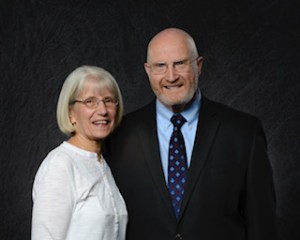
Yesterday was my wife’s birthday and though I will not broadcast the number of birthdays she has celebrated; I will share this key clue:  in August of this year, we will have been married fifty-six years!  She was a young bride.  I think I have written in an earlier post about the value to a pastor’s ministry the support of his God-given helpmeet is.  It is inestimable.  It is incalculable.  Without a loyal, spiritual, empathetic, committed wife, a pastor is doomed to defeat.  I thank God that though Ellen enrolled in the school of business with no intent to marry a “preacher-boy,” God brought our paths to cross early in my junior year when she was a freshman, and having eaten in the Dixon-McKenzie dinning common three meals a day for three weeks at Table T-1, where Ellen was also assigned for that period, I was smitten and though no other young lady had interested me up to that time at BJU or elsewhere, I fell head over heels for Ellen and now, a lifetime later, I can simply thank God for His grace and His sovereign purposes in directing the paths of those who “lean not” to their own understanding.  I was not smart enough to choose Ellen, but God with His unseen hand directed both of us to that first meeting and I give him unmitigated praise and daily heartfelt thanks.

For twenty or so of the forty years we labored in God’s vineyard at Thompson Road Baptist Church in Indianapolis, we published a monthly “TRBC Times,” and in each issue I wrote a Pastor’s Pen article and Ellen shared a “From Ellen’s Corner” piece. Since I am speaking of her on her birthday celebration of 2021, I am going to share with you one of her articles written twenty years ago entitled, “A Friend Loveth at all Times.” (Proverbs 17:17):

I’m not sure how they came into our life or when the relationship began, but for as long as I can remember, the Lowe family has been friends of my family.  They often dropped by as relatives did, on a hot summer evening (in North Wilkesboro, NC) just to sit on the front porch and visit.  They were members of my dad’s church, so they were my Sunday School teachers and mentors.  On many Sunday afternoons, they would invite me over for dinner and a drive in the country.  They encouraged me when I went to college and were proud that I married a preacher. In the intervening years, when my parents had no children around, they and their daughter looked in on my parents.  They planned celebrations for their birthdays and Christmas.  They brought in meals when my mom was sick, and almost every week since my mother passed away, they have brought my dad a good meal.  

My life has been so much richer because of the Lowes and also because of some wonderful people He brought into my life since we’ve been in the ministry.  Here at TRBC, many ladies have been dear friends. Three ladies who were especially kind to me, however, have passed away this year. I miss them sorely.  Mrs. Davee, Mrs. Tyra and Effie Scott (at age 102) were ladies who encouraged me when I was a young pastor’s wife and always treated me as if I were a special person.  No matter when I visited, they acted as if it were a privilege to have me in their home.

As I remember my old friends and thank the Lord for the new ones, I think of a poem entitled “New and Old Friends:”

“Make new friends, but keep the old; those are silver, these are gold.

            New-made friendships, like new wine, age will mellow and refine.

Friendships that have stood the test—time and change—are surely best;

Brow may wrinkle, hair grow gray; friendship never knows decay.

            For ‘mid old friends, tried and true, once more we our youth renew.

But old friends, alas! may die; new friends must their place supply.

            Cherish friendship in your breast—new is good, but old is best;

Make new friends, but keep the old; those are silver, these are gold.”

A man that hath friends must shew himself friendly:  and there is a friend that sticketh closer than a brother.” (Provs. 18:24)

Faith Healing

Newspapers across the nation carried a story of an eleven-year-old diabetic boy whose parents discarded his life-sustaining insulin that he had been taking for five years claiming that he had been healed after a so-called “faith healer” had laid hands on him in an attempt to “exorcise demons” and in so doing cure the lad of his disease.  Only a few days after his parents withheld the insulin the child died and, at his funeral, his father announced that his son would “come out of that coffin.”  Well, the child’s corpse did not revive in spite of two hours of mournful singing of hymns, swaying, shouting, and flaying of arms. It was a heart-rending story of a misguided, deceived people who had bought into false teachings about sickness, healing and death.

The teaching that God does not want anyone to be sick, or that all sickness is of he Devil and can be cured by faith is erroneous and has caused confusion, calamity and crushing disappointment and even disbelief in the hearts and minds of people who have been deluded by such heresy.

God does heal and without controversy all healing ultimately comes from God through His sovereign power and according to His wise purposes.  Both Old and New Testaments afford ample examples of healings, even of the raising of the dead.  Jesus is seen in the Gospels to have healed multitudes of sick people.  The apostles were able to exercise extraordinary healing powers in their apostolic ministries. (Matt. 15:30,31; Matt. 10:8) But apostolic authentication in the form of “signs, wonders and mighty deeds” (2 Cor.12:12) were no longer needed with the completion of God’s perfect Word and the period of great miracles passed with the coming of God’s indwelling Spirit and the completion of God’s revelation. (I Cor. 13:8-10)

So, what about healing today?  Faith healing?  James, in his epistle, chapter five, gives us some practical and ever pertinent Holy Spirit inspired instructions about what to do today when sickness strikes. And, how it does strike!  We are slowly coming out of a pandemic of a deadly virus that has claimed the lives of millions world-wide.  It has touched every home, every church, every corner of the inhabited world.  Beyond that, all of us have loved ones or friends who have battled with diseases, nagging physical disorders or disabilities for years.  When James questions “Is any among you sick?” he has our undivided attention. (James 5:14)

James begins this compelling discussion in verse 13 when he says “Is any among you afflicted?”  The word in the original Greek text means, literally, “facing evil,” or “feeling the impact of an evil assault upon oneself.”  It is a compound word, the prefix, kakos, meaning evil and the latter part of the word, pathei, from which we derive the English word “pathos,” meaning that which evokes pity or sadness; feeling. James is addressing the affliction of those who were suffering abusive assaults to their person, either physical, emotional or mental.  It is the kind of affliction James referred to in James 5:10 when he alluded to the suffering of the Old Testament prophets who suffered unspeakable anguish, abuse and most often death in their affliction.  It is the darkest side of evil, masterminded by the evil one, and directed at its victims for the purpose of destruction.  James gives the first and foremost solution to this kind of affliction:  prayer!  Pray for wisdom, grace, endurance and deliverance.  Pray for God’s intervention.  Pray for the perpetrator and pray for grace and strength to remain steadfast, even unto death.  (Rev. 2:8-10)

Then, in the next verse, James 5:14, James asks if there are any “sick among you?”  This word, transliterated, asthenai, means either physical sickness (Matt. 25:35) or spiritual weakness as in one who is weak in faith. (Romans 14:1,2,21) “Sick” in James 5:14 can mean either physical or spiritual weakness, the context determining which one is the case.  James advises that if there is one suffering, the cure is the same for either kind of sickness:  call for the elders (pastors) of the church for prayer.  The anointing oil is merely symbolic of the Holy Spirit’s power in the healing process, James assuring the persons involved that “the prayer of faith shall save the sick.” (v.15} The word translated “sick” in verse 15 is a different word still, transliterated kamnonta and it most often connotes a weariness or fatigue. (Rev. 2:3; Hebs. 13:3) James admonishes that the spiritual exercise of self-examination and confession of any known sin should, as with all prayer, accompany this prayer session.  The healing James assures of when he says “that ye may be healed” (v.16) could be physical as in Matt. 15:28 or spiritual. (I Pet.2:24; John 12:40). The word yathe is used in both of those passages referring to healing, which could be physical or spiritual healing or restoring.

So, one must conclude that James could be addressing any kind of weakness or anemia, either spiritual or physical, in this passage.  The solution is the same for either: fervent prayer (like that of Elijah’s), preceded by confession of sin when appropriate, and faith that God will make one’s prayer effectual. (5:16)  Seek advice, counsel and care from your family or trusted physician to be sure, but do not forget to pray, first and last.

Most every God-called, Holy Spirit led pastor or Christian worker has been a part of a prayer meeting such as described and outlined by James. And, people have been healed, physically and/or spiritually, demonstrably, because strong prayers of righteous people have been made effectual by God the Father, God the Son and God the Holy Spirit.  Truly, the prayer of faith does save the sick as God wills. Sometimes He chooses to heal in ways that we had not contemplated.  Sometimes the answer does not come as soon as we had hoped.  Sometimes, as with the apostle Paul, God chooses to answer “my grace is sufficient” and He demonstrates His power through our weakness.  But ultimately whether now or later, here or there, God will heal our affliction and deliver us from our diseases.

Ask and it shall be given you; seek, and ye shall find; knock and it shall be opened unto you.” (Matt. 7:7)

Lest We Forget

Perhaps you have read as have I that the world’s great civilizations have had life spans of about 200 years, progressing in a sequence of (1) moving from bondage to spiritual faith; (2) from spiritual faith to courage; (3) from courage to liberty; (4) from liberty to abundance; (5) from abundance to selfishness; (6) from selfishness to complacency; (7) from complacency to apathy; (8) from apathy to dependence; (9) from dependence back again to bondage.

120 years or so after God allowed the northern 10 tribes of Israel to be taken captive by Assyria, He had to severely discipline his beloved tribes of Benjamin and Judah, the southern kingdom, and their capital, Jerusalem, using the unyielding rod of correction that His instrument, the Babylonians, mercilessly meted out.  He tells them exactly why He had to deal with them so harshly and the primary reason was that their sins dwarfed the sins of Sodom and Gomorrah and the sins of the northern kingdom of Israel before their captivity in 722 B.C. (See Ezekiel 16:44-59) Those sins were:

  •  Pride Unbridled.  Solomon said that seven things were an abomination to God and first on the list was a “proud look.”  Abraham Lincoln was quoted as saying “We have been the recipients of the choicest bounties of Heaven; we have grown in numbers, wealth and power as no other nation…but we have forgotten God.  Intoxicated with unbroken success, we have become too self-sufficient to feel the necessity of redeeming and preserving grace, too proud to pray to the God that made us.”
  • Prosperity Unparalled.  We are so prosperous that we can afford to lose 116 billion dollars in gambling in one year (2016) and in 2020 we were able to shell out 99 billion dollars for pet care in these United States (food, vets, etc.)  Teddy Roosevelt warned that the things that will destroy America are prosperity at any price; safety first instead of duty first; the love of soft living and the get rich quick theory of life.  Daniel Webster exhorted that “if we abide by the principles taught in the Bible our country will go on prospering; but if we and our posterity neglect its instructions and authority, no man can tell how sudden a catastrophe may overwhelm us and bury all our glory in profound obscurity.”
  • Unprofitable Idleness.  Millions of Americans are alcoholics, twenty-five percent of whom are teens; 10% plus of our population live on tranquilizers; almost half of the marriages in this land founded upon a belief in God end in divorce; there are 1.5 unwed pregnancies each year, and suicide is the third leading cause of death of teens in America annually. George Washington: “Almighty God, who has given us this good heritage, we humbly beseech thee that we may always prove ourselves people mindful of Thy favor and glad to do Thy will.  Bless our land with honorable industry, sound learning and pure manners.  Save us from violence, discord and confusion; from pride and arrogance and every evil way.  In time of prosperity fill our heart with thankfulness, and in the day of trouble suffer not our trust in Thee to fail.”
  • Ungodly Selfishness.  Tom Anderson once wrote that loss of faith in God is our nation’s most serious problem.  He said that when men lose God they turn to the state; they compromise, appease, lie, steal, and make war.  “Unless we can recapture our Christian spirit and reestablish our Christian values, we will one day lose our freedom of choice…the question may become not whether America can be saved but whether America is worth saving.”
  • Unspeakable Abominations.  America’s Queen of Opera Beverly Sills said that violence and explicit sex in the arts were making the world uglier. The sins a loving God laid at the door step of His beloved nation of Judah which brought His awful judgment upon them as it had come upon Sodom and Gomorrah are sins embraced by America’s general population at this present hour.  The nation whose God is the Lord is blessed, but it is problematic that we can claim today to be a nation whose God is the Lord.

In 1787, after 20 years of work, Edward Gibbons completed his masterful book “The Decline and Fall of the Roman Empire” in which he identified five reasons for the fall of that once great world power: (1)  The rapid increase of divorce and the undermining of the dignity and sanctify of the home; (2) Higher and higher taxes and the spending of public money for free bread and circuses for the populace; (3) The mad craze for pleasure…sports becoming more exciting and attracting to the masses; (4) The building of gigantic armaments when the real enemy was within; (5) A decaying of religion, falling into mere form and becoming impotent to guide people.  The Roman Empire was not conquered, it collapsed.

Rudyard’s Kipling’s words about the once great British Empire that ruled the world are haunting: “The tumult and the shouting dies.  The Captain and the Kings depart.  Still stands Thine ancient sacrifice, a humble and a contrite heart.  LORD GOD OF HOSTS, BE WITH US YET; LEST WE FORGET, LEST WE FORGET.”

The wicked shall be turned into hell, and all the nations that forget God.” (Psalms 9:17)

God of the Second Chance

Where would any one of us be without those in our lives who have given us a second chance or third chance or multiple chances?  The teacher who refused to let us go our own stubborn way.  The parent who sought us and brought us back from the “foreign country” that we had wandered aimlessly and foolishly off to.  The pastor/mentor who tolerated our immaturity and embraced us for what he could see in us that few others were willing to find.  The friend, whose loyalty through the toughest of times in a rocky relationship never wavered.  The spouse who, because of sheer love and in respect to a sacred and solemn vow refused to call a lawyer to explore the next step in what seemed to be a hopeless cause.

Yes, where would any one of us be? Only God knows, but for sure most of us owe a debt of love to someone in our life who at a critical junction refused to abandon us to our own self-absorption and who drew us back into a circle of love with cords of mercy and forgiveness.  We can thank God for the friend, for the spouse, for the loved one or teacher who exercised those Godly attributes of longsuffering and loving kindness.

A few weeks ago, a pastor friend of mine, contemplating the truths that I have just expressed, called me to request that I pen a poem about the God of the second chance.  I think he was crafting a sermon on that theme.  I offered the following to him and pass it along to any pastor or teacher and others who might be benefited or blessed by it.

The God of the Second Chance

Jonah heard the call to Nineveh to go,
	But Jonah went another way his stubbornness to show;
He was swallowed by a whale in spite of piteous rants,
	The fish threw up the prophet:  Jonah’s second chance!

Mark whose name was also John, signed on to serve with Paul.
	But when the mission work got tough, the young man said, “That’s all!”
We would think that Mark was done, his mission work was through.
              The God of second chances said, “No, Paul has need of you.”

Peter, fisherman, the rock, denied his Lord did know.
	Warmed himself beside the fire until the cock did crow.
Three times Peter failed his Lord, denied Him with an oath;
	Jesus though had prayed for him, his service and his growth.

We do often fail our God, with words or deeds undone,
Umps would simply say “You’re out!” A called strike three, “You’re done!”
But God who prayed for Peter, Jonah and John Mark, 
Looks upon our flesh that’s weak and grants another start.

He’s the God of Second Chance, 3rd and 4th and more;
	By His patient kindness, He does by love restore.

But the father said to his servants, Bring forth the best robe, and put it on him; and put a ring on his hand, and shoes on his feet: and bring hither the fatted calf and kill it and let us eat and be merry:  for this my son was dead, and is alive again; he was lost and is found.  And they began to be merry.”  (Luke 15:22-24)

Waiting Patiently On The Lord

Most of us are not wired to wait well.  We prefer immediate and tangible results.  We don’t expect answers to our prayers will come instantly, but we do hope that the answers will come rapidly.  Learning to live patiently with expectations and anticipations have not proven to be the “strong suit” for most of us, even for those bathed in Biblical truth and committed to living spiritually.  David’s testimony would be a challenge for the typical 21st century saint: “I wait for the Lord, my soul doth wait, and in His word do I hope. My soul waiteth for the Lord more than they that watch for the morning….” (Ps. 130:5,6) But a word about waiting may encourage all of us to “wait patiently for the Lord.”

  •  Waiting, a matter of Direction.  Samuel instructed the newly anointed king Saul to wait seven days in Gilgal for the prophet to join him there to offer burnt offerings.  Samuel said “…seven days shalt thou tarry, til I come to thee, and shew thee what thou shalt do.”:  Saul impatiently chose not to wait until he received the crucial instruction of which Samuel had spoken and he missed critical direction from God, eventuating in his demise as the ruler of Israel.  The decision not to wait on the Lord was a fatal one for this newly crowned king (I Sam.10:8; 13:8-12) The lesson:  wait on direction from God rather than proceeding with your plans without definite direction from Him.  Be sure you have His guidance and, like Abraham’s servant, you can say with assurance, “I being in the way, the Lord led me.” (Gen.24:27)
  •  Waiting, a matter of Duty.  Young Timothy, under the spiritual tutelage of his master mentor, the Apostle Paul, was instructed to wait. “As I besought thee to abide still at Ephesus when I went to Macedonia, that that mayest charge some that they teach no other doctrine.” (I Tim. 1:3) Timothy followed the counsel of his “father in the faith,” and did well to do so.  As will we, when given wise counsel or direction from those we count as our leaders, counsellors or mentors.  We may not wish to do it, we may not have “chosen” to do it, we may not understand why we should do it, but sometimes just because it is a matter of duty, period, we ought to do it, therefore, we will do it!
  • Waiting, a matter of Devotion.  “Be still and know that I am God….” (Ps. 46:10) Learning of His sovereignty, His holiness, His purposes, power and exalted position can only be accomplished through some periods of waiting (i.e., 40 years on the backside of a desert for Moses and 17 years after his conversion before his main ministry for Paul); being still, and knowing in so doing that He is God.  We “behold His works” and are assured that He is in control so that even the “city of God” will not be moved because “God shall help her, and that right early.” (Ps. 46:4,5) Will He not also help us, and always on time and never too late?  But it may require us to wait.
  • Waiting, a matter of Design.  God has his holy purposes.  Nothing is by “happen stance.”  There are times when we surely cannot understand His timing, but we can always believe that His will and His way is best.  Peter cites the example of God’s working the perfection of His plan in the days of Noah.  Every day through faithful Noah, Christ was preaching to “spirits in prison.” (I Peter 3:19) Peter says of those men and women imprisoned in spiritual darkness and blinded to truth: “Which sometimes were disobedient, when once the long-suffering of God waited in the days of Noah, while the ark was preparing….” (I Pet.3:20) God’s design, by grace, was to spare Noah and his family, and His desire, through mercy, was that others also repent, believe and be saved!  Thus, He patiently waited for 100 plus years as He was executing His purposes in those antediluvian days.  So, with us today, He adroitly pens the script of our sojourn here, calling on us to wait patiently for the perfect pattern He has skillfully designed for each of us which by His sovereign hands He is faithfully fashioning.
  • Waiting, a matter of Discipline.  God had promised the Children of Israel that Jericho, that great first hurdle facing them just into the long- awaited land of promise, would be theirs without lifting a weapon against the formidable walled city.  How anticipation must have built as they marched around the city for six days, then climaxed as they marched around the walled fortress seven times on the seventh day before the walls would crash!  God could have done it without any marching or with marching on only one day; but as a matter of obedient discipline, it would require marching the circumference of the city one time for six days and seven times on the seventh day!  How is He working out His will in your walk?  Have you become impatient with the discipline of walking, waiting, walking, waiting, walking….?
  • Waiting, a matter of Deliverance.  God would deliver the discouraged, defeated prophet Elijah when, at his wit’s end, he despaired even of his life.  But it was only after the wind, the earth quake, and the fire that the still small voice was heard. (I Kings 19:10-14) We, like Elijah at times are put in the place of waiting.  It may be a process.  We may be physically and emotionally and spiritually emaciated going into the wait or at some point in the middle of it.  The winds of life may be howling, the earth may seem to be moving under us and fires of destruction may threaten our very existence.  But, while we are waiting because that is all that we can do, that still, small voice may be heard to whisper “What doest thou here?”  And we know at once that it is Him whom we have waited on, faintly, to desperately hear from again, “…I will never leave thee nor forsake thee.  So that we may boldly say, ‘The Lord is my helper….’” (Heb. 13:5,6)
  • Waiting, a matter of Destiny.  To His, God said, “Wait on the Lord, and keep His way and He shall exalt thee to inherit the land….” (Ps. 37:34) We know beyond doubt, from Scripture and from experience, that it is always best to commit our ways unto Him, knowing that He shall direct our paths.  His chosen apostles and earliest followers were commanded to “wait for the promise of the Father….”  (Acts 1:4) Can you imagine the chagrin of those who may have chosen not to have gone to Jerusalem to wait?  The destiny of those 120 people who waited in Jerusalem for 10 days for the promise of the Father was that they would become part of the foundation of the Church that Jesus had promised He would build (Matt. 16) against which the very gates of Hell would not prevail.  God’s people are waiting yet today for the promise of His coming for His Bride, the Church.  Like the future martyrs, we may be whispering “ How long, O Lord?” To which the reply comes, “yet a little season.” (Rev. 12:11) God has His plan for each and every individual, encompassing time and eternity.  His time table was not drawn for our convenience or for our endorsement.  But we are called, enabled, expected and instructed to “rest in the Lord, and wait patiently for Him.” (Ps. 37:7) It is, after all, a matter of destiny!

Prayer Made Effectual

James, writer under the Holy Spirit’s superintendence, of the powerful New Testament epistle of James, half-brother of Jesus, could not have said it more emphatically when, in urging his readers to practice praying persistently, he said “The effectual, fervent prayer of a righteous man availeth much.” (James 5:16)   Literally, the word order in its original could be rendered “A prayer of a righteous man is very strong, being made effectual.”

Can you think of anything believers and churches and communities with their governing bodies need more than powerful prayers that are made effectual?  If you are a Christian striving to live spiritually, you must know that your spiritual life will not rise above the level of your prayer life.  If you worship and serve your Savior in a local church which strives to effectively impact its community for Christ, you must know that no local congregation’s impact will ever be greater than the level of its corporate prayer life.  Nor will the composite, corporate prayer life of the body in whole be greater than the prayer life of each individual member; and each individual member of any local church will not achieve an effective prayer life greater than his daily time with God in His Word.  Selah.

Note the admonition of James in chapter 5 verse sixteen which focuses on a prayer that is “made effectual.”  That’s what we surely strive for—effectual praying, i.e., praying that gets results, praying that changes things.  So, how is one’s praying “made effectual?”

The prayer of which James speaks when he uses the “passive voice”, translated “made effectual,” is a prayer that is dependent upon an external force or power, outside of the one who is praying, to make the prayer effectual.  We know that the only power that can cause a prayer to become effectual is God.  And that truth should be the most compelling reason to “pray without ceasing,” knowing that God Himself not only hears our petitions but is also able to work supernaturally to make our praying effective!

First, God the Holy Spirit does His powerful, energizing work as we pray. Sometimes we are too weak to even frame the verbiage of a prayer to God and it is during those times when we find ourselves too weak to lift a prayer to God, emaciated mentally, emotionally, physically and or spiritually, that we can be assured that God’s Holy Spirit reads our soul’s yearnings and desperate cries to the heavens and will translate our heart’s feeblest pleas into the language of heaven with “groanings which cannot be uttered.” (Romans 8:16).  We in our own strength could never do that, but His Spirit does it on our behalf as only He can, thus, making our prayers effectual!

Second, God the Son is working to make every prayer of ours effectual. He is ever living to make intercession for us as He is seated at the right hand of His Father in Heaven.  He, being the God man, can be touched with the feelings of our infirmities, so in a way unique and supernatural, our High Priest, Jesus, is always mindful of our needs as we are praying and He is making those prayers effectual.  (Hebrews 7:25; 4:14-16)

And, finally, God the Father, our Heavenly Father, who made us in His own image and can understand our thoughts from afar, is making our praying effectual.  He is anxious and able to bless us; He longs to give us good things out of His storehouse of riches in glory.  He Himself taught us that if we have had fathers here in the flesh that have known how to give us good gifts, how much more our Heavenly Father?  Were we to ask our father here for a piece of bread would he give us a stone?  Or a serpent instead of a fish or a scorpion were we to ask for an egg?  Never!  And in so much greater, indeed infinite, way does God the Father grant us our requests and more when we are in need and asking for His intervention!  (Luke 11:13) Our great God who loves us and gave His only begotten Son for our very life can and will make our praying effectual in a way that will be exceeding and abundantly more than we would have dared ask as He daily loadeth us with benefits!

The only remaining question concerning this prayer prompt in James 5:16 is the issue raised when James identifies the praying person as a “righteous” man.  Who is “righteous?”  Or, as Job put it, “How can a man be just (righteous) with God?” (Job 9:2) And, the good news is that any living person can qualify as a “righteous” or “just” person.  Those who have put their faith in God, repenting of sin and believing in Christ as Savior, are judicially declared righteous by God as revealed in His Word!  (Romans 5:1) Even as God made His holy Son, Jesus, to be sin for our salvation, so He is able and willing to make us, judicially, righteous! (2 Cor. 5:21)   So, any seeking sinner, trusting Christ and Christ alone for salvation, is “righteous,” positionally, before God.  That does not mean you will never again sin; practically we do sin; and if we say that we have no sin we deceive ourselves (I John 1).  We need on a daily basis to do a “heart check,” heeding the Psalmist’s admonition that “if I regard iniquity in my heart, the Lord will not hear me.” (Ps. 66:18)   Sin will never change the standing of a believer for that is “sealed” by the Holy Spirit until the day of redemption. (Eph. 4:30)   But sin does alter the “state” of a believer putting us out of fellowship with God until that sin is confessed and forsaken. And, again, the Psalmist has the solution for that altered state: “For I will declare (confess) my iniquity.  I will be sorry for my sin.” (Ps. 38:18)   The moment we do that, we have forgiveness, fellowship is restored and we can once again rest assured that the Godhead is active in making our prayers effectual!  So, do remember His words: “Men ought always to pray and not to faint.” (Luke 18:1)

Nelle Reeves Shuler

One of the great pleasures of pastoring fifty years was the joy of entertaining evangelists in our church and home as they held meetings with us or when they were crisscrossing the U.S. from one meeting to another and needed a place to stay for a night or two.  I could mention many such as Jerry Sivnksty, Gary Gillmore, Joe Mark, Monroe Parker and others, but one of our favorites was Evangelist Phil Shuler and his beautiful wife, Marie.  I had seen Phil from a distance and made the mistake of judging him and Marie, an off the charts talented pianist, as more “glitz” than glory. That was a terrible miscall!  Then I learned that Phil, a Marine who landed at Bob Jones University just after an amphibian tour of the far east in World War II,  with some other GI’s going to school on the GI bill, just about rattled BJU off its solid foundations with their shenanigans, kept twelve weeks a year open so that he could hold revival meetings in churches of 50 or less, churches that were afraid to call an evangelist for help for fear they could not afford to pay their expenses and give them a love offering.  Well, Phil Shuler made it a point to go to such churches at his own expense and when I heard that I figured he had to have been a man of rare character caliber, and I was right.  More about Phil and Marie in a later post, but in lieu of Mother’s Day coming next Sunday, I want to share with you an article Phil wrote about his mother which he posted in one of his newsletters about 40 years ago. It read:

On August the 4th, my mother, Nelle Reeves Shuler, went home to be with Christ.  She was 96 and passed away in her sleep. If I live to be a hundred I will never, in this world, meet another woman like her!  Mother was reared in a well-to-do home in Jonesboro, Tennessee, went to ‘finishing school,’ and married my dad when she was 20.  Out of the state of Tennessee dad got the ‘pick of the litter!’  Those who remember her as a young lady remark about that ‘beautiful Nelle Reeves!’  Mom took her place beside her raw bones, fiery preacher husband, and never once let him down!  She was his mainstay!  Dad got the credit for great exploits for Christ, but it was Mom who stood firmly by him, and steadied him along the path.  She supplied him with most of his sermon texts and proof-read all his articles in THE METHODIST CHALLENGE.  You never saw mother in the foreground, but quietly she would be off in the shadow, supporting her husband and his work.  Her kind come along just now and then.

Mother raised seven children.  She lost Dick at the age of 9 months.  All seven of her children are bound for the Promised Land because of a mother who refused to see it otherwise and stayed on her knees nightly to so convince her God!  I can remember walking by her room on more than one occasion to hear her mention my name to God in prayer!  She lived to see three of her boys enter the ministry, and one of those enter heaven!  I can’t remember the number of her grandchildren; it keeps changing all the time. And great-grandchildren….forget it!  But what a joy it was for mother to entertain them on visits!  She was quite a lady!

God occasionally sends along a preacher like my dad, but never without a wife like my mother!  As I reflect upon their influence on me, I determine in my heart to do my dead-level best to carry on the tradition.  I certainly have the wife for it!  And the opportunity is there! God give me strength!  Yours for souls, Phil Shuler.” 

Ellen and I could never forget one of those times that Phil and Marie were house guests and, while we were relaxing in our living room, Phil broke out into one of the lull-a-byes that he used to hear his mother sing when he sat at her knee as a toddler.  He sang as only Phil could in his “sweet” tenor voice, and he must have sung those childhood lull-a-byes for a half-hour one after another; most of them were new to us but all of them had been tucked away in Phil’s heart and now as an older man himself those sweet verses sung from his mother’s heart through her holy lips came back to Phil like a flood and we just sat there listening “in another world!”  We have kicked ourselves a hundred times for not having turned on something that would have recorded those musical masterpieces, but alas! we had no cell phones, and the recording equipment was not handy at that moment.  It was one of those unforgettable moments that one would love to have frozen in time.

I hope you will enjoy this memory of Phil and Marie, one of many I could share if time permitted, such as the time Phil reenacted the funeral service at his Dad’s church in LA when his 9-month-old brother, Dick, had died and Nelle, in the middle of her husband’s message, broke out singing “Safe in the Arms of Jesus.”

I hope you all, especially Mothers, will have a blessed day this 2nd Sunday of May, Mother’s Day.

Her children arise up, and call her blessed; her husband also, and he praiseth her.”  (Provs.31:28 )

Are You a Christian?

That question can be answered with a “Yes” or “No,” but along with those brief answers there should be an accompanying spoken or unspoken reason for such an assertion.

The label “Christian” is pretty common in today’s world.  Some will assume that if one is not a Jew or Muslim then he is a Christian, assuming he were not an atheist, cultist, Hindu or Buddhist.  In that definition, all sorts of varieties would exist including Protestants, Catholics, Baptists, Lutherans and many others.  But, back to the question, “Are You a Christian?”

My concern by posing this query is whether or not you have a relationship with Jesus Christ.  Many Americans, if not most, would answer in the affirmative to the question.  In fact, a research group determined in one of its studies a few years into this new millennium/century that 80% of the adults in America considered themselves Christians and that six out of ten adults in America said their main purpose in life was to “love God with all their heart, mind, strength and soul.”  The research team concluded that though most Americans enjoyed the “security” of being known as “Christian,” most were not anxious to own up to the responsibilities incumbent upon those who are known by that name.

Followers of Jesus Christ were not always called “Christians,” or “Christ folk.”  First there were Apostles, then a wider group known as followers, then disciples and finally, about the time the converted Christian killer, Saul of Tarsus, later known as Paul, the Apostle, fell at Jesus’ feet on the Road to Damascus and instantly put his trust in the risen Lord, the writer of the book of Acts, Luke, tells us that Jesus’ followers were first called “Christians” at Antioch.  Stott, in his commentary on the book of Acts, notes that the term “Christians,”  was a term of derision, used as a sort of nickname tagged onto those people who confessed their allegiance to Jesus Christ.  (Acts 11:26)  The word is used again in Acts 26:28 where King Agrippa, having heard Paul’s personal testimony and his appeal to the King to accept Jesus as his own Savior, responded to the missionary/evangelist with the words, “Almost thou persuadest me to be a Christian.” And, in I Peter 4:16 the word Christian occurs a third and final time in the New Testament where Peter admonishes his readers that no one should be ashamed for suffering as a Christian.

So, a Christian, or Christians (“Christ folk”) are those who are disciples or followers of Jesus Christ.  They have acknowledged that He is God and Savior, have believed in Him and called upon Him in repentance for salvation, and are committed to living the Christian life.  The immediate instance that a person becomes a believer he or she may not understand the theology of it all—that will come later with growth—but the convert at least knows that he is a sinner, and that Jesus is the Savior so that by faith and repentance, the sinner in some fashion forms the plea “Lord, save me!”  Unknown to him, no doubt, at that moment he is spiritually baptized into the Body of Christ (the Church) and sealed by the Holy Spirit, a seal that assures him of redemption, now and forever, and he is immediately, instantly, made a son (child) of God with all the spiritual blessings attendant thereunto, including being indwelt by the Holy Spirit of God.  Glory!

A first-century observer described these Christians thusly:  “Christians inhabit the lands of their birth but as temporary residents thereof; they take their share of all responsibilities as citizens and endure all disabilities as aliens.  They pass their days upon earth, but their citizenship is in Heaven.”

That first century historian hit the nail on the head!  Paul said that “our conversation is in heaven,” (Phil. 3:20) and that we are “fellow citizens with the saints, and of the household of God,” (Eph.2:19) and that “God the Father of our Lord Jesus Christ…hath blessed us with all spiritual blessings in Christ.” (Eph. 1:3)  That is why Paul could exhort us to “set your affections on things above, and not on things of the earth.” (Col.3:2)

A.W. Tozer aptly spoke of Christ folks when he described them this way:  “He feels supreme love for One whom he has never seen.  He talks familiarly every day to someone he cannot see, expects to go to Heaven on virtue of another; empties himself in order that he might be full; admits he is wrong so that he can be declared right, goes down in order to get up.”

A pilot was flying over the Arabian dessert when he had to land at an oasis for fuel.  Upon taking off again he began hearing a scratching, gnawing sound from the fuselage area.  Fearing it might be a rodent that had crept on board during his refueling, the pilot instinctively began to fly the plane at an higher altitude.  Higher and higher he ascended until the scratching and gnawing eventually ceased altogether.  When he landed the plane, sure enough he found the dead rodent which was unable to survive in the heights far above the dessert floor that he was accustomed to.  That is a lesson that Christians learn when realizing that our life is “hid with Christ in God.” (Col.3:3)  We live on a higher plane, yet it is not us but Christ living in us (Gal.2:20).  We cannot survive as believers living on the floor of the dessert of this world’s sin.  We survive, yes, thrive appropriating the truth that God “…hath raised us up together, and  made us sit together in heavenly places in Christ Jesus.” (Eph.2:6)

So, back to the original question, “Are You a Christian?”  “Yes,” or “No?”  If you answer “Yes,” it is because you are “accepted in the Beloved,” (Eph.1:6), that is, you have experienced justification by faith through the Lord Jesus Christ (Romans 5:1). “He that believeth on the Son hath everlasting life; and he that believeth not on the Son shall not see life, but the wrath of God abideth on him.” (John 3:36)  The question is, then, do you have the Son in your heart, by faith? “But as many as received Him to them gave He the power to become the sons of God, even to them that believe on His name.” (John 1:12)  Are you, then, a Christian?  Do you have the Son (in your heart)?  The decision is personal, the consequences are eternal.  If you are not now a Christian, receive Him today.  You will never regret becoming one of the Christ folks!

And he (the jailor) brought them out, and said, ‘Sirs, what must I do to be saved?’  And they said, ‘Believe on the Lord Jesus Christ and thou shalt be saved, and thy house.’” (Acts 16:30,31)

Making A Difference Around the World

We said farewell to our friend Bertha a few days ago who, on the third Lord’s Day of March in 2021, was escorted through the heavens to her home on high where she has an irrevocable deed to a dwelling place where Jesus lives and where she will live with Him and His forevermore.  Her final flight was on short notice as she had indicated no special physical problems and was active and enjoying serving God in her prime time of life.  Her stated purpose for living was that she would be “making a difference in peoples’ lives around the world.  By attending a Bible college, I will be able to learn in depth the foundation, the history of missions in detail and this will strengthen me spiritually to serve God and not please people.  Missionaries can be found in many countries around the world….”  But, at 59 years of age Bertha’s time to transition from this land of shadows to the eternal glory of that City, where neither moon nor sun doth shine for Jesus is the Light of it, came and we were shocked, then saddened but soon filled with exceeding joy knowing that her labors are over and she is now enjoying the eternal rest that Bertha dreamed of, desired and is now delighting in, worshipping at her blessed Savior’s feet.

Bertha migrated here solo from her country of birth probably twenty-five or thirty years ago.  She grew up in a prosperous African nation, but when Zimbabwe became an “independent” nation in the early 1980’s she could “read the tea leaves” and what she anticipated she and her fellow countrymen soon experienced when leaders soon occupied positions of authority who were driven more by their thirst for power than by prosperity for their people.  Bertha came to America with resourcefulness, intelligence, industriousness and faith that would stand her in good stead while working toward the goal of bringing her family to this land where they, too, could enjoy the pursuit of life, liberty, and happiness.  In time her daughter joined her here as well as two sons.  She found the Thompson Road Baptist Church as a place where the Word of God was preached in a way that God would use as He led and fed her in her daily walk with Him.  Her son Arthur, a child when he first arrived here, would one day attend Bob Jones University where he would master the art of cinema and media matters. 

Bertha had come to America for freedom and for opportunity and she found those things while growing in grace and in the knowledge of her Lord and Savior through His Word.  As was her heart’s desire, she was able to serve others and in time became affiliated with a movement of women, especially Zimbabwean women, who wanted to bind themselves together as a godly group of believing women serving their God under the banner of faith, hope and love.  It was not hard to love and admire Bertha for what she accomplished living in a foreign country with those nearest and dearest to her a half world away, but she worked and worshipped with dignity, joy, quietness of spirit and a loving, caring attention to the needs of souls amongst whom she lived.

Pursuing her desire to attend Bible college so she could learn more about world missions with the goal of becoming a missionary, she was required to submit to some physical examinations hoping, as part of her training, to serve as a foster parent.  It was through one of the exams that  Bertha learned she had stage 2 cancer, the news coming to her “as a death sentence.”   But by God’s grace and with the skilled health care that she found in caring doctors and nurses, she eventually, after two surgeries and weeks of radiation, was pronounced “cancer free!”  Having come from a “third world country” Bertha was used to the realization that few diagnosed with the cancer that she had would survive.  But with a Christian and caring surgeon and “through the grace of God” survive she did!  “To many people I was a young, healthy mother, working for her children.  There is power in prayer.  It has taken me long to answer my calling because of other circumstances but my conscience all this time is that I should serve God through His people.  Being a missionary will enable me to share the Word of God, to share my experiences, to share trials and still have faith in the Lord.”

Sometimes someone very special comes into your life who touches you deeply and lifts your spirit, whose life bears witness of authenticity and who, having spent moments with you, leaves you spiritually strengthened and thirsty for a deeper knowledge of and closer walk with your Lord and Savior.  Such a presence was Bertha.  Her faith, her quiet spirit, her caring smile, her determination to press forward– when drawing back at times must have been severely tempting, left a mark ineffaceable upon all who knew her.

People were drawn to Bertha, fellowshipped with her and worshipped alongside of her as if they had known her for a lifetime.  She never did realize her “goal” of becoming a missionary in the sense that we think of when speaking of vocational missionaries, but as her friend, my wife and I, and others who knew her well, would be quick to affirm that Bertha was a missionary indeed, having been sent to America from Zimbabwe, third world to the world’s most powerful, affluent nation, as a missionary to teach us by her life and love for Jesus, her sweet spirit, her humbleness, her fidelity to God’s Word, Work and Will lessons written not with the ink of a pen but upon our hearts indelibly for a lifetime.  Thank you, Lord!  Thank you, Bertha.  Farewell.

Give her of the fruit of her hands; and let her own works praise her in the gates.” (Prov. 31:31)