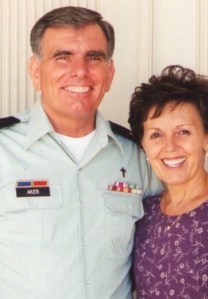
In Her Own Words (Part 2)

(Note: This is a continuation of the testimony of Jennifer Wilkerson, recounting how life changed for her and her husband, Rick, following an automobile collision on Christmas Day, 2000. Her lower body was completely paralyzed, and the crash also affected the use of her arms and hands. Read part one here.)

“Support—I want to mention at this point how grateful Rick and I have been and continue to be for the faithful prayer warriors in our lives. When we’ve been angry, apathetic and grieving, they have interceded. The prayers of others have buoyed us up and have been one reason we’ve been able to cope—and enjoy the blessings God has provided.

Grieving and Acceptance—Whenever someone is severely injured, what is the main concern of the medical personnel attending them?  The first thing they ask is, ‘Can you wiggle your toes?’ Paralysis seems to be a fate worse than death to many. God’s arms support me when I’ve lost the unthinkable—mobility. The first memory I have of realizing the severity of my injury was while working with one of the therapists at hospital number two, who I sensed was trying to tell me something. In the course of our conversation the realization struck that she didn’t think I’d ever be able to walk again. More than once I imagined myself kneeling at the foot of the cross, trying somehow to come to terms with everything. In so doing, reality seemed so harsh as I repeated over and over, ‘Jesus, this is what you planned for me! This is your best for me!’ After a while, grief would give way to peace.

Insight—A friend who lost not only a child but her husband expressed in a blog post, ‘So many of you have commented to me how amazing and strong I am…I want to be real with you, so you may see the power Christ has in my life. Sometimes I feel like I am clinging to the pieces of my life so tight that my arms go numb from pain…I fear dropping a piece, even if that piece is gone already…it is just memories.’ I remember only a few months after my injury the sudden realization that I’d forgotten what it was like to walk…like forgetting what a loved one looked like after they’d gone because you don’t have a picture.

The Reason for My Hope—I Peter 3:15 encourages me to ‘always be ready to give a defense to everyone who asks you a reason for the hope that is in you, with meekness and fear.’ (NKJV) I want everyone who reads this to know that the source of the supernatural strength that has enabled me to not only endure these past (25) years but see a purpose in them, rejoice in victories and triumphs, and even thank my Heavenly Father for allowing the circumstances that were used to draw me close to Him and turn my attention to eternity—despite shedding many, many tears and struggling harder than I have in my entire life, with frustration and griefs that couldn’t even be shared here—is only possible because of my relationship with Him, and I’d like to share how this came about.

There was a time in my life when I learned about salvation and heaven, which God freely offers to anyone who comes to Him with a repentant heart. Two Bible verses, Ephesians 2:8,9, tell us that: ‘For by grace you have been saved through faith, and that not of yourselves; it is the gift of God, not of works, lest anyone should boast.’ (NKJV)

And, Romans 6:23 talks about how: ‘The gift of God is eternal life in Jesus Christ our Lord.’ (NKJV) I also realized I’d disobeyed God’s laws and therefore was a sinner. The Bible talks about this in Romans 3:23: ‘For all have sinned and fall short of the glory of God.’ (NKJV) When we think of sin, we might think of outwardly visible things like murder, adultery, cheating, etc. However, it also involves inward transgressions of God’s law like pride, hatred, lust, envy, anger, and bitterness.

We know it is right for God to judge wrong…the principle of justice is wired into our being. If a man broke into your house and robbed you, it would only be right that this person be brought to justice. God, by His very nature is just and must punish sin and evil.

But, He is also a loving God! John 3:16 tells us: ‘God so loved the world that He gave His only begotten Son, that whoever believes in Him should not perish but have everlasting life.’ (NKJV)

God solved this dilemma in the person of Jesus Christ. God the Son took on humanity at His birth. He lived a sinless life because He is 100% God. He walked on earth for 33 years as a man. God’s plan from eternity past was to send His Son, Jesus, to die in the place of those that had sinned against Him (that would be all of us!). Isaiah 53:6says, ‘All we like sheep have gone astray: We have turned every one, to his own way; And the Lord has laid on Him the iniquity of us all.’ (NKJV)

We need to receive this gift of God, this grace, by faith. Jesus has paid the price for every sin you have, and ever will commit. God wants us to give up our efforts to earn salvation by being ‘good’ enough, acknowledging that we have sinned against Him and ask His forgiveness based on what Jesus did on the cross alone.

If you have not already, will you believe Christ died for your sins, and ask Him to be your Savior and receive Him as I did? You will not only live forever with Him in heaven but have strength for your trials and joy in your journey here on earth. Don’t go through life without Him!”

But as many as received Him, to them He gave the right to become children of God, to those who believe in His name.” (NKJV)

Write Jennifer Wilkerson and let her know how her story has impacted you. Her email address is wilkerite@sbcglobal.net.

In Her Own Words

On Christmas Day, 2000, Rick and Jennifer Wilkerson were hit on the passenger side of their car in a snow-related crash that left Jennifer—after multiple surgeries and months in three different hospitals—with minimal upper-body movement and complete paralysis from her waist down. Jennifer shared their story in A Hope and a Future, a booklet she wrote 15 years after this life-altering event.

Through excerpts from this testimony, I want to let Jennifer open her heart up with insights gained from something that neither she nor her devoted husband, Rick, both faithful servants of God, would have ever asked for. Yet both trust that God, who is daily guiding and guarding them through life’s journey—one day at a time, one moment at a time—allowed it. Hear Jennifer’s insights in her own words:

Everyday Stuff—“The hardest part of living like this is seeing how my appearance has changed. I often don’t like the way I look in clothes, and my swollen feet prevent me from wearing most kinds of shoes. Then there’s my protruding ‘quad belly’ caused by lack of muscle control and an overly curved spine.

Little (and Big!) Victories—Ever since childhood I couldn’t even swallow an aspirin. By the end of my hospital stay I was taking medication five times a day and knew this had to change. So…Philippians 4:13 (“I can do all things through Christ who strengthens me.” NKJV) was quoted every time a pill was swallowed whole. I can take as many as eleven with a few gulps of water without a second thought!

Pain—A condition called autonomic dysreflexia, which affects some spinal cord patients, is a frequent intruder in my life. Below my shoulders I have some sensations but cannot (with one exception) consciously feel pain. If something happens to my body in this area (such as a sore) that would normally cause pain or discomfort, I sometimes start to sweat, at times profusely. The exception I just mentioned is a constant companion—nerve pain (neuropathy) similar to that which diabetics struggle with. Why do spinal cord-injured people struggle with these symptoms? Well, compare the human body’s nerves to its wiring. When an injury happens that disturbs these nerves, they get confused and ‘short circuit.’

Matters of the Heart—The accident, though not consciously remembered, has nevertheless had a profound effect upon my emotional well-being. Undoubtedly the accident scene that day was jarring to my senses, with the harsh sirens and glare of headlights coming from multiple vehicles. To this day, exposure to the cold (especially when combined with bright lights and loud noises) frequently causes anxiety. I still have a vivid memory of a day shortly before I came home from the hospital when I looked directly at the sun, closed my eyes and (literally) soaked it in as it infused me with strength, courage and reassurance. Ever since then, I crave the sun on my face.

I longed so much to be able to get down on the floor and hold our dog, ‘Mr. Bear,’ who was the closest thing I’d ever had to a child at that time.* After his death, we adopted ‘George,’ who I eventually bonded with as well, but there were still many things we could not do together.

Relationships—Over the past years, many have commented about what a good ‘support system’ I have. Relationships have certainly become deeper as others see the ‘real me,’ stripped of pretension (and make-up!). Memories of waking up and weepy after too much morphine, and friends helping with my nursing care come to mind. And, I often have had (many more times than I want to admit) a micro-managing, demanding, controlling and selfish mindset.

Trusting—For a long time, I’ve been a planner and assumed that I was the one who arranged for all my needs to be met. When much of my life suddenly became very dependent on others and there were so many circumstances that I had no control over—it was frustrating—but at the same time actually freeing as I learned to receive God-given ‘manna’ each day.

Meaning—A friend told me one day that he was almost jealous because I’d had the chance to know Jesus in a way that many others do not. It is true that the spiritual and emotional growth He has brought about through all this would not have happened any other way! My walk with Him is so much closer, and life is so more meaningful.

Purpose—I’ve had to confront my purposes in life and realize God’s purpose instead! I’ve had to learn that there is something much bigger than myself going on here, and although the present (earth) is the only reality we’ve known, the future (eternity) is vastly more important.

Life is preparation for eternity. We were made to last forever, and God wants us to be with Him in heaven…God is more interested in your character than your comfort. God is more interested in making your life holy than He is in making your life happy. We can be reasonably happy here on earth, but that’s not the goal of life. The goal is to grow in character, in Christ-likeness.’ (Note: These words are from Rick Warren’s The Purpose Driven Life, published by Zondervan, used by permission. Rick Warren’s excerpts used here express the message I’m trying to convey so well! However, I do not always agree with his views on other topics. JW)

To Be Continued…

And we know that all things work together for good to them that love God, to them who are the called according to His purpose.” (Romans 8:28)

*Jennifer was 35 years old when the crippling crash occurred.

Judas Iscariot (12th in a series on The Apostles)

In the last of these 12 apostolic portraits, I come now to a man of whom Jesus Christ said the worst thing He could have said: “Good it were for that man if He had never been born.” (Mark 14:21) He is mentioned last in every list of the Apostles—just as Peter was mentioned first in every listing of these specially chosen men.

But he was born—born of a woman, son of Simon Iscariot of Kerioth in Judah—and he lived and died, and his story—sad and somber, with its large and lasting lessons—is immortalized in the sacred writ of the Word of God. And it will do us well to remind ourselves, from time to time, that in every group of professing believers there may be, and there most likely is, a JUDAS.

Indeed, the aged Apostle John wrote in what were possibly his last lines, “Little children, it is the last time: and as ye have heard that antichrist shall come, even now are there many antichrists: whereby we know that it is the last time. They went out from us but they were not of us: for if they had been of us they would have continued with us: but they went out that they might be made manifest that they were not of us.” (I John 2:18,19)

As we look at the life of Judas Iscariot, please note with me three things:

  1. His Privileges

➢ He was a disciple. He had learned from the lips of Jesus, lived in the light of Jesus, and had lavished on him the love of Jesus.
➢ He was an apostle. He had preached the gospel of the Kingdom; he had healed the sick and cast out demons. “Many will say to me in that day, ‘Lord, Lord….:’” (Matt. 7:22,23)

  1. His Problems

➢ He professed what he did not possess; he had something in his head that he did not have in his heart.
➢ He had the right manners but the wrong motives (no apostles suspected Judas!).
➢ He went through the proper actions but had an improper attitude (i.e., his rebuke of Mary for anointing Jesus, claiming that the 300 pence could have been given to the poor, John 12:1-8).
➢ He was outwardly clean but inwardly filthy (as Jesus portrayed the Pharisees, whose lives were like a cup and platter, outwardly clean while inwardly filthy).
➢ He had been born but never born again.
➢ He had been called but never converted. God knew Judas would be lost and would be “the son of perdition” (John 17:12)—but that does not mean he was predestined to that role.
➢ He loved money more than Jesus Christ; he gambled with his soul and lost! (I Tim. 6:9)
➢ He surrendered to Satan (John 13:27).

  1. His Plight

➢ He conspired against the Son of God (Mark 14:10; Matt. 26:14,16).
• All the apostles doubted of whom Jesus spake when He said that one of them would betray Him (John 13:22; Luke 22:23).
• Each of the apostles said, “Is it I?” (Mark 14:19).
➢ He betrayed his best friend for a few pieces of silver (Ps. 55:12-15).
• Before he was a traitor, he was a thief (John 12:4-6).
• He forsook his fellow laborers to become a traitor (John 13:21ff).
• He repented himself (Matt. 27:3; comp. II Cor. 7:10).
• He killed himself (Matt. 27:5). All the other apostles, except John, were killed by wicked men; Judas, a wicked man, killed himself. All the other apostles died a noble death; Judas died in ignominy. All the other apostles’ memory is revered; Judas is remembered for his wicked betrayal of the sinless Son of God. All the other apostles will spend eternity reigning with Christ in heaven; Judas will spend eternity separated from God and good in the Lake of Fire.

“Judas,” by Gamaliel Bradford:

“They called him King, and I would have no king: Let all be equal; yea, let none be best. Why should the weakling John be ever pressed against His bosom, Peter urged to fling his clumsy zeal about while I must bring, forsooth, the bag behind, and feed the rest—never praised or flattered or caressed, although so watchful in my stewarding?

They called Him Son of God; in rage I saw this vain idolatry. Was I not wise, not honest, not in truth administering the holy precepts of Thy sacred law—

Oh, God! Those pleading, tender eyes!

Oh God! O God! Why did I do this thing!”

“Now he that betrayed him gave them a sign, saying, ‘Whomsoever I shall kiss, that same is He: hold Him fast.’ And forthwith he came to Jesus, and said, ‘Hail, master;’ and kissed Him. And Jesus said unto him, ‘Friend, wherefore art thou come?’ Then came they, and laid hands on Jesus and took Him.” (Matt. 27:48-50)

Special Edition of “You and God”: Health and Ministry Update

It has been almost six years since I bid farewell to my faithful flock that I had “watched over” as an under-shepherd for 40 years. My farewell to Thompson Road Baptist Church as “Senior Pastor” was as follows:

Farewell, dear friends, it’s hard to say ‘Goodbye.’ At times we want to laugh, at times to cry. We’ve walked, we’ve talked, we’ve worked along life’s way. Our love has grown, His grace He’s shown, From our first meeting 40 years ago today.

You’ve been a flock supreme, A shepherd’s fondest dream; You’ve heard and heeded truths—and grown in grace; you’ve made your goal in life to seek His face.

We part now, yet our sorrow—it is sweet; we’ll soon all cast our crowns at Jesus’ feet; We know by then the victory will be won—our soul’s desire: to hear Him say ‘Well done!’

‘Come, enter child, enjoy eternal rest; you are at home, now with His children blessed. Your work on earth is done forever more; come, child, come boldly through the door.’

Oh! Happy thought when time no more is rushed; when sirens, guns and wailing will be hushed; And with for eons in His precious love, we’ll talk and laugh and share with all above.

The world that now is drear will then be past; no more will weakness wear us down at last. We shall be there, with Christ in Heav’n so fair—Oh blessed thought—His joy for e’er to share!”

Following that farewell occasion, Ellen and I journeyed to Sebring, Florida, where for six weeks we loafed and lounged with friends—old and new—at Maranatha Village, a retirement haven where homes can be purchased or rented by retirees, mostly but not exclusively pastors and missionaries. We enjoyed fellowship with friends, several of whom we had gone to school with a half-century earlier.

The day we left Maranatha Village was the day that EVERYTHING shut down due to Covid-19! We spent one night with my sister in Georgia, then made it home the next day, thankful to be able to get fuel along the way!

In the meantime, I had been accepted by Gospel Fellowship Association as a member of their Interim Pastor’s ministry. I would be available and on call to serve churches without a pastor as the church searched for God’s man to lead their flock. Happily, a church about 40 miles west of Indianapolis, Coatesville Missionary Baptist Church, was searching for a senior pastor. I met with the deacons, and the church invited me to serve as their interim pastor as they continued their search. Ellen and I so very much enjoyed our year-long ministry there with those dear people—a church, incidentally, in which I had served for two summers when I was a college student, helping in their summer camp ministry before I married the love of my life (after graduating from Bob Jones University) in August of 1965!

All of the interim ministry at Coatesville was during the pandemic; but we were never sidelined with that sickness. However, early in 2021, I was told that my body was being attacked by some rogue white blood cells. The doctor said it was multiple myeloma, a cancer for which there is no known cause or cure. It can be treated by chemotherapy and by infusion of a cancer-fighting drug, and it sometimes does go into remission—but eventually will return. The average lifespan after diagnosis is typically between 5 and 6 years. I have been receiving monthly treatments and, until few weeks ago, have been taking chemo by pill—three weeks on and one week off.

After the Coatesville church called a full-time pastor, God opened up an opportunity to serve—with my long-time friend, Dr. Larry Hufhand—a church in Noblesville, Indiana, which is about a 35-minute drive from our house. Pastor Hufhand and I alternated Sundays in sharing the pulpit ministry there. In his mid-80’s at the time, he was limited in physical strength, and due to my weakened physical stamina because of cancer, it was necessary that each of us have a Sunday off between engagements, and the church was “OK” with that. So I preached regularly until mid-December—when Pastor Hufhand, turning 90, announced that he would not be able to continue preaching after the end of the year (2024). The church also announced that there was a man that they believed would meet their need for a pastor. So for Dr. Hufhand, the church, and myself, the end of that chapter had come.

A couple of months ago, my cancer doctor told me that he thought I could stop taking the chemo pill that I had been on for more than three years. He did not say that my cancer was in remission—there are still a couple of markers indicating it is still active—but he wanted to see how I would respond without the chemo. So far, so good. I am, as I have been, fairly weak and not without some pesky pain along with neuropathy, etc. But so far I am able to do light work, write this bi-weekly blog called “You and God” (for five years now, with 500 plus installments), and fill a pulpit occasionally at our home church.

Ellen and I will mark our 60th wedding anniversary, Lord willing, this summer. God is good; and with heartfelt sincerity, I can concur with the apostle: “For me to live is Christ, to die is gain.”

“Thank you” to Ellen, our children, grandchildren, pastor, church family, friends, and followers of “You and God” for all the prayers, enabling us to enjoy these last years here. Our son, Theo, a freelance journalist, proofs and edits each of these blogs; our daughter, Sandy, a marketing specialist, does the artwork and posting logistics. Our daughter, Marti, and her family live close by and tirelessly serve us, addressing a myriad of our needs, without which help we would be struggling! Thank you all—and thank Him for such rich goodness!

But I (we) have all, and abound: I (we) am full, having received…the things which were sent from you, an odour of a sweet smell, a sacrifice acceptable, well pleasing to God. But my God shall supply all your need according to His riches in glory by Christ Jesus. Now unto God and our Father be glory for ever and ever. Amen.” (Phil.4:18-20)

The Old Rugged Cross

A missionary was visiting with Mahatma Gandhi, and at the close of their visit Gandhi said, “Before you leave, would you sing one of your hymns?” When asked what hymn he would like to hear, Gandhi replied, “Please sing a hymn that expresses all that is deepest in your faith.” After a few moments, the missionary broke out in

“When I survey the wondrous cross, on which the Prince of glory died;
My richest gain I count but loss, and pour contempt on all my pride.
Were the whole realm of nature mine, that were a present far too small.
Love so amazing, so divine, demands my soul, my life, my all.”


Often, we who have been redeemed from the curse of the law ought to go back to where, for us, life began. “Lead me to Calvary” should be our constant prayer: “Lest I forget Gethsemane, lest I forget Thine agony, lest I forget Thy love for me, lead me to Calvary.”

Come back with me for a few moments today as we kneel at the cross.

Paul, the Apostle, in his epistle to the Galatian saints, made three references to the cross. In each of these we can find something significant about the cross—the emblem of suffering and shame, and of the Christian’s faith.

(1) The Offense of the Cross: “And I, brethren, if I yet preach circumcision, why do I yet suffer persecution? then is the offense of the cross ceased.” (Gal. 5:11) The cross is the source of shame: “Christ hath redeemed us from the curse of the law, being made a curse for us: for it is written, cursed is every one that hangeth on a tree.” (Gal. 3:13) In Deut. 21: 22,23 Moses gave instruction that if a man committed a crime worthy of death, and he was put to death by hanging on a tree, his body should not remain all night upon the tree, “but thou shalt in any wise bury him that day, for he that is hanged on a tree is cursed of God.” Cicero, a Roman statesman and orator, said of the cross and crucifixion: “The very name should be excluded from the thought, eyes and ears of a Roman citizen: no word can adequately describe such a nefarious thing.”

The cross was also a source of stumbling. (I Cor. 1:23) To the Jews, looking for a Messiah, it was a stumbling block since they were awaiting the appearance of their King. Pilate, interrogating Jesus, asked, “Art Thou the King of the Jews?” He would later have the superscription written on the cross, “Jesus of Nazareth, the King of the Jews.” And, while the cross was a stumbling block to the Jew, it was just plain foolishness to Greeks—lovers of wisdom, beauty, and bodies. The cross, to the Gentile, was not wise; nor was there beauty in a body that was beaten, bloodied and bruised. “Human nature, whether of the philosophic mind of the Greek, the religious mind of the Jew or the analytic mind of the Roman, or the intellectual mind of modern man, recoils from the thought of seeking salvation from a crucified messiah.” (MacArthur)

Contrast what Harry A. Ironside—the 20th-century Bible commentator and one-time pastor of Moody Memorial Church in Chicago—said about Isa. 53:6, a verse which paints the picture of our suffering Savior as he pays the price for sin at Calvary: “To me verse six (‘All we like sheep have gone astray; we have turned every one to his own way; and the Lord hath laid on Him the iniquity of us all’) is the most wonderful text in the whole Bible. I have been trying to preach for sixty years and that is the first text I ever preached on. I was just a boy 14 years old, and out on the streets of Los Angeles with the Salvation Army. I started speaking on that verse, meaning to take 5 minutes, but a half hour later the captain leaned over and said, ‘Son, we should have been in the Hall twenty minutes ago; you’ll have to tell us the rest some other time.’ I have been trying to tell the rest all through these years since, but it is a text I never get beyond.”

(2) The Persecution of the Cross, Phil.3:18: “I have told you often, and now tell you even weeping, that they are the enemies of the cross of Christ.” Lucifer, of course, is the ancient and age-old enemy of the cross of Christ. He has been—and is to this hour—joined by unbelievers, modern religion, false prophets, and the masses of the world who are simply indifferent to the Cross. Rembrandt, the famous Dutch artist, in painting the scene of the crucifixion of Christ, painted himself in a corner scene, suggesting that he himself was just another interested but indifferent part of the crowd that crucified the Christ. “When Jesus came to Golgotha, they hanged Him on a tree…when Jesus came to Birmingham, they simply passed Him by.” (Studdert Kennedy)

(3) The Glory of the Cross, Gal.6:14: “But God forbid that I should glory, save in the cross of our Lord Jesus Christ, by whom the world is crucified unto me, and I unto the world.” Our Lord, for the joy that was set before Him, endured the cross, despising the shame, “and is set down at the right hand of the throne of God.” (Heb. 12:2) We can and should then “glory” in the cross, as did Paul. “And you, being dead in your sins and the uncircumcision of your flesh, hath He quickened together with Him, having forgiven you all trespasses. Blotting out the handwriting of ordinances that was against us, which was contrary to us, and took it out of the way, nailing it to His cross; and having spoiled principalities and powers He made a shew of them openly, triumphing over them in it.” (Col. 3:13-15)

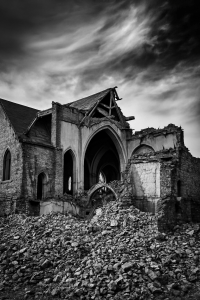
When Portuguese traders, following the trail of the explorer Vasco da Gama, settled on the south coast of China, they built a massive cathedral on a hillcrest overlooking the harbor. In time, though, typhoons and three centuries wreaked havoc on the structure, leaving only the front façade. That part of the cathedral stood long after most of the structure had crumbled to dust. Left “high on its triangular top, clean cut against the sky, and defying rain, lightning and typhoons, is a great bronze cross. When Sir John Bowring, Governor of Hong Kong, visited Macao in 1825, he was so impressed by the scene that he wrote the famous hymn, ‘In the Cross of Christ I glory; towering o’er the wrecks of time; all the light of sacred story, gathers round it head sublime.’” (Samuel Zwermer, The Glory of the Cross, 1928)

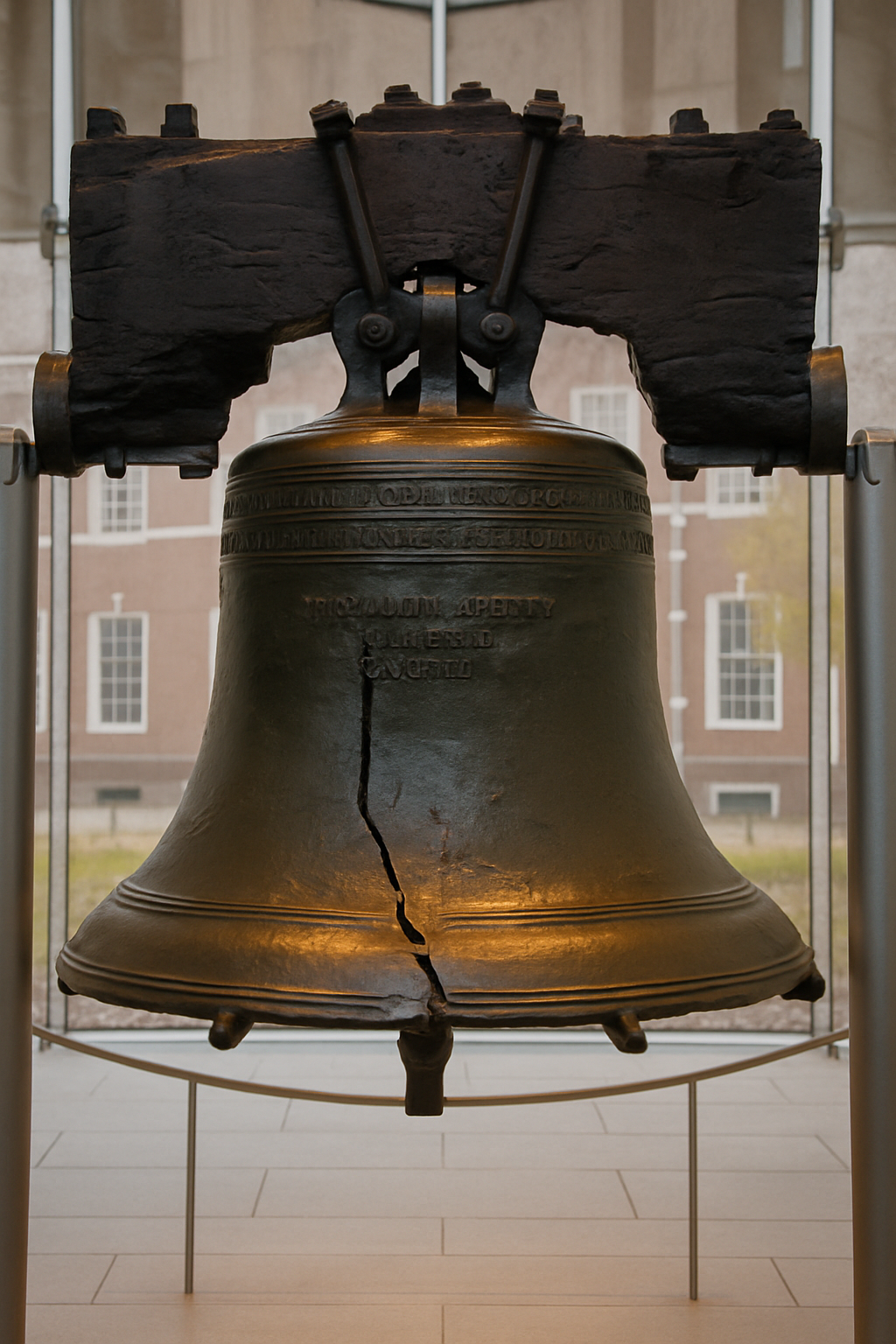
Think of hamburgers and you might think of a golden arch; think of the Olympics and a burning torch might come to mind; think of freedom and the Statue of Liberty on Ellis Island may loom large in your thinking; think of politics and a donkey or an elephant might be the physical emblems of what you have in mind. We do not have a golden arch or a burning torch or a Statue of Liberty or an elephant or donkey; BUT we have an “old rugged cross, the emblem of suffering and shame.” May we ever glory in the cross of our Lord Jesus Christ!

“And I, if I be lifted up from the earth, will draw all men unto me.” (John 12:32)

The Crucifixion Week

It is often referred to as the “Holy Week,” the last week upon earth of Jesus’ life amongst men as the God-man, culminating in the cruel cross crucifixion.  It serves us well to be reminded often of the unspeakable Calvary event, unspeakable because of the rejection of Jesus by His own whom He came to redeem; yet, precious because of the atonement that His dying secured for all men, specially for those who believe. (I Tim.4:10)  The following is an outline of the events of His last week:

On the Sunday before He was nailed to the cross, Jesus entered Jerusalem on a colt, fulfilling Zechariah’s prophecy that Messiah would come as King “riding upon a colt, the foal of an ass.” (Zech. 9:9)  On that day multitudes cried “Hosanna to the Son of David,” (Matt. 21:9) yet just a few days hence the crowds would be crying “crucify Him, crucify Him!” Luke notes that “when he was come near, he beheld the city and wept over it.” (Luke 19:41)

On Monday, approaching the city, Jesus curses a fig tree that appeared to be at the stage of fruit bearing but was instead barren.  Arriving in Jerusalem at the Temple site, Jesus surveys the merchandizing taking place in His “Father’s House,” and responds by turning upside down the moneychangers’ tables, driving them out as He proclaimed that “…it is written, my house shall be called a House of Prayer; but ye have made it a den of thieves.” (Matt. 21:13)  He had similarly done this temple cleansing at the beginning of His ministry as John records in his gospel, chapter 2. 

Tuesday was an extended teaching day for Jesus, beginning in the Temple teaching His disciples in parables and continuing just outside the Temple where the disciples asked Jesus about the end of the age issues.  Those questions (Matt. 24:3) initiated a lengthy discourse of Jesus, recorded in Matthew 24, 25, called the Olivet Discourse, in which Jesus gave signs that would precede His 2nd coming, and the great tribulation that would take place just prior to that coming; and the judgment of the nations that would immediately follow His return to earth in power and great glory. (Matt. 25)

On Wednesday of “Holy Week” Jesus, at dinner in the home of Simon the leper, had His head anointed by a woman who poured over Him a box of very precious ointment.  The disciples rebuked the woman, but Jesus rebuked the disciples and commended the woman, while Judas Iscariot slipped out of the room to seek out Pharisees with whom he could conspire to betray His Master.

On Thursday afternoon, the first day of the feast of Unleavened Bread, Jesus instructed Peter and John to secure an upper room where He and the disciples could share in the Passover Supper together. It was after this meal that Jesus washed His disciples’ feet, then revealed that Judas would betray Him, while He also warned His followers of their pending denial of Him.  Our Lord instituted the memorial of the Last Supper, (Luke 22:17-20) then launched into a farewell discourse, (John 14-16) climaxing with His great Intercessory Prayer, (John 17) followed by a short walk to the garden of Gethsemane on the Mount of Olives where Jesus uttered the agonizing petition, “Let this cup pass from me, nevertheless, not my will but Thine be done.”  It was under the cover of an early morning blanket of darkness that Judas then led his cohorts in crime to the garden, betraying Jesus with a kiss, feigning love and loyalty, resulting in the arrest of Jesus and His hearing before Annas, former High Priest and father of Caiaphas, the then current High Priest, before whom Jesus would next stand to be interrogated along with being accused, mocked, charged with blasphemy, beaten, blindfolded and reviled. 

Friday morning, early, Jesus was formally condemned by the Sanhedrin, about the time, interestingly, that Judas, beginning to feel the awful consequences of his betrayal of the Son of God, went out and hanged himself.  Jesus was led to Pilate where the Roman governor asked Him point blank “Art thou the king of the Jews?”  In keeping with the custom of releasing a prisoner on such festive feast days, the blood-thirsty crowd demanded that the seditionist-murderer Barabbas be released and that Jesus, King of the Jews, be crucified.  Pilate, learning that Jesus was from Galilee, sent Him to Herod Antipas to be judged, and it was before Herod that Christ was mocked, dressed for a few moments in a gorgeous robe, and then sent back to Pilate where he was chastised and crowned in mockery with a crown of thorns.

Friday morning, between 6:00 a.m. and 9:00 a.m., Jesus continued to be mocked and scourged by soldiers and then, with reservations, released by Pilate to the frenzied crowd.  He is led to Golgotha just a little before 9:00 a.m. and nailed to the cross where He would hang between two thieves from 9 until noon, during which time Jesus would utter “Father, forgive them,” and to the repentant thief “This day thou shalt be with me in Paradise,” and to His mother, “Woman, behold thy son,” and to the beloved John, “Son, behold thy mother.” His garments were parted, and soldiers cast lots to see who would get what; and a superscription was written in Hebrew, Latin and Greek, “This is Jesus of Nazareth, the King of the Jews.”  Jesus would suffer hanging upon the hill called Golgotha for another three hours from noon until 3:00 p.m. crying out four more times:  “My God, My God, why hast thou forsaken me?” and “I thirst,” “It is finished,” and finally, under a darkened sky where neither sun nor moon shone and where the earth was about to quake, Jesus cried “Father, into Thy hands I commend my spirit.” Immediately Matthew tells us that the veil of the Temple was rent from the top to the bottom, the earth did quake, some tombs of Old Testament believers were opened, and some Old Testament saints were observed walking the streets of Jerusalem. (Matt. 27:52) The Centurion Soldier at the cross was overheard saying, “Truly this was the Son of God.”  Jesus had died for the sins of the world; then He was carefully anointed for burial before being placed into the never before used tomb of a wealthy man from Arimathaea, Joseph, who was  also a follower of Jesus.

After three days and three nights, (by Jewish reckoning any part of a day is a day, night is a night) Jesus rose victorious over death, hell and the grave, whereupon He appeared to many of His followers before ascending back into the heavens in a visible display of His power and great glory, the full display of which is being reserved for His 2nd coming at the conclusion of the Great Tribulation. (Matthew 24,25)

Behold He cometh with clouds; and every eye shall see Him, and they also which pierced Him:  and all kindreds of the earth shall wail because of Him.  Even so, Amen.” (Revelation 1:7)

(This “You and God” post is a reprint of a March, 2024 article on the Holy Week)

Simon, the Zealot (11th in The Apostles Series)

To understand the apostle who is called “the zealot,” it is necessary to know something of the party after which he was named, the Zealots.

The Zealots were a nationalistic group of extremists before and after the time of Christ’s ministry on the earth. The main goal of the party was the overthrow—by any means possible—of Roman rule in Palestine. They were fiercely bent on restoring “divine” rule, and they were intensely “religious.”

Whereas the Scribes and Pharisees—religious groups that were also prominent in the same time period—were either indifferent or resigned to Roman rule, the Zealots refused to accept and acknowledge foreign domination of their motherland. They despised Rome and thought of them as “the enemy.”  One of their leaders gathered about himself a large and mostly young following at about the time that Jesus was 10 or 11 years of age. Their slogan was “No God but Jehovah, No tax but the Temple tax, No Friend but a Zealot.” To advance their cause, they resorted to terrorist tactics.

It was one of these Zealots, named Simon the Canaanite or Simon Zelotes (Matt. 10:4; Acts 1:13), that Jesus called to follow Him—one of the chosen 12. His name occurs only four times in the Bible, and each of these times he’s only mentioned in a list of the 12 Apostles.

Yet, though nothing of significance is said about Simon, the Zealot, there are several things a careful contemplation of God’s Word will reveal.

First, he had a saving faith in Jesus Christ. He knew that his “good works”—even on behalf of his beloved motherland, if indeed those works could have been considered “good”—were not going to “pass muster” at the Judgment Bar of God Almighty. He was saved, like every other person who has ever been saved, by believing through faith in Jesus as Lord, and then by confessing Him and calling upon Him for salvation—all of grace. (Eph. 2:8,9)

After Simon was called and ordained by Christ as an apostle, he was sent out with the other apostles on preaching missions, during which endeavors Simon exercised the “signs of an apostle.” (II Cor. 12:12) These included casting out demons, raising the dead, healing the sick and, on occasion, speaking in tongues. But none of these apostolic wonder-works saved Simon; he was only a sinner, saved by grace!

Simon, when called by Christ to be His follower, left family and friends. He was, like his compatriot apostles, willing to forsake all to follow Christ. (Matt.19:27) When the time came, he obeyed Christ’s commission to go on a preaching/healing/miracle-working tour for His kingdom’s sake. (Matt. 10:5,6) The field for these men was the Jewish field of Israel—which, Jesus said, were “lost sheep.” (Matt. 10:6) Their message: “The kingdom of Heaven is at hand.”

There is never an indication that Simon, having put his hand to the plow, ever looked back. His life as a Zealot was past; his mission as an apostle was ever and always present and future. On the first appearance of Jesus to the apostles after the resurrection, Judas Iscariot and Thomas were absent; Simon, though, was present. He was with the Apostles watching Christ ascend up into the heavens. (Acts 1:11) He met with the 120 in a room in Jerusalem, waiting for the coming of the Holy Spirit, as Christ had instructed them to do. Simon was in the number of willing, watching, waiting followers of Jesus.

Simon the Zealot met Christ, was converted—and his life was radically transformed. His battles with blades would be abandoned for a fight for the faith with the Sword of the Spirit, the Word of God. His greatest ambition after conversion to Christ would no longer be national, but spiritual. His first concern would be about a heavenly rule rather than an earthly reign. His affections would be set on things above and not on things of the earth. Now he would not be a zealot against something; he would be zealous for Someone.

Simon would recognize Caesar as someone to whom he ought to pay taxes, as Christ had wisely taught; but he would bow to Christ as One for whom He would be willing to die and, like Paul, his mantra would be “For me to live is Christ, to die is gain.” (Phil. 1:21)

Those whom Simon at one time hated and felt murder in his heart for, now—as one of His—he loved and longed to see accept the One as Savior Who would make them “new creatures.” Rather than working against them, Simon would—with his heart, head, and hands—work for their deliverance from Satan’s bondage.

Simon would never write a New Testament epistle or preach a powerful message recorded for the ages, as did Peter on the day of Pentecost. But he was faithful unto death and, like most of the apostles, he died, according to history, a martyr’s death.

His mark—many may have thought to have been minor—but forevermore his name will be engraved on one of the 12 foundations of the heavenly, holy city, the New Jerusalem.

Not too shabby for a former Zealot, huh?

And the wall of the city had 12 foundations, and in them the names of the 12 apostles.” (Rev. 21:14)

Honor in Reverse

On one occasion while I was senior pastor, the church chose to mark an anniversary with a special reception. That is always a humbling experience because, as any pastor knows, the honors should go to a whole lot of people, starting with his wife and family as well as scores of others. Paul spent a lot of ink in the last chapter of the book of Romans expressing his heartfelt appreciation for all who had helped make his ministry possible—people who for the most part were unknown. More about that later.

Let me share with you a bit of what I said when honored on the above-mentioned anniversary:

“Actually, you folks are the ones who ought to be receiving the honor here today. Without you, I would not be here. Without faithful parents, I would not have had the opportunities, the encouragement, and the direction necessary to pursue God’s calling as I have. Without good people who’ve influenced me—pastors, teachers, friends along life’s way, I’d not be here speaking to you today.

Without a devoted wife and helpmeet, I could not have given myself to the ministry as I have desired and done these past years, with Ellen always by my side. Without children who have honored me through obedience and respect, who have believed in my Savior and made my God their God, and who have lived their lives in a way that has not brought reproach upon our Lord, I could have no ministry to you or to any of the Body of Christ at this hour.

Without faithful deacons who’ve supported me through bad times and good—through thick and thin—I’d not have any effective ministry in this church. Without a faithful and Bible-loving flock who have loved and obeyed the Gospel and the whole counsel of God, and who have followed the leadership of their God-appointed under shepherd, I would be a pastor without a congregation, a man without a church.

And so, you’ve honored me and for that reason I am indeed appreciative, BUT you are also deserving of much honor. I think a fitting scriptural lesson in this regard is Romans 16. Paul, in writing to the saints at Rome, which place he had at that time not yet visited, singled out many people who were to be greeted, saluted and commended on his behalf. I could single out many of you by name and commend you and salute you. Many who have gone more than the 2nd mile. Many who have labored behind the scenes to make the public ministry of your pastors more effective. I will not do that, but I would direct your attention to this passage and to some thoughts from Paul concerning such helpers—then and now.

  • Their number—about 30 or so individuals were mentioned, both men and women. These were unsung heroes. These kinds of people are the backbone—the nerve center under the guidance of the Holy Spirit—of any church that is alive. It has been said by astute observers that 90% of the work in a church is done by 10% of the people; but to get the job done for Jesus today, it is going to take everyone doing what he or she can. Those of extraordinary talents and those of ordinary skills; those who work with their hands, and those who work with their tongues (as in teaching); those who have money and those who have none; those who are employed and those who are unemployed; those who have been to Bible college, and those who have not; those who have been saved many years, and those who are new-born babes in Christ.
  • Their names—some were well-known; some were unknown to most. In God’s church, there are no “Big Shots.” God keeps His own list of “Who’s Who.”
  • Their necessity—Paul could not have done what he did for Christ without them! Without Acquilla and Priscilla; without Mary, Phebe and Urbane. And each and every one. No preacher can buy love, loyalty and faithful, dedicated servants. Paul: “And this they did, not as we had hoped, but first gave their own selves to the Lord, and unto us by the will of God.” (II Cor. 8:5)

Their nature—they all had one thing in common: all were servants (succorers, helpers, laborers and/or fellow prisoners, Romans 16:2, 3, 7, 12).

As such, they were in good company: ‘Paul, a servant of Christ,’ ’James, a servant of God and of the Lord Jesus Christ,’ ‘Simon Peter, a servant and an apostle of Jesus Christ,’ and ‘Jude, the servant of Jesus Christ and brother of James.’ (Rom. 1:1; James 1:1; II Pet. 1:1 and Jude 1) “And whoever will be the chief among you, let him be your servant.” (Matt. 20:27)

So, that was my message then and remained so until September of 2019 when I then delivered a “farewell” address—but that will be the subject of a later post. Many who were serving with me on that anniversary were still faithfully serving their Savior alongside of me when I spoke my last words to them as their pastor. Now, almost six years later, many of them are still serving Jesus Christ our Lord alongside their new pastor, Joel Stevens. “Unto Him be glory in the church by Christ Jesus throughout all ages, world without end. Amen.” (Eph. 3:21)

For God is not unrighteous to forget your work and labor of love which ye have shewed toward His name, in that ye have ministered to the saints, and do minister.” (Hebrews 6:10)

Thaddaeus (Lebbaeus) the Apostle (10th in a series on the Apostles)

When God created the world, on the fourth day He made a greater light to rule the day and a lesser light to rule the night—and He made the stars also. (Gen. 1:16)

In so doing, the Creator of the universe set in place a principle that seems to govern all of life on this planet: namely, that there are greater lights and there are lesser lights, each in their place, each fulfilling God’s ordained purpose for their being.

This is true in the natural world, it seems, and it is true in other realms also. There is the Lion and there is the lamb; the first chair and the other chairs; the captain and the corporal; the supervisor and the supervised.

John the Baptist knew this in the spiritual world. He spake of himself as the one sent to bear witness of the Light, the true Light that lighteth every man that cometh into the world. John was merely a lesser light. John had to decrease and Jesus had to increase, the Baptizer announced.

In the apostolic corps, there were greater lights and there were lesser lights. James, Peter, John, and Andrew were lesser lights compared to the greater Light, Jesus; yet they were brighter lights than some of the other apostles.

Thaddaeus, also known as Lebbaeus and identified as “Judas, not Iscariot”—and also as “Judas (Jude) the brother of James”—was a lesser light. He hardly appears in the pages of the New Testament. But, as is true of the other apostles, his name will be forever engraved on one of the 12 foundations of the New Jerusalem, the eternal heavenly city of God.

Thaddaeus was unknown but not unfaithful. He followed Jesus in the beginning and never betrayed his Lord, Master, Messiah. He was with Jesus to the end and, after the end, gathering in the room where 120 of His followers waited for the coming of the Holy Spirit and the genesis of the Church that Jesus had promised the apostles He would found. (Acts 1:13)

Thaddaeus exemplified the first and foremost requirement of a steward, that of faithfulness. (I Cor. 4:3) So, he never became well known; in fact, most people would struggle to come up with his name when attempting to name all of the 12 apostles. He was, at best, faithful over a “few things.” (Matt. 25:23) He was never famous, but he was ever faithful. Jesus, in His letter to the church in Smyrna (Rev. 2:10) did not command the Smyrna saints to be “successful,” or “influential,” or “accepted,” or “diverse,” or “powerful,” or “wealthy.” But He promised them a crown of life if they would be faithful unto death.

Thaddaeus might well have echoed those now-famous words of the apostle “born out of due time” who, in the face of certain death, said: “I have fought a good fight; I have finished my course; I have kept the faith.” (II Tim. 4:6,7) Tradition records that Thaddaeus was clubbed to death, joining all the other apostles, except John, in the ranks of the martyrs.

Thaddaeus, on one occasion recorded in John’s gospel, seemed to have been unclear: “Judas, saith unto Him, not Iscariot, Lord how is it that Thou wilt manifest Thyself unto us and not unto the world?” Jesus answered, “If a man love Me, he will keep My words; and My Father will love him, and We will come unto him, and make Our abode with him.” (John 14:22,23) So, this apostle may have appeared to be unclear at times, but he was never accused of being uncertain. He was ready to leave that Upper Room and follow Him to the garden—and on to Golgotha.

Thaddaeus may have been undistinguished, but he will never be forgotten. As has been mentioned, his name will be on one of the 12 foundations of the New Jerusalem. Most of our Lord’s followers—then and now—will forever be “undistinguished.” But none of His faithful followers will ever be forgotten: “God is not unrighteous to forget your work and labor of love which ye have showed toward His name.” (Hebrews 6:10)

Thaddaeus—aka Lebbaeus and Judas, not Iscariot—was unpaid, but like His faithful servants throughout all ages, neither he nor they will be unrewarded.  Peter, spokesman for the 12 on one occasion, reminded Jesus that “we have forsaken all, and followed Thee; what shall we have therefore?” (Matt. 19:27) Jesus replied with words that must have plowed through the thick aura around Peter’s heart: “Verily I say unto you, that ye which have followed Me, in the regeneration when the Son of Man shall sit on the throne of His glory, ye shall also sit upon twelve thrones, judging the twelve tribes of Israel.” (Matt. 19:27)

Thaddaeus, finally, on the way to Calvary, appeared to have been unsettled, but he proved not to be untrue. Like every other apostle, Thaddaeus forsook Jesus momentarily. (Mark 14:50) But like the women at the cross, the apostles came back to “watch Him there.” Most of us have, at one time or another, forsaken Him in a weak moment in some way. Maybe by just clamming up when we should have spoken up. But Solomon gives us hope: “A righteous man falls seven times, and riseth up again.” (Provs. 24:16) And, Thaddaeus rose up again and was with Him to the end.

And every one that hath forsaken houses, or brethren, or sisters, or father, or mother, or wife, or children, or lands, for my name’s sake, shall receive an hundredfold, and shall inherit everlasting life.” (Matt. 19:29)

The Reign of Grace

Words escape us when we attempt to explain the concept of grace. An oft-sung hymn is about as good as one can do: “Marvelous grace of our loving Lord, grace that exceeds our sin and our guilt! Yonder on Calvary’s mount out-poured, there where the blood of the Lamb was spilt.”

As do many believers, I began reading through the Bible in January and am now just about through with the Penteteuch—the books penned by Moses under the direction of God, books that major on the Law given by God to govern the ways, work, and worship of His chosen people before Christ’s first advent.

I often remind myself that the Law is “holy, just, and good.” (Romans 7:12). Paul told the Galatians that it was given as a “school master” to bring us to Christ. It reveals the sinfulness of man and the holiness of God. Old Testament believers never had to wonder whether something was “right” or “wrong” because a law governed every aspect of life—from diet, dress, and deportment to work and worship. One could not live under that economy without coming to the realization, eventually, that Paul came to when, in spiritual exhaustion, he exclaimed: “Oh wretched man that I am!” The law condemned; the law convicted.

But “marvelous, infinite, matchless grace—freely bestowed on all who believe! You that are longing to see His face, will you this moment His grace receive?” As John 1:17 says: “The Law was given by Moses, but Grace and Truth came by Jesus Christ.” Jesus, John declares, was the Word that was “made flesh and dwelt among us (and we beheld His glory, the glory as of the only begotten of the Father,) full of grace and truth.” (John 1:14)

What a day that was! The reign of the law was about to be fulfilled by the only One Who could keep it, the only begotten Son of God! The reign of grace was about to be initiated by the only One Who was qualified to administer it, God the Son, Grace incarnate.

The following simple outline that God gave me recently will provide some hooks upon which to hang our thoughts on the inexhaustible subject of grace:

  1. The Word of Grace, Titus 2:11

“For the grace of God that bringeth salvation hath appeared to all men, teaching us that, denying ungodliness and worldly lusts, we should live soberly, righteously, and godly, in this present world.”

➢God’s word of grace for salvation…to all men
➢God’s word of grace for service…teaching us

  1. The Wonder of Grace, Eph. 2:8,9

“For by grace are ye saved through faith; and that not of yourselves: it is the gift of God, not of works, lest any man should boast.”

➢Wonder, that Jesus would save, cf. Romans 3:9-20—“They are all gone out of the way…there is none that doeth good, no, not one.”
➢Wonder that salvation would be a “gift!”

  1. The Way of Grace, John 1:14,16,17

➢He giveth grace: “And of His fulness have we all received, and grace for grace.”
➢He giveth more grace, Romans 5:20,21. His grace reservoir is never depleted!

  1. The Wisdom of Grace, I Cor. 15:10—”But by the grace of God, I am what I am.” Paul, killer of Christians, chief of sinners—now the least of apostles—by the grace of God.

➢The law condemns, grace converts
➢The law sentences, grace saves
➢The law restricts, grace releases
➢The law separates, grace seeks

  1. The World of Grace, Eph. 3:8: “Unto me, who am the least of all saints, is this grace given….”

➢The world of sinners: sought and saved!
➢The world of saints: sealed and sanctified (“…that I should preach among the Gentiles the unsearchable riches of Christ.”)

  1. The Worth of Grace, Rom.6:6; Acts 20:32

➢It is marvelous. By it the “old man”—the body of sin—is destroyed “that henceforth we should not serve sin.” “I commend you to God, and to the word of His grace, which is able to build you up, and to give you an inheritance among all them which are sanctified.” WOW!
➢It is matchless, Eph. 2:7: “That in the ages to come He might shew the exceeding riches of His grace in His kindness toward us through Christ. For by grace are ye saved through faith.” Take that, Devil!

“O to grace how great a debtor daily I’m constrained to be! Let Thy goodness, like a fetter, bind my wandering heart to Thee.” (Robert Robinson-“Come Thou Fount of Every Blessing”)

“Moreover the law entered, that the offence might abound. But where sin abounded, grace did much more abound.” (Romans 5:21)